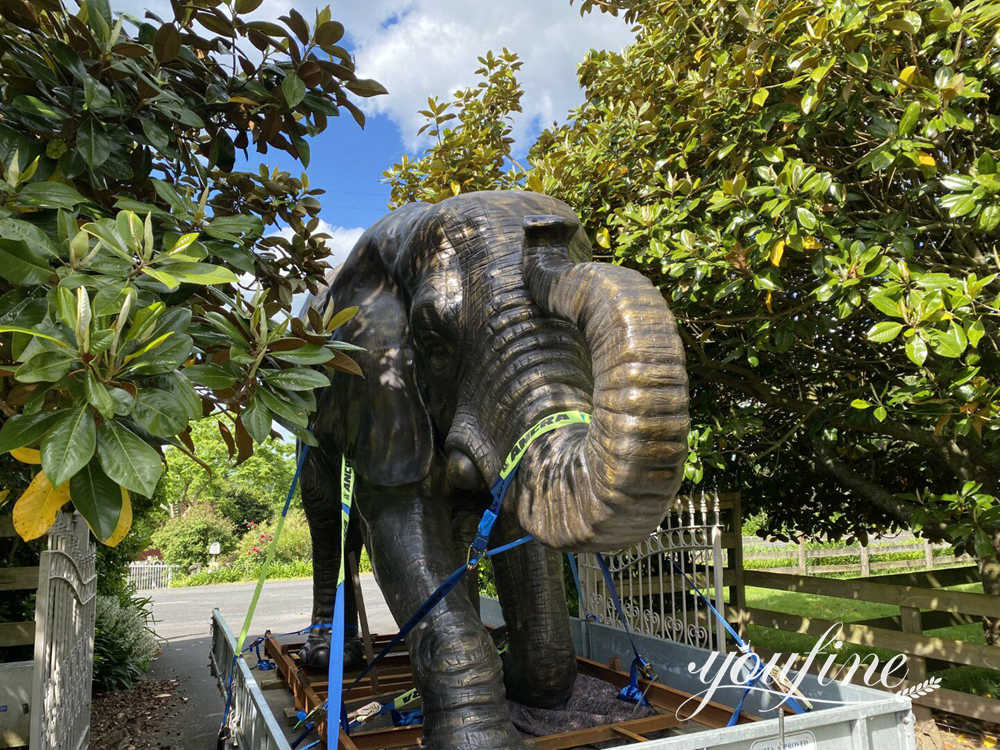
My starting point for selecting an outdoor animal sculpture is simple: there is no single best material—only the material that best fits the actual project. A bronze horse beside the sea, a stainless steel bird in a desert courtyard, and a granite bear in a cold public park face very different conditions.
I would not make that decision from appearance alone. Salt exposure, sunlight, trapped water, foundation design, and access for maintenance can all affect the result. The quality of fabrication and installation matters just as much as the material name.
For a buyer, this means asking two linked questions: which material suits the site, and can the manufacturer turn that material into a sculpture designed for those conditions?
In this guide, I explain how I would compare bronze, stainless steel animals, marble animal statues, and granite for outdoor animal sculptures.
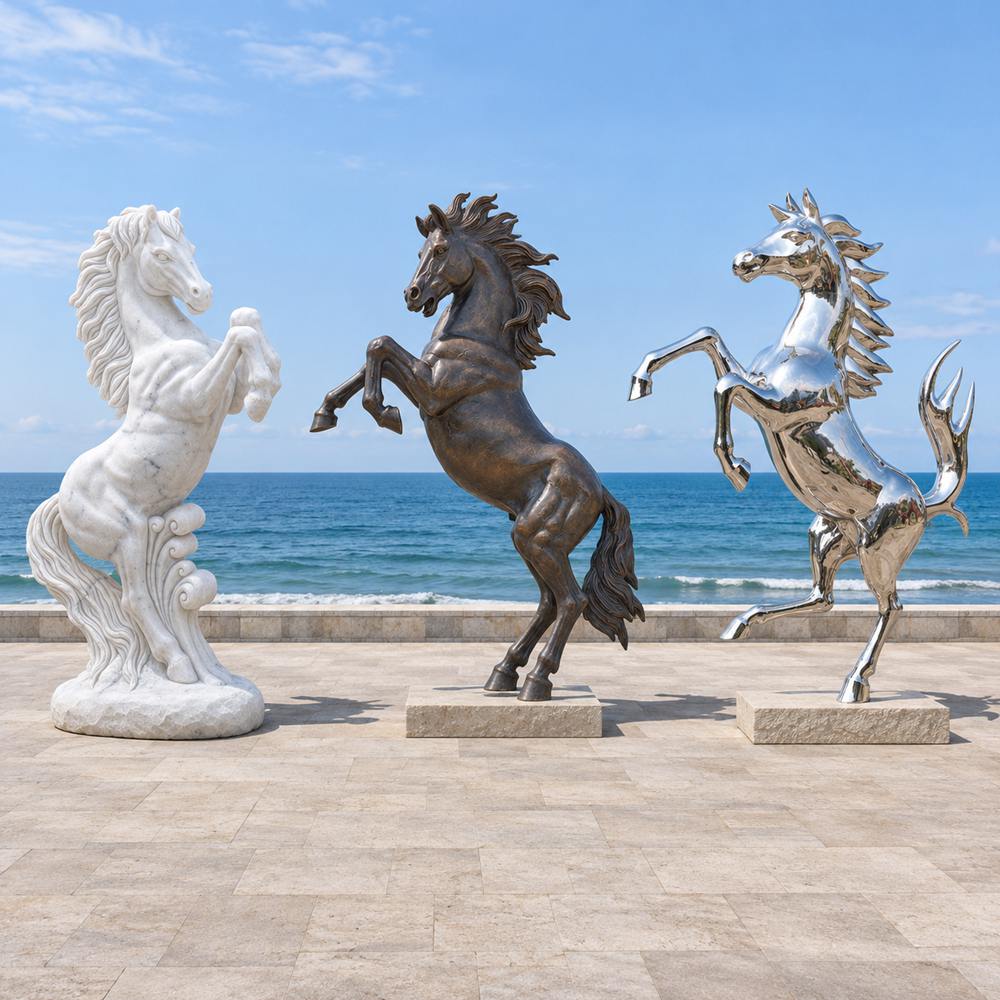
1. Understanding the Three Major Outdoor Climate Challenges
I begin with the site rather than the sculpture catalog. A regional climate label is useful, but the sculpture’s exact position often reveals the more important risks.
A coastal garden sheltered from sea spray is different from an exposed waterfront. A desert hotel entrance with irrigation is different from a dry, open landscape. In a cold climate, a sculpture that drains freely faces different conditions from one with water trapped inside.
1.1 Coastal Climates: Salt, Moisture and Corrosion
At a coastal site, I would first ask how often salt reaches the sculpture. Sea spray, windborne salt, and persistent humidity can create conditions that encourage corrosion—the gradual deterioration of metal through chemical reactions.
Bronze can develop an attractive outdoor patina, meaning the surface coloration formed through oxidation or applied finishing. However, salt can also contribute to unwanted corrosion. I would not treat every green surface deposit as harmless.
Stainless steel resists corrosion through a thin protective surface layer, but it is not immune. Chlorides in salt can cause localized attack, especially around crevices, contaminated surfaces, or poorly finished welds.1
Stone has different vulnerabilities. Salt can enter pores and crystallize as moisture evaporates, contributing to surface damage in susceptible stone.2
My practical recommendation is to assess both salt exposure and cleaning access. A material that performs well with periodic freshwater washing may be less suitable where maintenance is difficult.
1.2 Desert Climates: Intense UV, Heat and Temperature Fluctuations
For a desert installation, I pay particular attention to surface temperature, sunlight, and movement caused by heating and cooling.
Ultraviolet light, commonly called UV, usually affects coatings and organic protective materials more directly than bronze, stainless steel, or stone themselves.3 A finish may fade or deteriorate even while the main sculpture remains sound.
Metal sculptures can become hot in direct sunlight. Polished stainless steel may also create strong reflections, which deserve consideration near roads, windows, seating, and pedestrian routes.
Daily temperature changes cause materials to expand and contract. I would ask how the sculpture’s connections accommodate that movement, particularly where different materials meet.
Dust, windblown sand, and irrigation water also matter. Abrasive particles can change a finish, while water can leave deposits or introduce salts even in an otherwise dry setting.
1.3 Freeze-Thaw Climates: Water Absorption and Repeated Freezing
In a freeze-thaw climate, my main concern is water entering places where it cannot escape.
When absorbed or trapped water freezes, it can create pressure that damages vulnerable stone, joints, or enclosed details.4 Repeated cycles can gradually worsen existing cracks.
For stone sculptures, I would examine water absorption, natural fissures, and evidence that the specific stone is suitable for exterior freezing conditions. A material name alone is not enough.
For hollow metal sculptures, I would check drainage paths, cavities, and attachment details. A durable metal exterior does not protect a design that traps water inside.
The foundation also needs attention. Frost-related ground movement can affect stability even when the sculpture itself performs well.
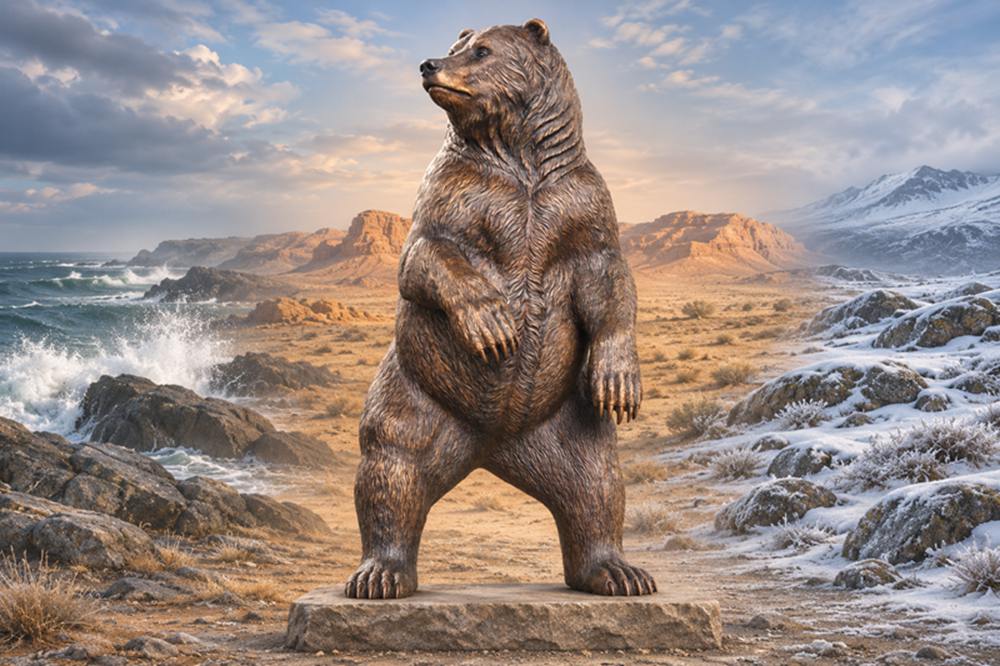
2. Comparing the Best Materials for Outdoor Animal Sculptures
I compare materials by both environmental performance and the artistic result. A realistic animal with fine fur, a sleek abstract form, and a solid carved figure may call for different production methods.
2.1 Bronze: A Reliable Choice for Long-Term Outdoor Animal Sculptures
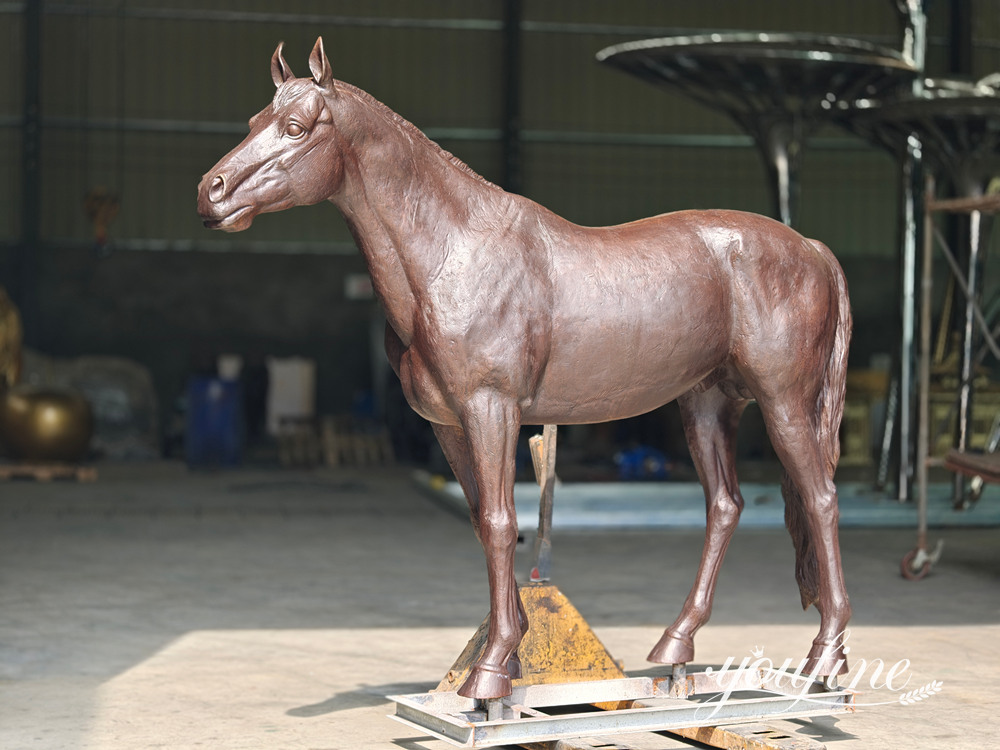
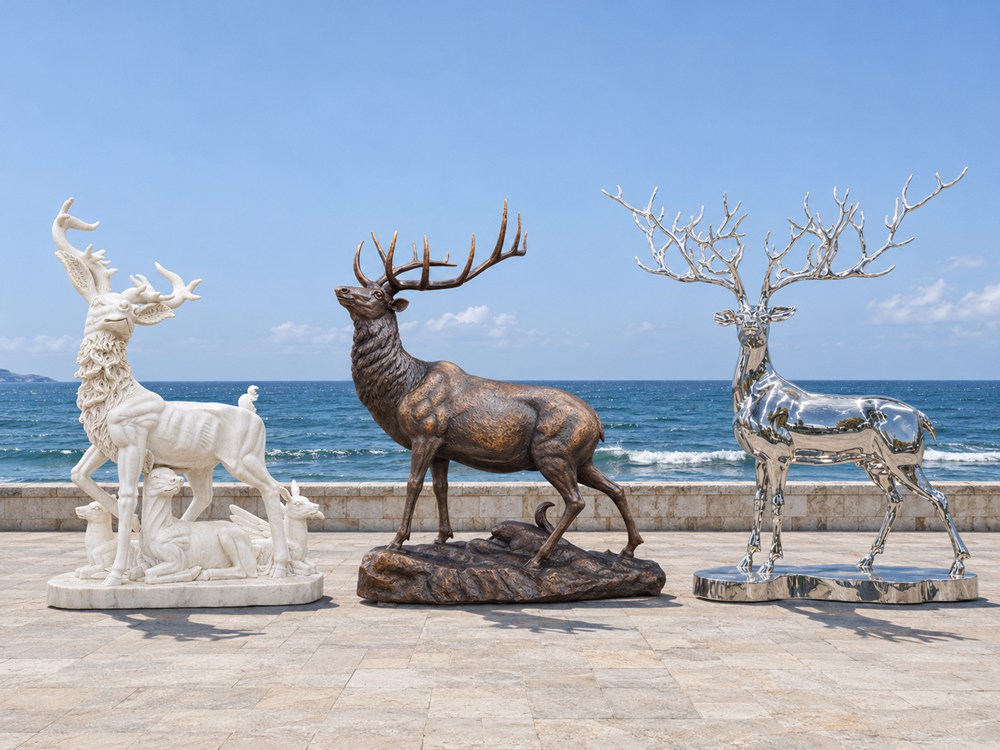
Bronze is a strong option for animal sculptures that need detailed anatomy, textured surfaces, and a traditional appearance.
Casting allows complex shapes and expressive details. In lost-wax casting, a wax version of the sculpture is used to create a mold that receives molten metal.5 Depending on size and design, separate cast sections may be joined and finished into one sculpture.
I would consider bronze for coastal, desert, and cold-weather projects, provided the alloy, fabrication, finish, drainage, and installation are appropriate.
However, I would not describe bronze as maintenance-free. Outdoor patina changes over time, and protective waxes or other specified coatings may need renewal. Coastal exposure can require more attention than a sheltered inland site.
For purchasing, I would ask the manufacturer to identify the bronze alloy and explain the proposed finish. “Bronze sculpture” is not a complete technical specification.
2.2 Stainless Steel: Suitable for Modern Outdoor Designs
I would place stainless steel high on the shortlist when a project calls for a contemporary animal sculpture, clean lines, or a reflective appearance.
Its corrosion resistance depends on the grade, exposure, fabrication, and surface condition. Molybdenum-bearing grades generally provide better resistance to chloride attack than common general-purpose grades, but severe marine exposure may require a more specialized selection.6
Welding deserves particular attention. Heat discoloration, contamination from ordinary steel tools, and unfinished crevices can reduce performance. Appropriate post-weld cleaning and passivation—a treatment that helps establish a clean, corrosion-resistant surface—may be necessary.
For a coastal project, I would request a written grade recommendation tied to the actual site. For a desert installation, I would review glare and touch temperature before choosing a mirror finish.
Stainless steel can also suit cold climates, but drainage, joints, and anchors still require proper design.
2.3 Natural Stone: Marble and Granite Animal Sculptures
I would choose stone when the project benefits from a substantial carved form, natural texture, and visual connection to the landscape.
Marble can suit expressive carving and refined detail. However, many marbles are more vulnerable than suitable granites to acidic weathering and surface loss outdoors.7 Their suitability for freezing conditions varies with the stone’s characteristics.
Granite is often a practical candidate for exposed landscapes, especially when the selected stone has low water absorption and suitable exterior performance. Still, different granites vary, and natural cracks or vulnerable mineral features need inspection.
Slender legs, projecting ears, antlers, and tails are another concern. I would review these details early because stone’s limitations differ from those of cast or fabricated metal.
Here is how I would compare the main material choices:
| Material | Main design advantage | Climate-related concern | Key purchasing check |
|---|---|---|---|
| Bronze | Detailed anatomy and rich patina | Salt-related corrosion and finish upkeep | Alloy, casting quality, finish, and drainage |
| Stainless steel | Modern forms and varied reflective finishes | Chloride attack, weld quality, and glare | Grade, post-weld treatment, and surface specification |
| Marble | Refined carving and natural veining | Weathering, absorption, and fragile projections | Exact stone selection and exterior suitability |
| Granite | Substantial forms and durable landscape character | Natural fissures, joints, and freeze-thaw suitability | Stone condition, absorption, and anchoring design |
My takeaway is that each material can serve a different design goal. I would narrow the shortlist by climate, then test it against the sculpture’s shape and maintenance expectations.
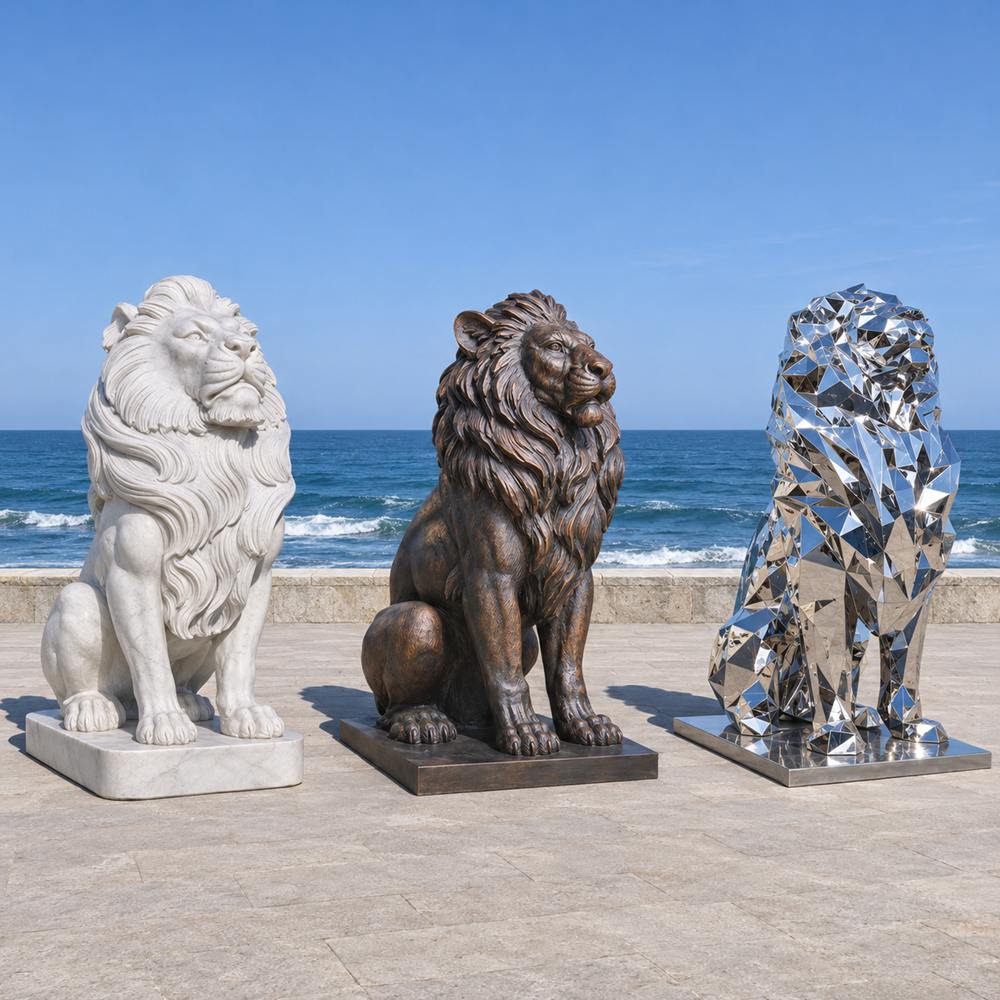
3. Best Animal Sculpture Materials for Each Climate: A Quick Comparison
I use the following table as an initial shortlist, not a universal ranking.
| Climate | Materials I would consider first | Materials needing closer review | Main condition for success |
|---|---|---|---|
| Coastal | Properly specified bronze, suitable stainless steel, suitable granite | General-purpose stainless steel in direct salt exposure; porous or vulnerable stone | Salt management, appropriate finishes, sound joints, and cleaning access |
| Desert | Bronze, stainless steel, suitable granite | Reflective metal near sensitive viewpoints; finishes with poor UV performance | Heat movement, finish selection, glare control, and dust management |
| Freeze-thaw | Suitable low-absorption granite, properly detailed bronze or stainless steel | Stone without exterior performance evidence; water-trapping designs | Drainage, suitable stone, secure anchoring, and a frost-appropriate foundation |
I would avoid choosing solely from this table. A bronze deer with thin legs and a large body needs a different structural solution from a compact bronze tortoise, even at the same site.
The surrounding environment can also change the recommendation. Pool chemicals, de-icing salts, irrigation, and industrial pollution may introduce risks beyond the regional climate.
Need help choosing a material for your site?
Tell us your project location, approximate sculpture size, and whether the site is exposed to salt spray, strong sun, or freezing temperatures.
Discuss your project4. Material Is Only Part of the Equation: What Else Determines Outdoor Durability?
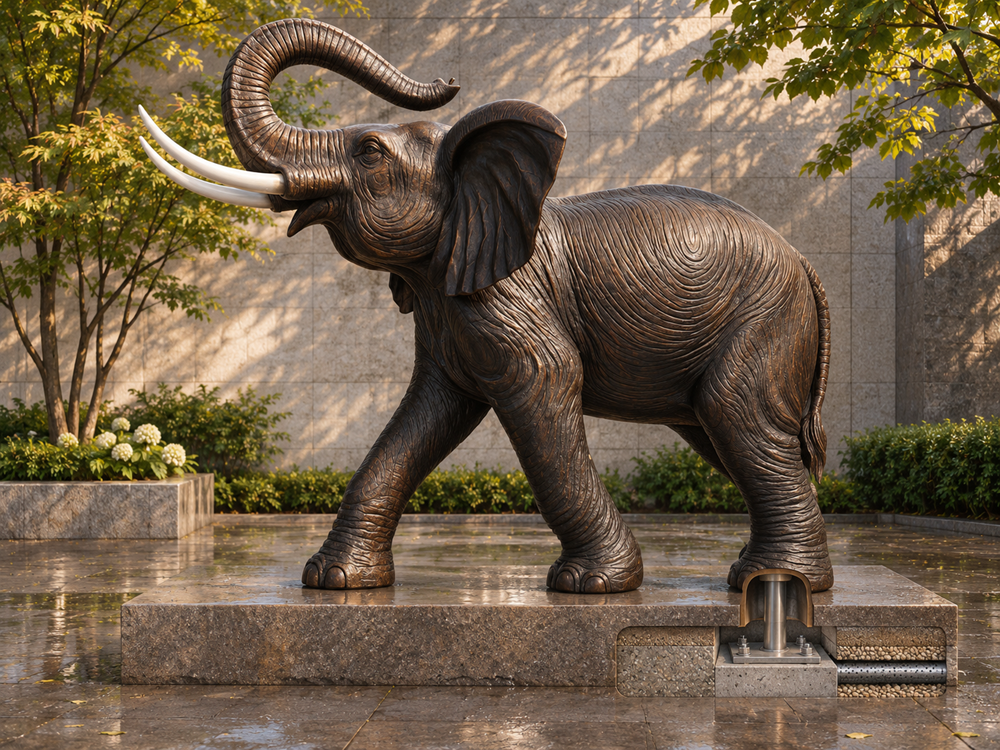
My recommendation is to treat the sculpture as a complete installed system: exterior material, internal support, finish, water paths, anchors, and foundation.
4.1 Sculpture Wall Thickness and Internal Structure
I would not use “thicker is better” as a purchasing rule. Required thickness depends on material, shape, unsupported spans, fabrication method, and loads.
Animal sculptures often concentrate forces at narrow legs or small contact points. Long necks, raised wings, horns, and tails may need additional support or revised geometry.
For large or publicly accessible sculptures, I would request a structural review that considers wind, self-weight, and foreseeable interaction where relevant. The internal frame and its connections should also suit the exposure.
If different metals are connected, the designer should assess galvanic corrosion: accelerated corrosion that can occur when dissimilar metals are electrically connected in the presence of moisture.8
4.2 Surface Finishing and Protective Treatments
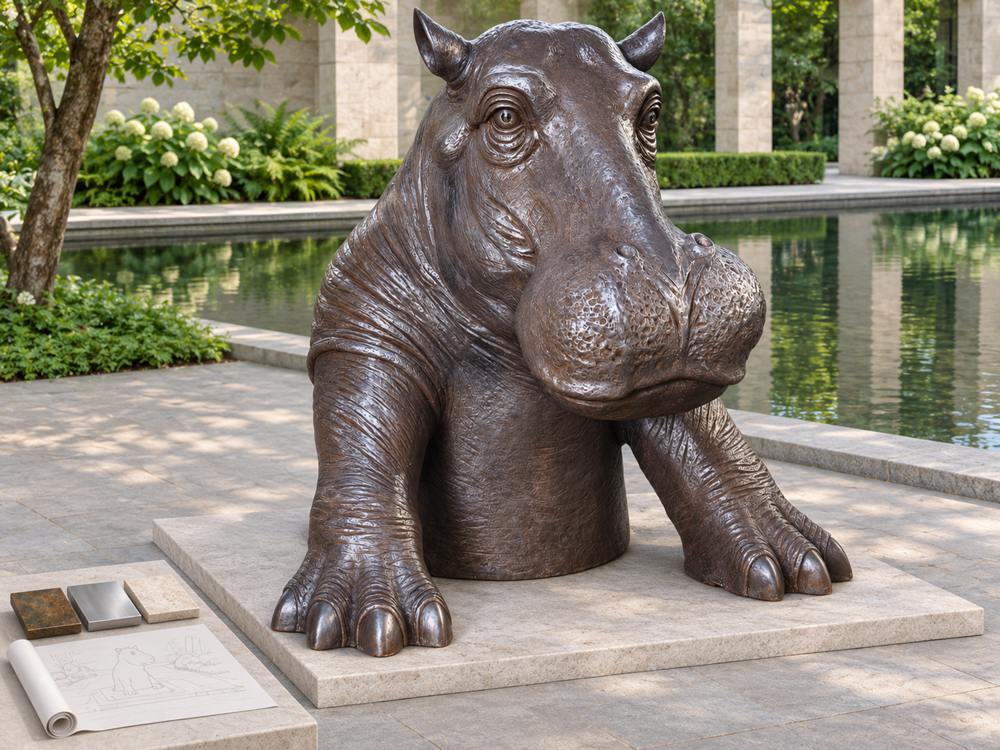
A finish affects appearance, corrosion behavior, and maintenance. I would agree on it before production rather than leaving it as a final workshop decision.
| Material or finish | What I would confirm | Maintenance implication |
|---|---|---|
| Patinated bronze | Approved color sample and protective treatment | Color may evolve; protection may need renewal |
| Polished stainless steel | Reflection level and weld finishing standard | Deposits and surface marks can remain visible |
| Brushed stainless steel | Consistent texture and appropriate final cleaning | Cleaning should preserve the surface pattern |
| Natural stone | Surface texture and whether treatment is appropriate | Treatment should not trap moisture or alter appearance unexpectedly |
I would approve a physical sample where appearance is important. Photographs help, but lighting and screens can make colors and reflections misleading.
4.3 Drainage and Water Management
I would ask the manufacturer to identify every place where water could collect.
Animal forms can create hidden pockets beneath bodies, behind wings, around paws, and inside hollow sections. Drain outlets should remain accessible and should not simply direct water into vulnerable connections.
For stone, I would review upward-facing recesses and joints. A small change in slope or detail can reduce standing water without changing the main artistic concept.
4.4 Foundation and Installation
A sound sculpture can still fail if the base or anchors are unsuitable.
I would have the foundation designed for the sculpture’s loads, local ground conditions, and applicable requirements. In freezing climates, the foundation should account for frost effects. Exposed sites may require greater attention to wind.
The sculpture supplier and local installer should agree on anchor locations, base dimensions, lifting arrangements, and tolerances before fabrication is finalized.
I would also check that the installation avoids trapping water around the feet or base. Those areas are easy to overlook once landscaping is complete.
5. How to Choose the Right Animal Sculpture Material for Your Project
I recommend a decision process that starts with the site and ends with an agreed specification.
Define the Exposure
Record whether the sculpture will face direct sea spray, de-icing salts, irrigation, strong sunlight, freezing temperatures, or standing water. Photographs and a site plan can help the manufacturer understand the setting.
Confirm the Artistic Priorities
I would identify which features are essential: realistic detail, a particular color, a reflective surface, natural stone texture, or a slender silhouette.
If a design feature conflicts with the preferred material, I would resolve that before quoting. Redesign is usually easier before modeling, casting, or carving begins.
Set a Realistic Maintenance Plan
I would ask who will clean the sculpture, inspect it, and renew protective treatments. “Low maintenance” should mean a manageable written plan, not an assumption that nothing will be needed.
Compare Complete Installed Cost
A purchase quote does not always cover the whole project. I would compare suppliers on a consistent scope.
| Cost driver | What can change the cost | What I would request |
|---|---|---|
| Material and design | Alloy or stone selection, size, complexity | Clear material identification and approved dimensions |
| Production | Modeling, molds, casting, carving, welding | Defined production scope and approval stages |
| Finish | Patina work, polishing, protective treatments | Sample and written finish description |
| Structure | Internal frame, anchors, engineering | Responsibility for design and documentation |
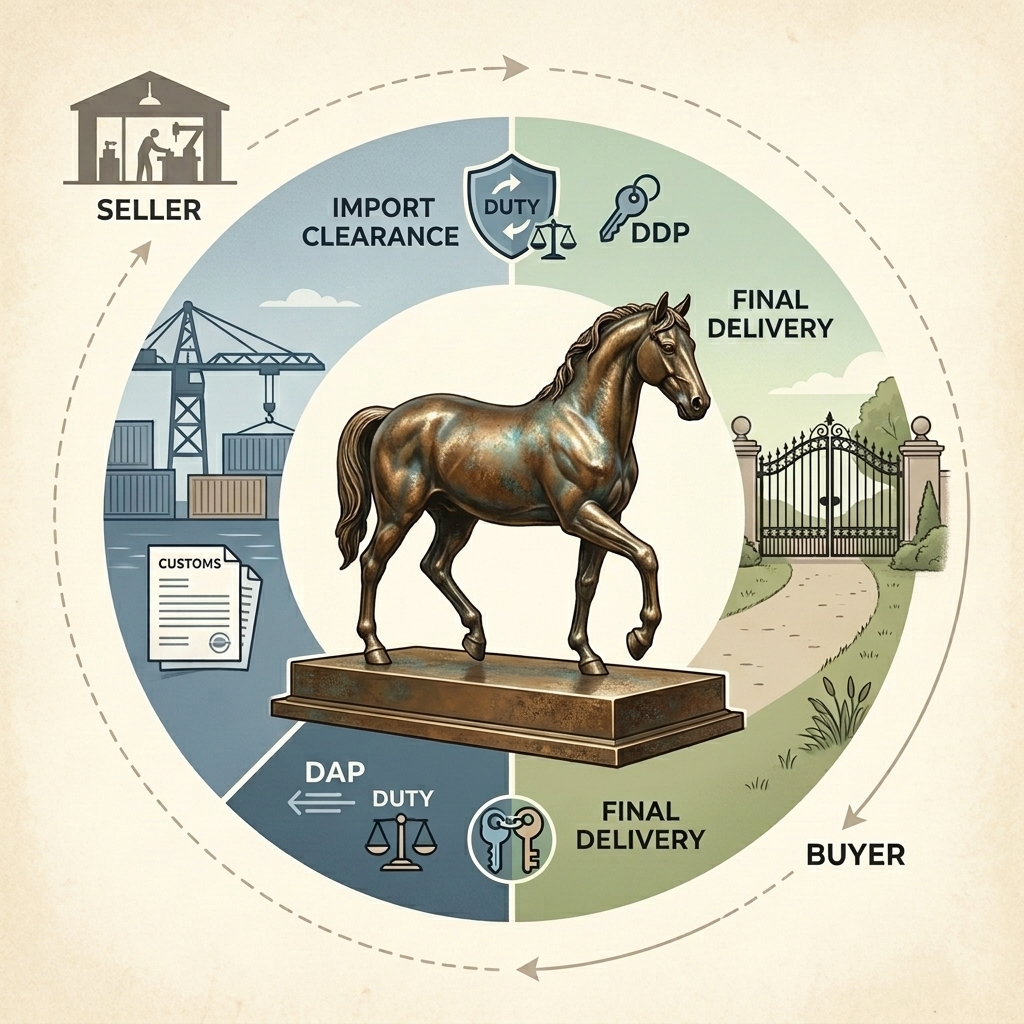
| Delivery | Packing, freight, customs, inland transport | Named delivery terms and included services |
| Installation | Lifting, foundations, access, site labor | Separate installation scope and exclusions |
I would use this comparison to identify missing items, not just the lowest initial price. An incomplete quote can transfer important costs and risks to the buyer.
Approve the Details Before Production
Depending on the project, I would request approval of the design, model or drawings, finish sample, and installation interfaces.
The contract should explain what can still change at each stage and how revisions affect cost and schedule. Major changes become harder after molds, castings, or carved forms are underway.
6. Questions to Ask Your Animal Sculpture Manufacturer Before Ordering
I would look for clear, project-specific answers rather than broad promises of durability.
| Question I would ask | What a useful answer should include |
|---|---|
| What exact material do you recommend? | Alloy, stainless steel grade, or stone identification and reasons |
| How does the recommendation suit this site? | Discussion of salt, heat, freezing, water, and maintenance |
| How will vulnerable details be supported? | Drawings or explanations for legs, wings, necks, and projections |
| Where will water drain? | Drainage locations and treatment of cavities or recesses |
| What must I approve before production? | Defined design, model, finish, and drawing checkpoints |
| How will the sculpture be packed and lifted? | Support method, protected features, handling instructions |
| Who is responsible for the foundation and anchors? | Clear division of supplier, engineer, and installer responsibilities |
| What aftercare information is supplied? | Cleaning guidance, inspection points, and finish maintenance |
My strongest recommendation is to put important answers into the order documents. Verbal assurances are harder to check when production is complete.
For international purchasing, I would also clarify shipping documents, delivery terms, insurance responsibility, and what happens if damage is discovered on arrival.
Packing should support the sculpture at suitable points and protect delicate features. Installation instructions should identify safe lifting locations; I would not assume that an animal’s neck, wing, or tail can carry lifting forces.

Conclusion: Choose for the Site, Not Just the Material Name
My central advice is to choose the combination that fits the project—not to search for one material that is best everywhere.
Bronze offers detailed forms and a distinctive patina. Stainless steel supports contemporary designs and can perform well with appropriate specification and fabrication. Granite can be a practical exterior choice, while marble deserves closer review in harsh exposure.
I would make the final decision only after checking the sculpture’s shape, water management, finish, structural support, foundation, and maintenance plan. A suitable material is the starting point; a well-defined manufacturing and installation process turns it into a dependable outdoor sculpture.
Before contacting You Fine Art Sculpture, I recommend preparing site photographs, approximate dimensions, a preferred animal design, climate details, and your maintenance expectations.
Share those details when requesting a proposal, and ask for the recommended material, finish, drainage approach, approval stages, and installation requirements. That gives you a clearer basis for comparing options—and choosing the animal sculpture that genuinely suits your site.
Frequently Asked Questions
1. Is bronze the best material for a coastal animal sculpture?
I would consider bronze a strong option, but not an automatic winner. The alloy, finish, salt exposure, drainage, and maintenance plan all matter. Suitable stainless steel or granite may better fit a particular design or maintenance requirement.
2. Can stainless steel rust near the sea?
Yes. I would not treat stainless steel as corrosion-proof. Salt can cause staining or localized corrosion, especially with an unsuitable grade, contamination, poor weld finishing, or trapped moisture. Request a grade and finishing recommendation for the actual exposure.
3. Is granite better than marble in freezing climates?
I would generally shortlist suitable low-absorption granite before many marbles for exposed freeze-thaw conditions. However, the specific stone still needs review. Natural fissures, water absorption, sculpture geometry, and installation details can change the decision.
4. Which material usually needs the least maintenance?
I would compare complete specifications rather than name a universal winner. Suitable granite and correctly specified stainless steel can have relatively straightforward care needs, while bronze may require periodic protective treatment. Exposure and the desired appearance determine the real maintenance burden.
5. What most affects production and delivery time?
I would look at design complexity, modeling approvals, material availability, casting or carving work, finish approval, and packing. International delivery adds freight and customs variables. Ask for a schedule that separates production milestones from estimated transit.
6. Do I need an engineer for installation?
For large, elevated, slender, or publicly accessible sculptures, I would recommend qualified structural input. Local rules and site conditions determine the requirements. Foundation and anchor design should be resolved before finalizing the sculpture’s base connections.
- What Is Crevice Corrosion on Stainless Steel? ↩︎
- PDF Salts in the Deterioration of Porous Materials; an Overview ↩︎
- Ultraviolet Filters – Canadian Conservation Institute (CCI) Notes 2/1 ↩︎
- Preservation Briefs – U.S. National Park Service ↩︎
- Lost-wax casting – Wikipedia ↩︎
- Resistance of Stainless Steel to Corrosion in Naturally Occuring Waters ↩︎
- How does acid precipitation affect marble and limestone buildings? ↩︎
- Caring for metal objects – Preventive conservation guidelines … – Canada ↩︎