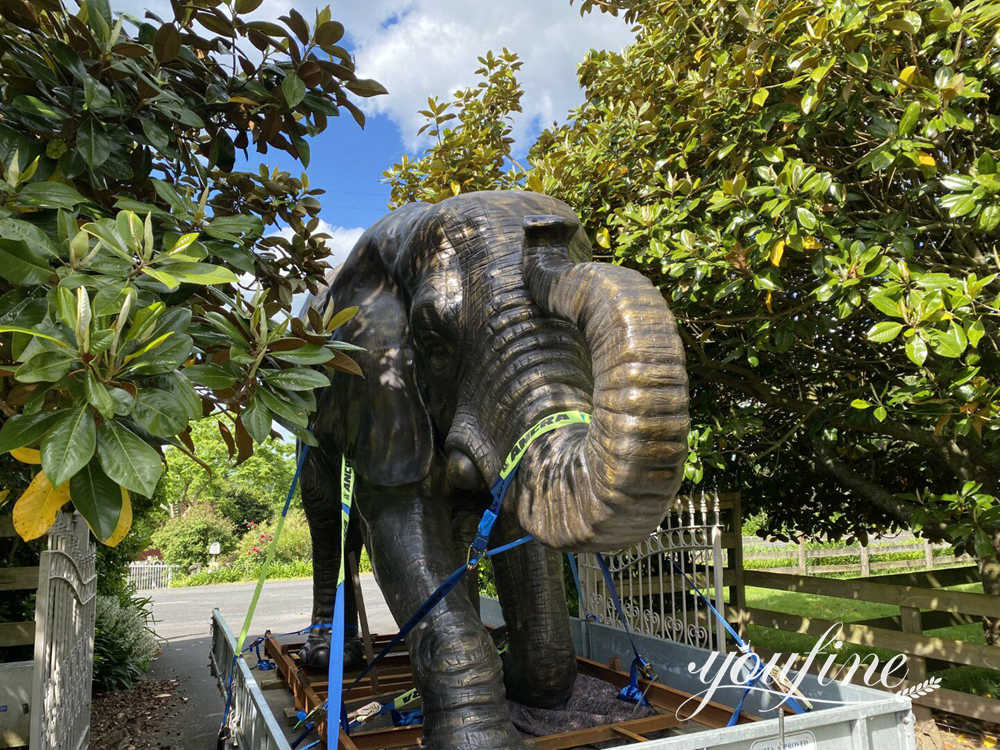
Choosing between bronze, stainless steel and marble animal statues starts with the result you want on site. A realistic stag in a woodland garden, a reflective horse outside a modern hotel and a pair of carved entrance lions ask different things of their materials.
Bronze is a strong starting point for expressive anatomy and textured patinas; stainless steel for reflective, geometric or contemporary forms; and marble for natural stone character and carved architectural settings. None is the best choice for every outdoor project. The animal’s pose, local exposure, maintenance access and installed cost should guide the final specification.
This guide is for estate owners, landscape designers, resort teams and project buyers comparing custom, life-size and large animal sculptures.
Bronze vs Stainless Steel vs Marble: A Quick Comparison
| Decision factor | Bronze | Stainless steel | Marble |
|---|---|---|---|
| Visual character | Modelled surfaces with brown, dark or other agreed patinas | Mirror, brushed, geometric or other specified finishes | Natural color, veining and carved surfaces |
| Design opportunities | Detailed fur, feathers, muscles and expressive animal poses | Reflective silhouettes, fabricated forms and contemporary statements | Carved animals coordinated with stone architecture and entrances |
| Outdoor specification | Confirm alloy, finish, drainage and protection | Confirm grade, weld finishing, drainage and exposure | Confirm stone suitability, soundness, detailing and local climate |
| Care priorities | Inspect patina and protective finish; follow an agreed cleaning and coating plan | Remove deposits with finish-compatible cleaning; inspect joints and fixings | Monitor staining, cracks and biological growth; use stone-compatible care |
| Installation considerations | Confirm actual weight, internal support and anchoring | Confirm actual weight, framework and anchoring | Confirm actual weight, lifting points and base support |
| Cost drivers | Model development, casting complexity, size and finish | Fabrication complexity, grade, framework and surface finishing | Stone block, carving complexity, fragile details and handling |
These are selection guidelines, not fixed rankings. Bronze can be abstract, stainless steel can be realistic, and marble can work in contemporary architecture. Ask to see examples close to your intended design.
Start with the Animal’s Shape and Pose
Realistic detail or a simplified silhouette?
For a lifelike horse, buyers may judge the neck, chest, legs and expression before they notice the material. A bronze animal’s surface begins with the model: casting will not correct weak anatomy. Review the model from the same angles and approximate viewing distance that matter at the finished location.
For a geometric bear or an abstract deer, the outline, proportions and transitions between planes may matter more than individual hairs. Stainless steel offers a different visual vocabulary through reflections and fabricated surfaces. With marble, the composition must also respect the selected stone and the physical support needed around carved features.
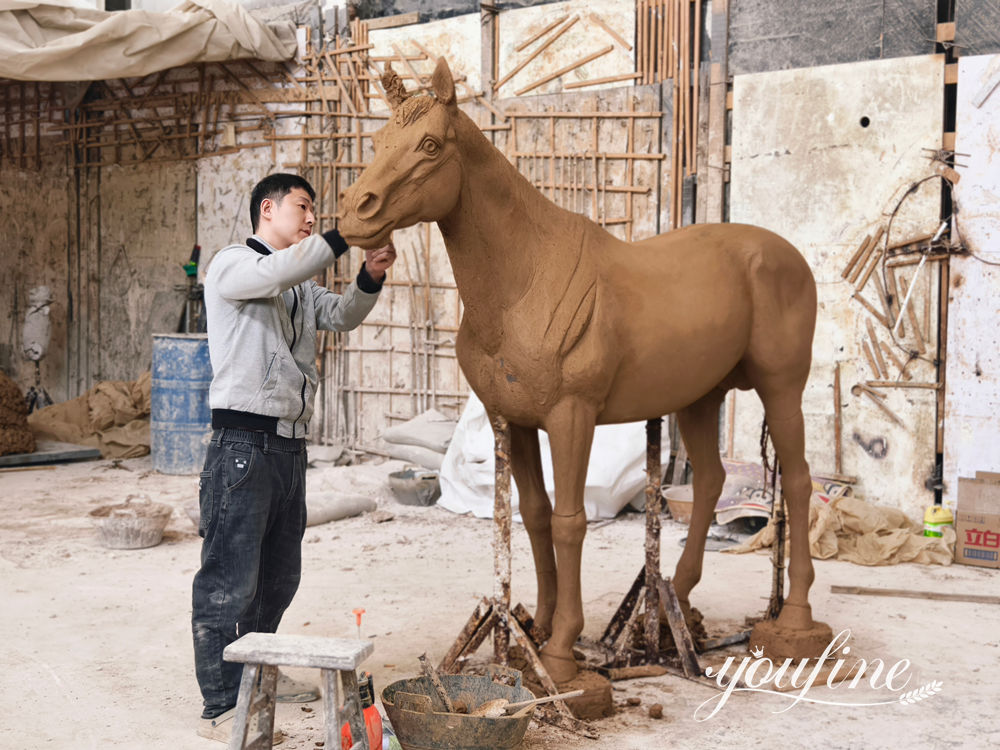

Antlers, wings and raised legs need early discussion
A standing horse and a rearing horse are different production and installation problems, even at the same height. Antlers, thin tails and extended wings can affect structure, transport protection and handling. Request a review of projecting features before committing to a design.
Do not assume an identical pose can simply be transferred between all three materials. It may need thicker elements, additional support, a different base or a revised composition. For complete briefing requirements, see our guide to specifying outdoor animal sculptures.
When to Choose Bronze Animal Statues
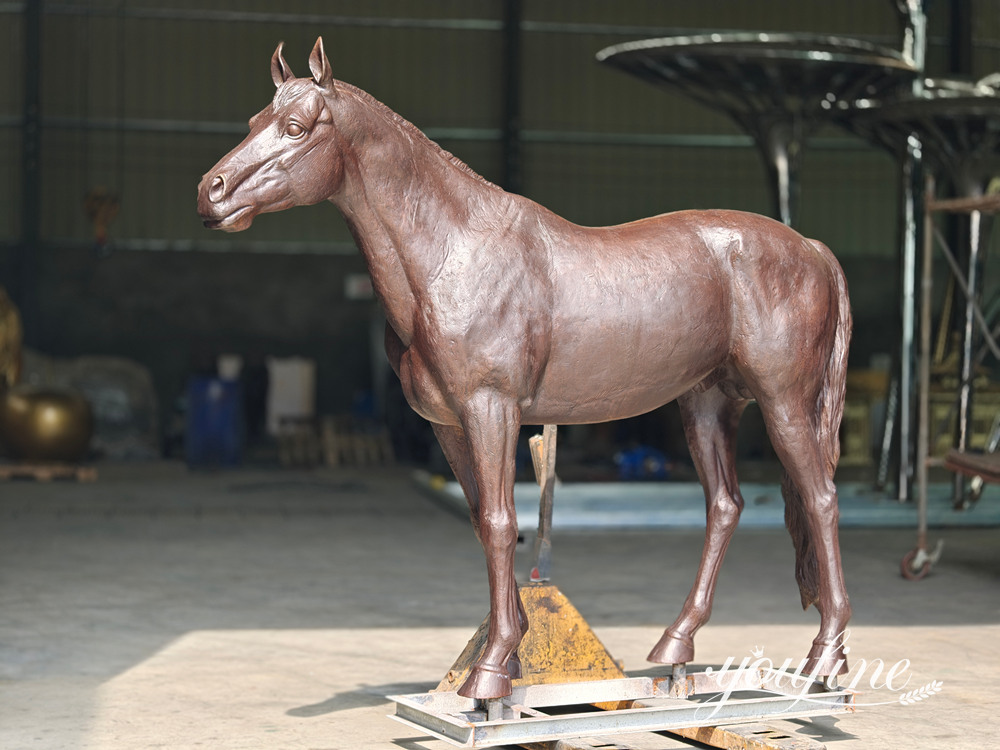
Consider bronze when the project calls for expressive wildlife, a detailed horse, a family group or an animal with a warm, varied surface. It can complement estates, ranch entrances, gardens and wildlife-themed resorts, depending on the chosen pose and finish.
Specify the model and patina separately
“Brown bronze” does not define an exact appearance. Deep brown with highlighted muscles looks different from a lighter, mottled surface. Share reference images and agree how the finish will be reviewed. Lighting and photography can alter the apparent color, so discuss the acceptance process before final finishing.
Confirm the alloy specification, model approval stages, surface detail, joint finishing, internal supports and protective finish. For a group or matching pair, review how the pieces will relate in scale, pose and color.
Plan for surface changes outdoors
Outdoor bronze does not stay visually unchanged. Exposure, runoff and the condition of protective finishes influence its appearance. The Canadian Conservation Institute’s outdoor object guidance emphasizes regular inspection and maintenance, including protective finishes. Ask for a care plan suited to the supplied patina and site rather than assuming every bronze needs the same treatment schedule.
If keeping a very consistent color is essential, explain that requirement before ordering. Include the base in the discussion: runoff and staining can affect adjacent materials.
When to Choose Stainless Steel Animal Sculptures
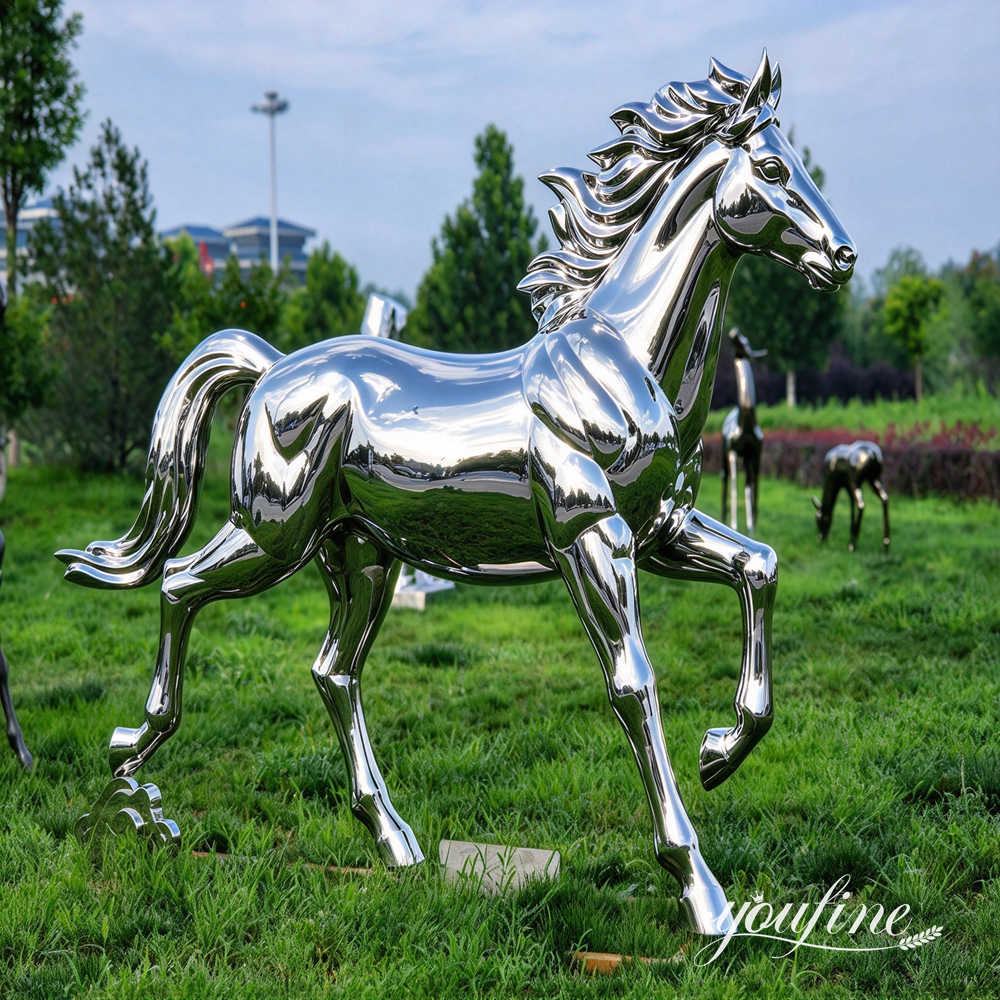
Consider stainless steel for a contemporary entrance, a geometric animal or a reflective landmark. The surface can pick up the sky, planting and nearby buildings, making the sculpture’s appearance change with its surroundings.
That effect should be assessed in context. A mirror finish can look very different against a busy street, a bright facade or a quiet lawn. Ask whether mirror polishing, brushing or another agreed finish best supports the intended design.
Confirm the grade and fabrication quality
“Stainless steel” alone is an incomplete specification. Discuss 304 versus 316 or 316L with the fabricator in relation to salt exposure, pool chemicals, deposits and cleaning access. More demanding locations may need a different specification; a grade label alone does not guarantee suitability.
Also confirm sheet thickness where relevant, internal framing, visible joints, weld treatment, surface finishing and drainage. A carefully finished exterior still needs an appropriate structure and installation plan.

Allow for cleaning access
Stainless steel requires care. Deposits and water marks can change the appearance, especially on reflective surfaces. The British Stainless Steel Association’s maintenance guidance relates cleaning schedules to the environment and steel grade. Agree suitable cleaning methods and avoid improvising with abrasive products that could change the finish.
For an example of this design direction, explore our stainless steel geometric bear sculpture.
When to Choose Marble Animal Statues
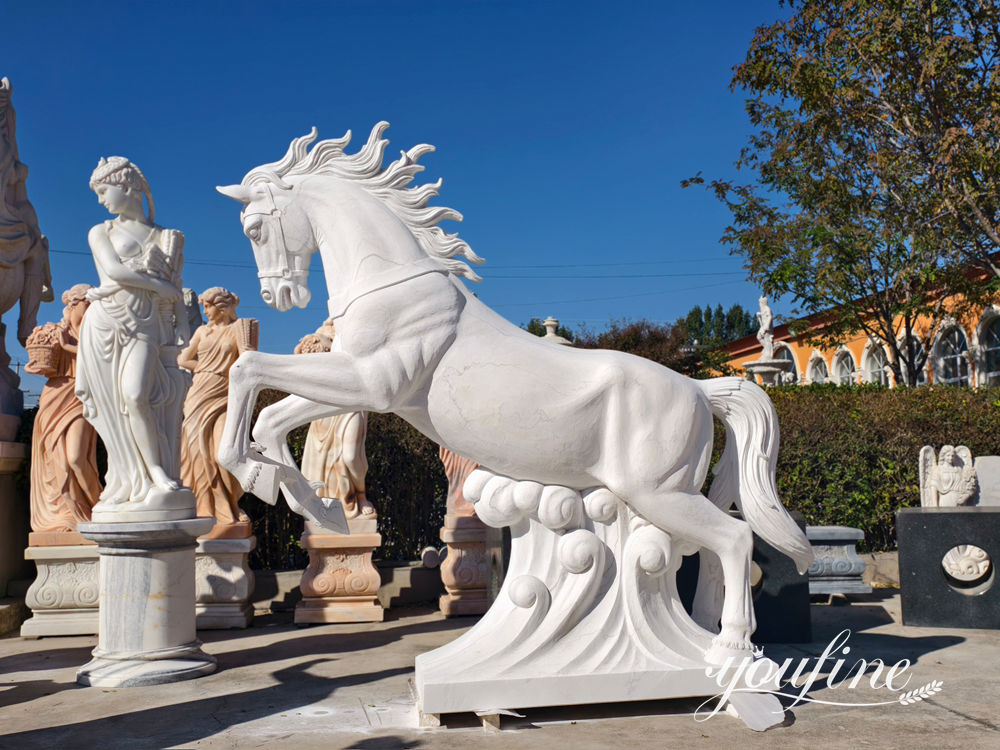
Consider marble when natural stone is part of the architectural language: entrance lions, courtyard animals and sculptures coordinated with stone steps, walls or pedestals. Its color and veining can help connect the artwork to its setting.
Approve the stone as well as the design
A photograph of a previous sculpture is not an exact color promise for a new stone block. Confirm the stone type, expected variation, visible veining and finish. Ask how the selected block will be reviewed and how natural features will be assessed around important carved details.
Slender legs, antlers and extended wings need particular attention. The design should account for carving, handling and the conditions in which the finished sculpture will stand.

Review outdoor exposure before choosing a block
Do not treat every marble as equally suitable for every climate. Discuss moisture, drainage, freezing conditions, pollution and irrigation with the supplier. Where necessary, request relevant stone information and specialist advice for the intended location.
Allow room for lifting and support beneath the sculpture. Use the actual proposed weight and base dimensions when planning delivery and installation. For care, agree compatible methods; difficult stains, damaged surfaces and broken details may need specialist treatment. The NSW guidance on sculpture conservation illustrates why weathered marble and remedial cleaning require care.

Which Material Fits Your Installation Location?
Private gardens and estate entrances
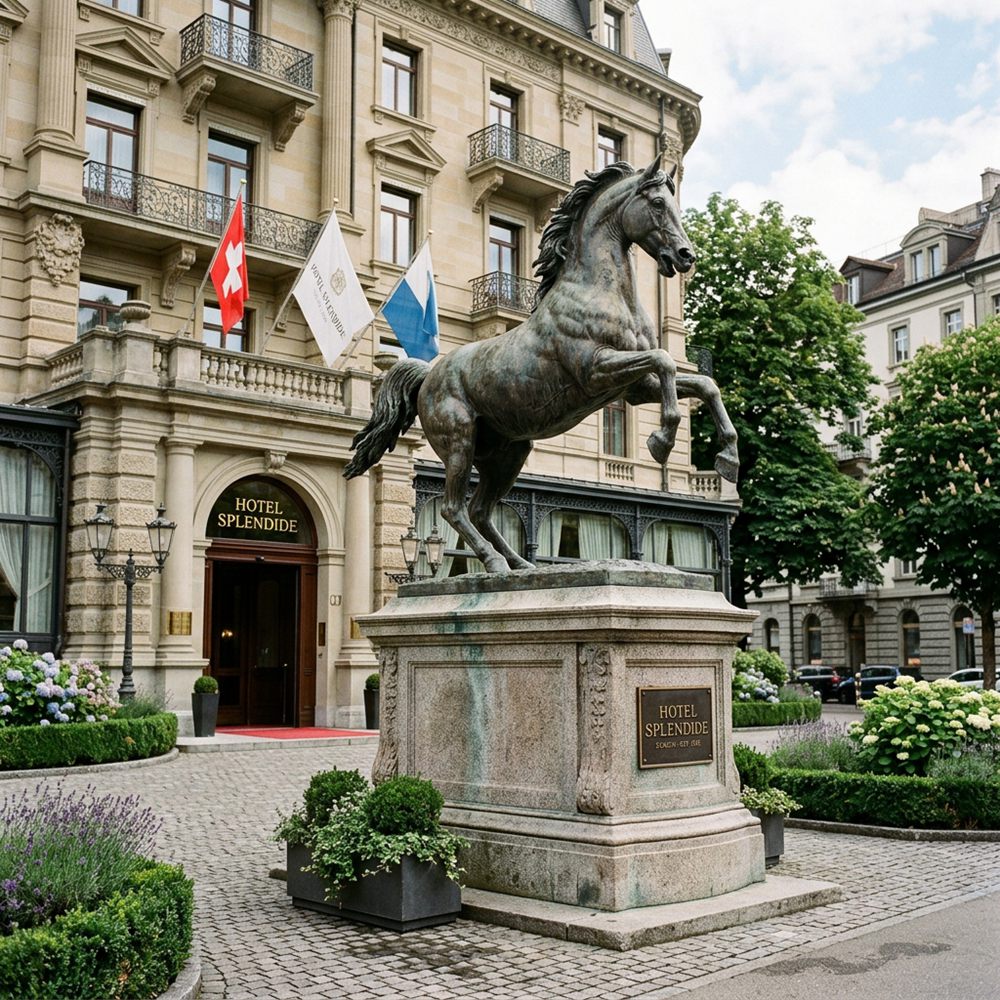
Start with the building, planting and viewing distance. A detailed bronze deer may suit a naturalistic garden, while carved lions may connect with a stone entrance. A reflective animal can also work in a garden when its contemporary appearance is intentional. Choose a scale that reads clearly without blocking circulation or competing with the architecture.

Hotels, resorts and commercial spaces
Consider how guests will approach, photograph and move around the sculpture. A stainless steel animal can create a striking contemporary focal point; a bronze wildlife group can support a landscape theme; marble can reinforce a carved architectural setting. Review cleaning access and the treatment of projecting features wherever visitors can get close.

Public parks and wildlife settings
Material selection is only part of the brief. Public access, foreseeable contact, base design and maintenance responsibility must also be addressed. A decorative animal statue should not be assumed suitable for climbing or play. Communicate the intended use so the design and local requirements can be reviewed accordingly.
Coastal locations, pools and cold climates
Send site information before the material is finalized. Include proximity to the sea, salt spray, pool-water splash, irrigation, drainage and seasonal freezing. A sculpture beside a pond has a different exposure from one designed to discharge water or remain partly submerged.
For a fountain animal, specify the water system, contact conditions and access for maintenance. Confirm the complete assembly, including fasteners, internal supports and connections, rather than selecting by the outer material alone.
Compare Total Project Cost, Not Just Sculpture Prices
There is no reliable universal price order for bronze, stainless steel and marble animal statues. A simple fabricated form and a highly detailed cast animal are not equivalent products. A compact stone carving and a large animal with vulnerable projecting details also carry different production and handling requirements.
For a meaningful comparison, give suppliers the same animal reference, dimensions, intended finish and delivery scope. Ask them to identify any design changes required by each material.
- Design and development: new modelling, drawings and approval stages.
- Production: casting, fabrication or carving, structure and surface finishing.
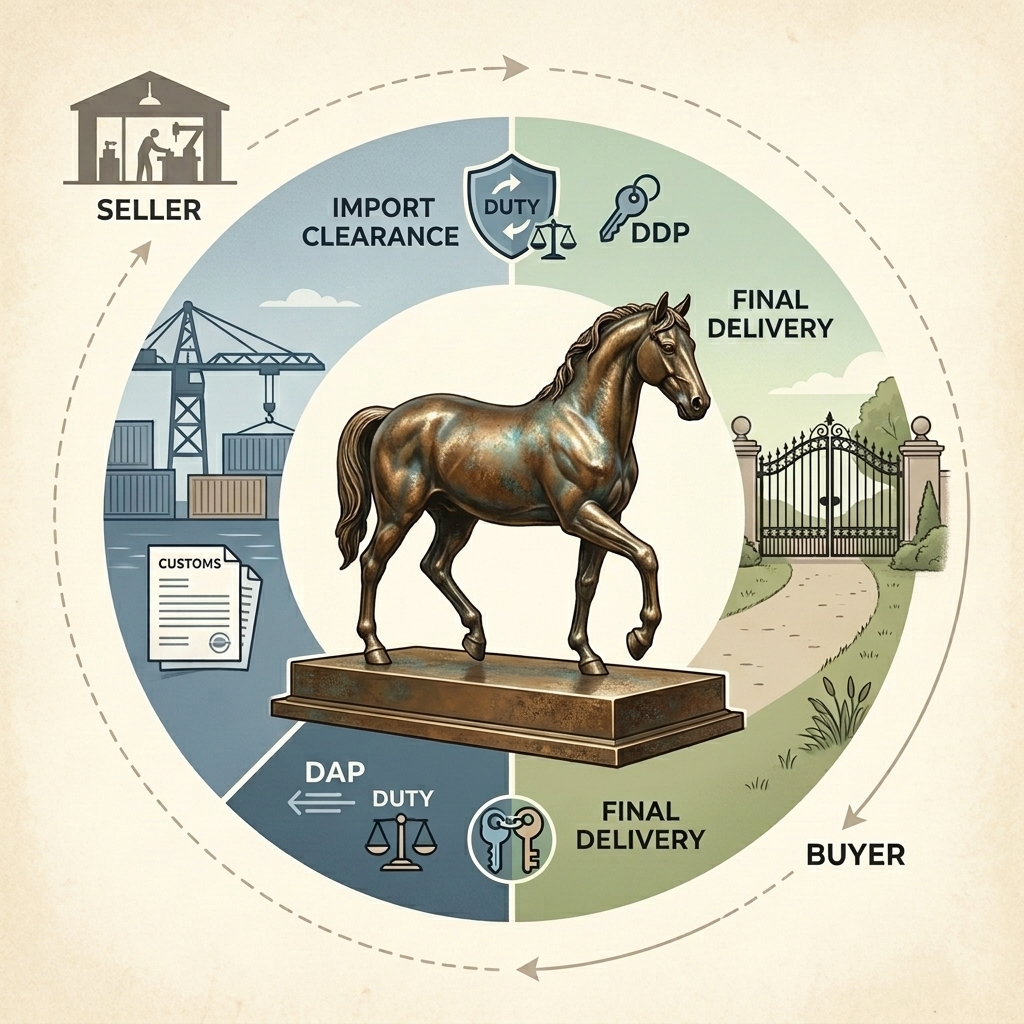
- Delivery: protective packing, freight, destination charges and local transport.
- Installation: foundation, anchoring, lifting equipment and site access.
- Ownership: inspections, cleaning and renewal of specified protective treatments.
Height alone is not a sound pricing basis. Body volume, pose and complexity can change the quote substantially. Our custom bronze animal sculpture cost guide explains the main bronze pricing factors. Confirm current project-specific costs before budgeting.
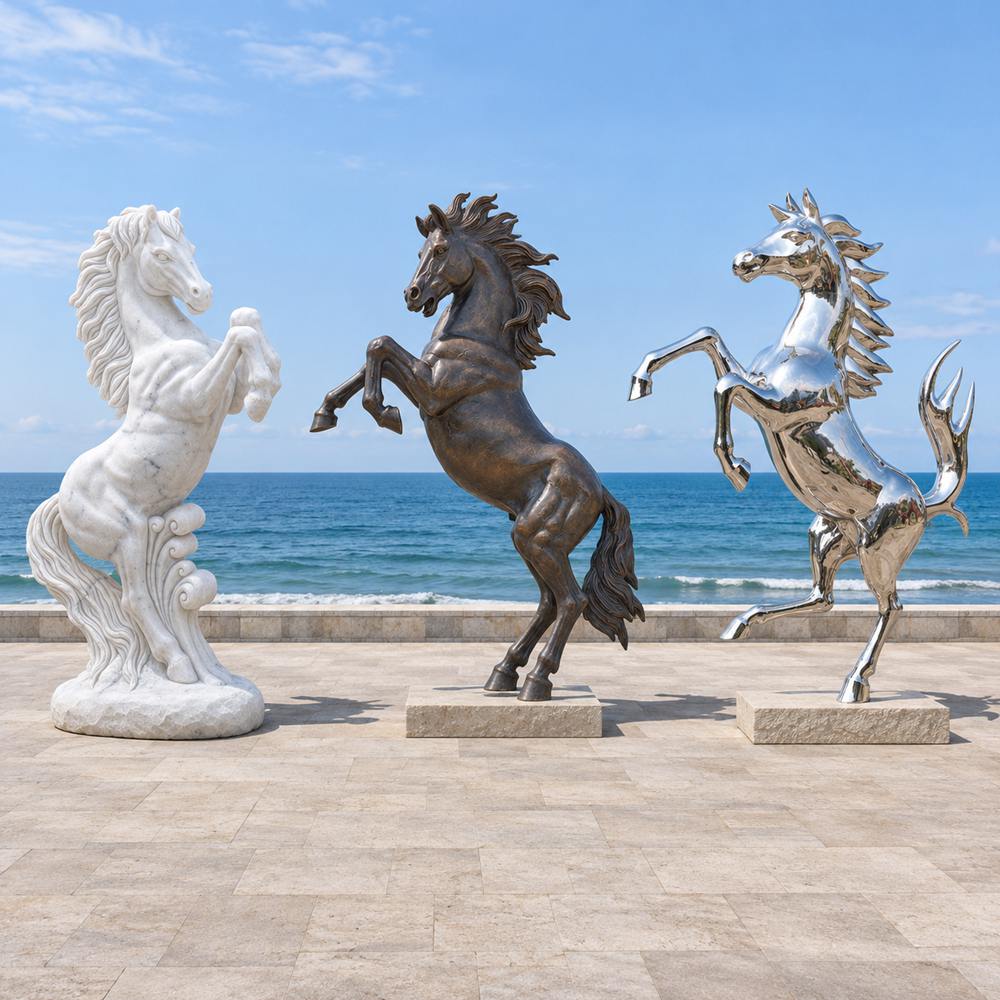
A Horse in Three Materials: How the Decision Changes
The horse photographs in this guide show separate designs, not an identical commission reproduced in three materials. They illustrate visual differences rather than a controlled price or engineering comparison.
For a realistic estate horse, begin by comparing anatomy, pose and surface detail. Bronze may be a suitable starting point if a patinated, modelled appearance is central to the brief.
For a contemporary hotel horse, examine the outline and how the finish interacts with the building. Stainless steel may suit a reflective or simplified treatment, with the fabrication and joints reviewed accordingly.
For a horse within a stone courtyard, consider whether marble’s natural character connects with the surrounding architecture. Confirm that the chosen pose works with the stone and installation requirements.
The useful question is: which version best delivers the intended effect at this particular site, within the available budget and maintenance resources?
What to Send Before Requesting a Material Recommendation
- The animal species, reference images and preferred pose.
- Approximate overall dimensions and quantity.
- Site photographs, architectural drawings or a location plan.
- Indoor or outdoor use, climate and relevant water or salt exposure.
- The desired surface appearance and acceptable changes over time.
- Available maintenance access and responsibilities.
- Budget range, delivery destination and required completion date.
- Known foundation, unloading or lifting constraints.
Ask the supplier to separate confirmed specifications from items still requiring design review. For large commissions, coordinate the foundation and anchoring requirements with the local installation team before production is complete.
Frequently Asked Questions
What is the best material for an outdoor animal statue?
The best material depends on the design and site. Begin with bronze for modelled detail and patina, stainless steel for reflective or contemporary forms, and marble for carved natural stone character. Then check exposure, structural requirements, maintenance and total installed cost.
Is stainless steel always cheaper than bronze?
No. Complex fabrication, surface finishing, steel grade and internal structure can change the price. Compare quotes for equivalent dimensions, design complexity and delivery scope.
Can marble animal statues be used outdoors?
Yes, but the specific stone, design and local exposure need review. Do not assume that all marble varieties or delicate carved features perform equally in all outdoor settings.
Which material needs the least maintenance?
There is no single answer for every site. Stainless steel needs suitable cleaning, bronze needs attention to its patina and protective finish, and marble needs monitoring and compatible care. Obtain a written plan for the supplied sculpture.
Can you make the same animal in all three materials?
Many animal concepts can be developed in bronze, stainless steel or marble, but the pose, supports, details and base may need adjustment. Review each proposed version on its own production and installation requirements.
Discuss the Right Material for Your Animal Sculpture
YouFine produces custom animal sculptures in bronze, stainless steel and marble. Share your reference image, approximate size, site photographs and delivery location so we can discuss suitable materials, finishes and production options.
Send your animal sculpture project brief or explore our animal sculpture collections to find a starting point.