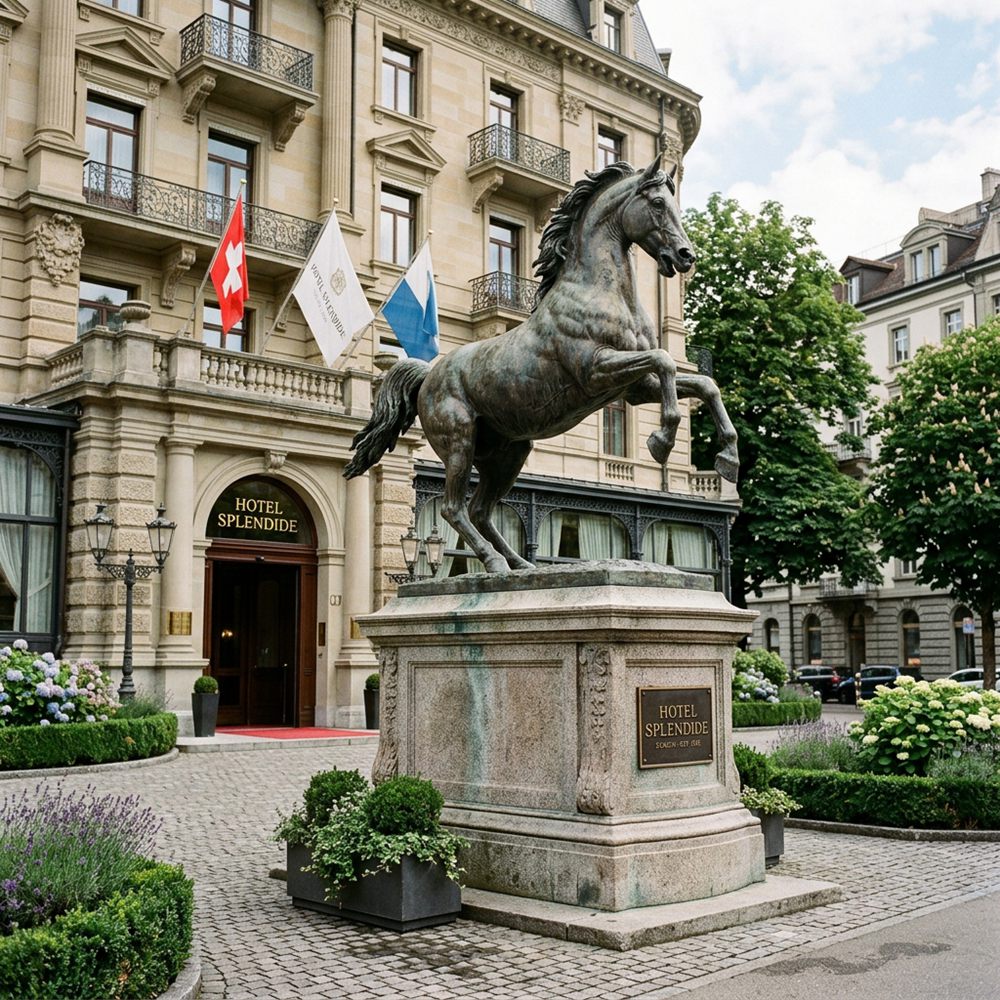
A bronze bull at a business entrance should fit the space before it tries to dominate it. For a financial or corporate setting, a charging pose makes the strongest statement; for a quieter hotel or office forecourt, a walking or standing bull may be easier to live with. Choose the sculpture’s overall length, horn span and base footprint against the actual site plan, then decide where people will see it, walk around it and photograph it. A beautiful bull placed in the middle of an accessible route is not a successful entrance sculpture.
At YouFine, we make bronze animal sculptures for commercial landscapes and private projects. The first questions we ask are not simply “How big?” and “How much?” We ask what visitors should feel when they arrive, which direction they approach from, and whether the bull is meant to be a landmark, a closer-view artwork or a photo opportunity.
Which bull pose works best at a business entrance?
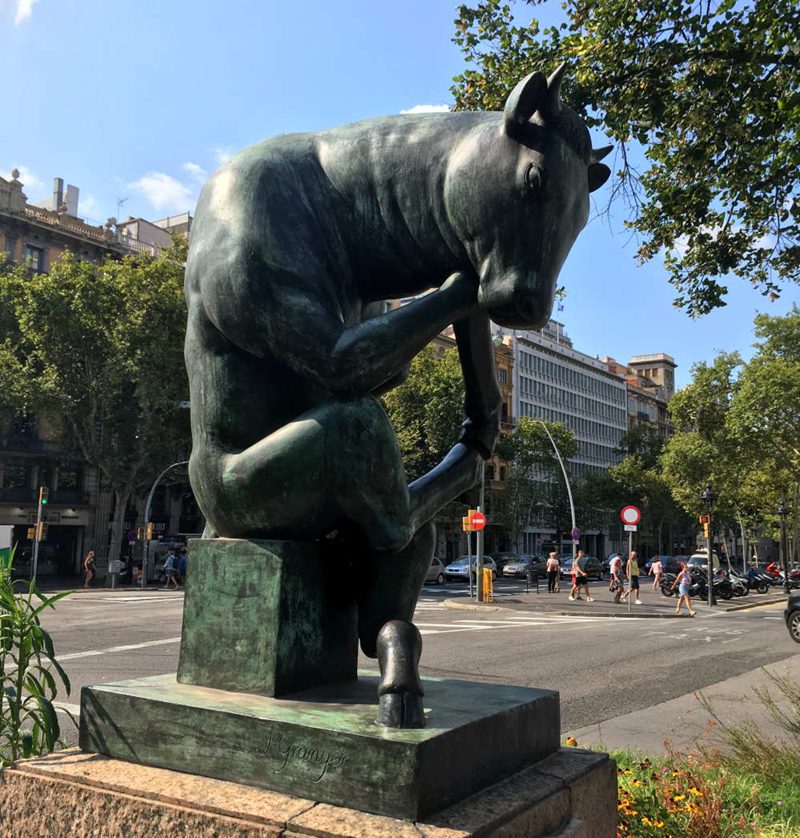
Pose inspiration: this seated, contemplative bull shows how a very different silhouette can create a thoughtful character. It is shown as a visual reference, not as one of the customer installations below or as a claim that YouFine made the depicted public artwork.
If a charging pose suits your brand, compare our Bronze Charging Bull Statue Replica, Bronze Giant Bull Statue and Bronze Outdoor Bull Statue. For a more site-specific character, see the Life Size Bronze Longhorn Sculpture, Copper Spanish Bull Statue and Large Bronze Bull Bust Sculpture. These are design references, not a claim that every style suits every entrance.
Why is the Wall Street bull the most popular style?
The most familiar reference for a business-entrance bull is New York’s Charging Bull, often called the Wall Street bull. The original is an artwork by Arturo Di Modica, not a YouFine sculpture. According to NYC Parks’ history of Bowling Green, it was first installed outside the New York Stock Exchange on December 14, 1989, before being placed at Bowling Green. NYC Parks connects its image with strength and determination and its financial-district setting with a bull market.

The original Charging Bull in New York is a reference for the Wall Street-style pose; it is not a YouFine-made customer project.
For our factory’s bull projects, the Wall Street bull is the most popular design direction. Buyers recognize the low, advancing body and the sense of forward energy immediately; they can also adapt the size and finish to a site rather than commissioning a monument on the original’s scale. Our Wall Street-style charging bull product page lists multiple length options—from 3.6 ft to 16 ft—as well as custom sizing. Our bronze bull collection also documents several bull projects and customer installations. “Most popular” here describes our factory’s design preference, not a published industry-wide sales ranking.
For an entrance, do not simply copy the famous silhouette and stop there. Decide whether the head should meet arriving visitors at a three-quarter angle, whether the body is visible from the street, and whether a dark brown, near-black or warmer bronze finish makes the form legible against the building. A sculpture inspired by Charging Bull should be presented as Wall Street-style, not as the original work or an officially affiliated edition.
How large should a bronze bull statue be?
Start with the three dimensions that actually affect the site: nose-to-tail length, widest point across the horns and finished height including the base. A product listing may state a length rather than a height; do not treat the two as interchangeable. Ask for a dimensioned drawing before approving the order.
As a practical design starting point—not a universal sizing rule:
- Compact entrance garden: compare a shorter sculpture or a bull bust. Check the viewing distance, planter depth and door swing before choosing a full-bodied bull.
- Open forecourt: a life-size or near-life-size bull may read clearly from both the drop-off area and the entrance. Test the model’s actual footprint on a scaled plan, rather than assuming “life size” is a fixed measurement.
- Large plaza or landmark project: a monumental design can hold its own against a broad façade, but it needs more room for its base, deliveries, maintenance and pedestrian circulation. Our giant bull design is one option to discuss once those constraints are known.
Our workshop can review reference photos, scale drawings or a clay model before casting. This is the stage to check the horns, expression, stance and base proportions from the visitor’s viewpoint; changing them after casting is much harder. The right size is the one that remains readable without crowding the entrance.
Where should you place the bull?
1. Map the approach. Stand where visitors first see the property, where vehicles arrive and where people pause for photographs. A three-quarter view often communicates both face and body; a strict side view emphasizes length; a head-on view needs enough setback to feel welcoming rather than confrontational.
2. Keep circulation clear. Position the sculpture beside or within a planned landscape zone, not across the route to doors, ramps or emergency access. Check the relevant local accessibility and site requirements with your architect or facilities team. Horn tips, plinth edges and nearby planters should not create unexpected obstructions.
3. Engineer the support for the actual piece. Give the site engineer the sculpture’s confirmed weight, footprint, anchoring details and exposure conditions. A qualified local professional should specify the foundation and fixings; a photograph or generic “bronze bull” specification is not enough. If the setting includes a fountain or reflecting pool, coordinate waterproofing, drainage and future service access before final placement.
4. Review the finish in context. A dark patina can stand out against pale stone; a warmer finish can work against darker architecture. Request a finish sample and consider sunlight, surrounding materials and how the bronze surface will change outdoors. Leave access for safe cleaning and inspection.
Customer photos: how our bronze bulls look after delivery
The following photographs were shared after customers received bronze bulls from our workshop. They show different designs and settings, not four examples of completed business entrances. That distinction is useful: it shows how a pose reads in place and from different viewing angles, without pretending one customer’s site matches yours.
A charging bull in a modern courtyard
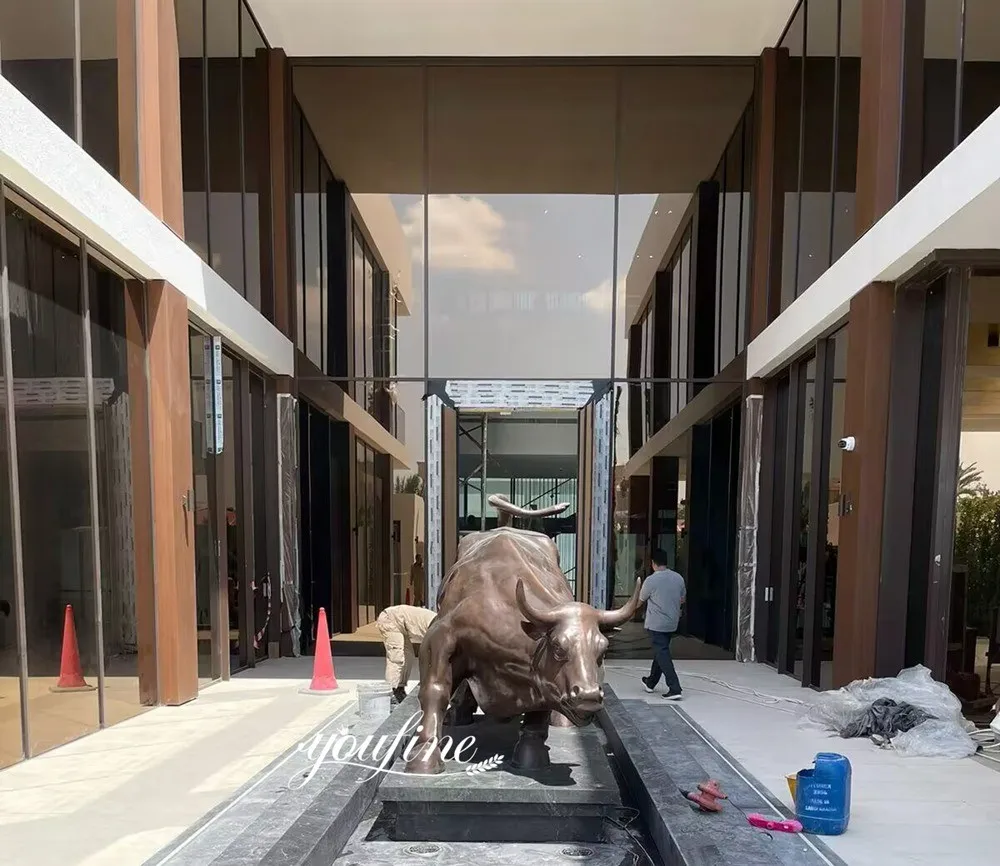
Client installation photo: a charging bull becomes the visual center of a long, symmetrical courtyard. The surrounding water feature appears to be in progress in this image; this is not presented as a finished commercial entrance.
A bull seen from behind on an open lawn
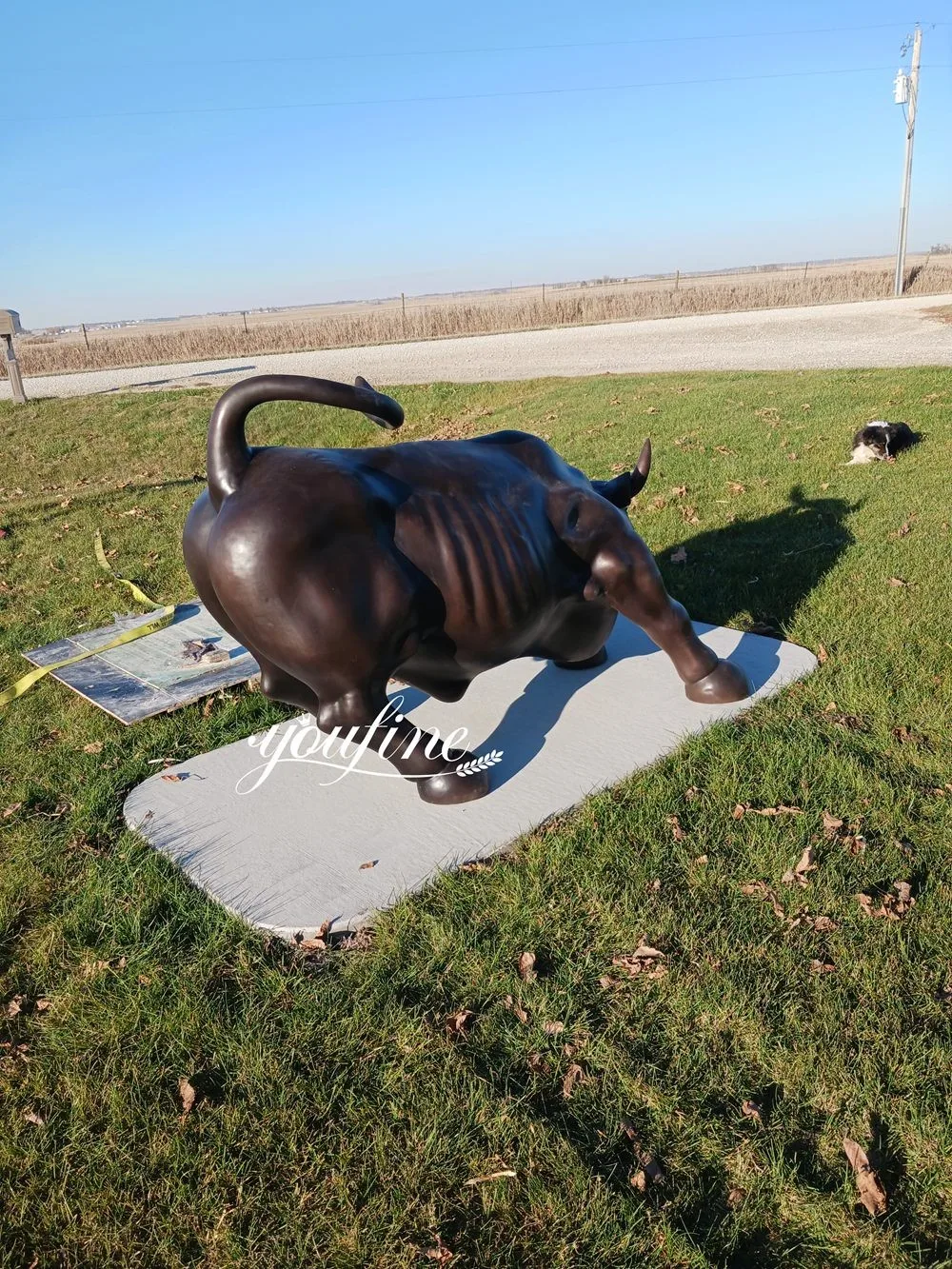
Client installation photo: the broad body and raised tail remain visible from the rear and side. This view is a reminder to check a proposed sculpture from more than its front angle.
A striding bull beside a pool
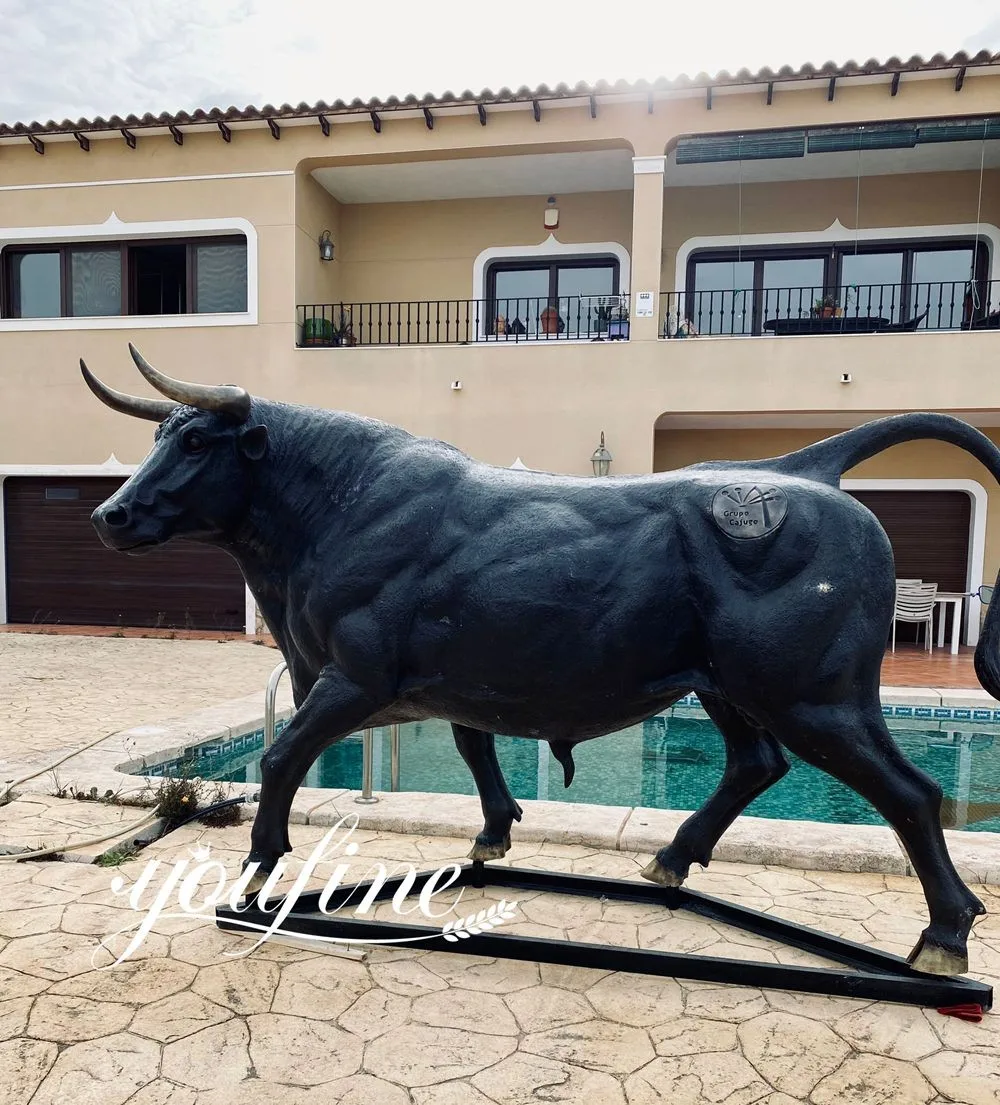
Client installation photo: the long side profile and extended tail need generous horizontal space. The emblem visible on this customer’s bull shows why custom details should be reviewed before casting.
A charging bull framed by planting
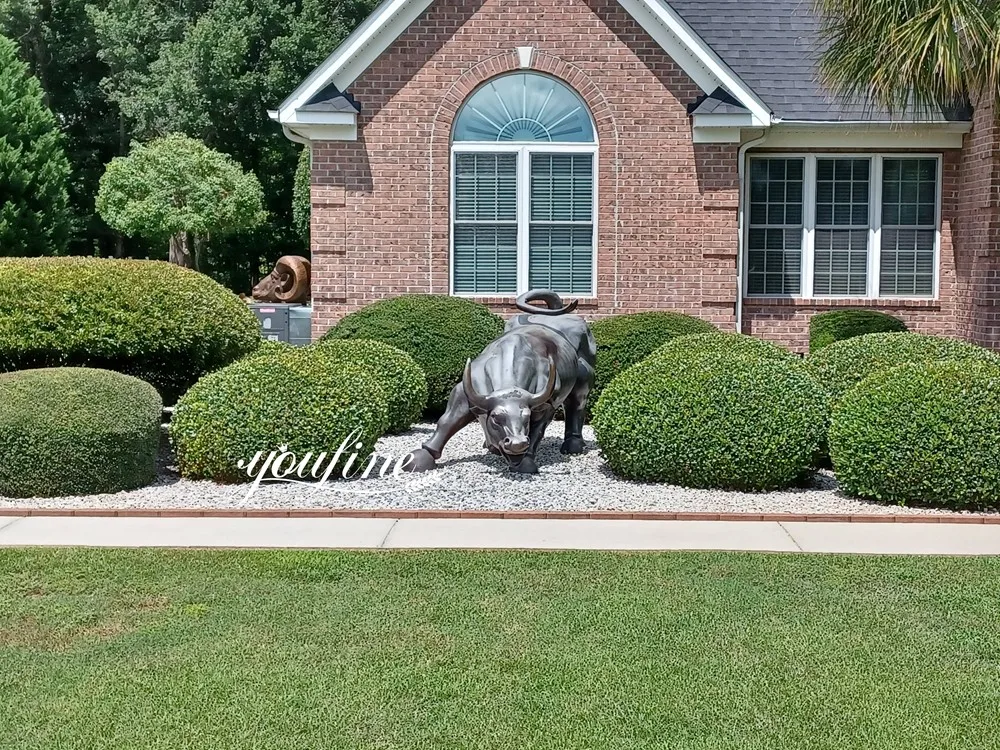
Client installation photo: low planting frames the bull’s head and forward stance while leaving a clear view from across the lawn. This is a residential landscape, not a documented office entrance.
These are photo-based project observations, not verbatim customer reviews. No customer quotation, project dimension or satisfaction rating has been inferred from the images.
Questions to settle before you order
Is a Wall Street-style bull suitable for every business? No. Its charging posture is particularly recognizable in a finance-related or bold corporate setting, but a standing, walking or longhorn design may better reflect a hospitality, agricultural or heritage brand.
Can we order a different size from the one shown online? Yes. Our charging bull listing offers listed length options and custom sizing. Confirm the complete dimensioned proposal, not just a single catalog number.
Should the bull face the front doors? Not automatically. Aim for the best view from the primary approach and keep the entry route comfortable and unobstructed. Test front, side and three-quarter views on the actual site plan.
Can the finish and details match our business? Discuss patina, base treatment and any site-specific details during design review. If you want an emblem or other bespoke feature, provide its approved artwork early and review how it appears on the clay model or drawings.
What should we provide for an installation proposal? Send site photographs, a dimensioned plan, preferred pose, desired visual size, material/finish preferences and the delivery location. Your local team should confirm foundation, anchoring and regulatory requirements for the particular site.
A successful entrance bull is not simply the biggest sculpture in the catalog. It is the right pose for the brand, the right scale for the approach and the right placement for the people who use the space. Browse our bronze bull statue collection, then start your project with YouFine using a site photo and a few preferred reference designs.