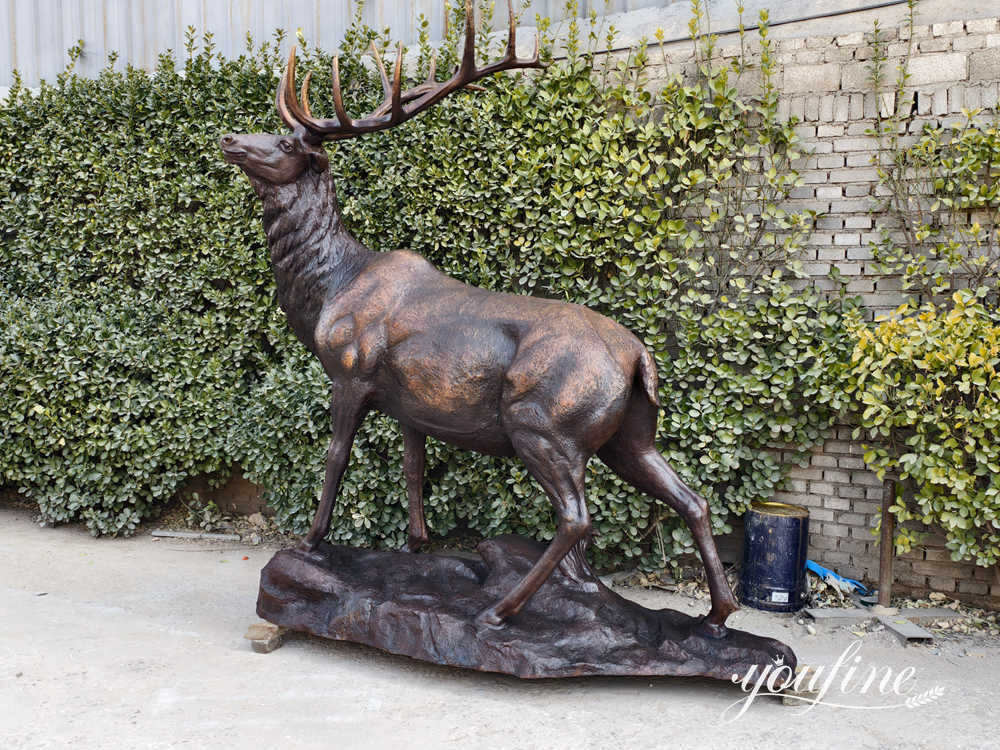
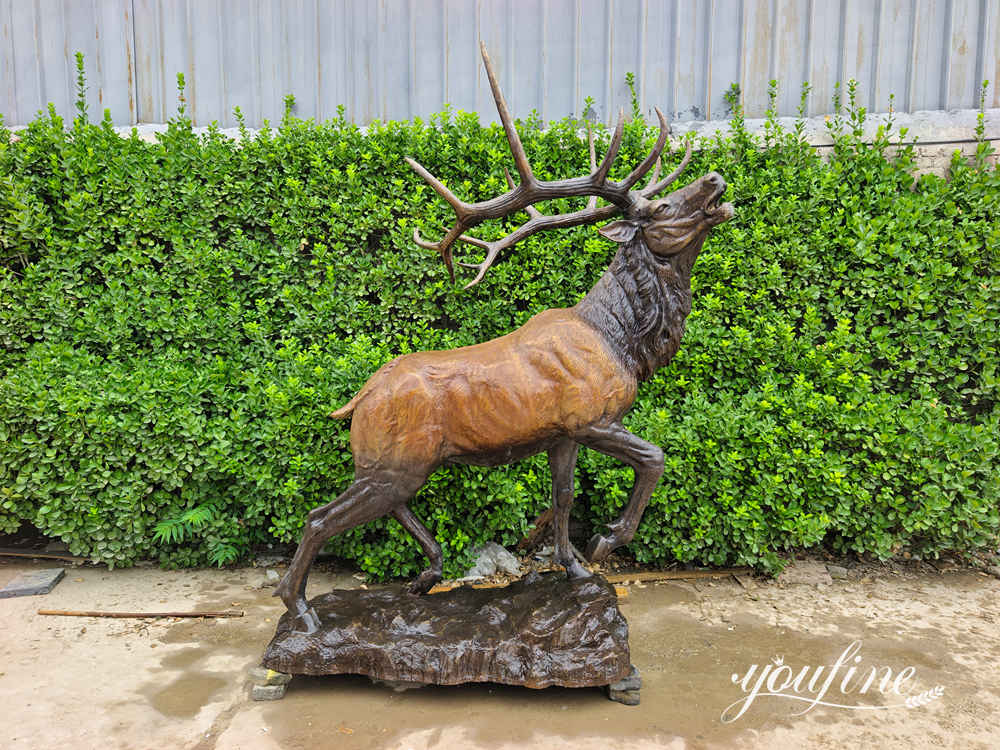
Look at the neck and shoulders of two finished bronze stags from YouFine. One has a dark brown finish with warmer highlights across the shoulders and hindquarters. The other has a warm brown body framed by a darker neck and legs. Both can be described as “brown bronze,” but they give you two different ways to read the animal’s shape.
That distinction matters when you choose a patina for a garden, an entrance, or a public landscape. The overall color determines how the sculpture reads against its surroundings. The placement of darker tones, highlights, and markings determines which details you notice as you get closer.
Brown, Black, and Green Patinas at a Glance
| Finish | What to look for | What to check at your site |
|---|---|---|
| Warm brown or golden bronze | Amber, copper, or golden tones across raised surfaces | How bright the shoulders, back, and horns appear in direct sun |
| Dark brown | A deep base with warmer or lighter accents | Whether eyes, muzzle, and fur remain visible in shade |
| Black or near-black | A strong silhouette with optional bronze highlights | Contrast against dark stone or dense planting |
| Antique green | A muted green cast or more pronounced green areas | Visibility against planting, stone, and paving |
| Custom multicolor finish | Tones placed to follow anatomy or markings | Where colors blend and where edges remain distinct |
Color names give you a starting point. When comparing references labeled “dark brown,” look at the whole animal, the darkest recesses, and the brightest raised areas. Those views tell you how the finish works across a complete sculpture.
Brown and Golden Bronze: What the Finished Sculptures Show
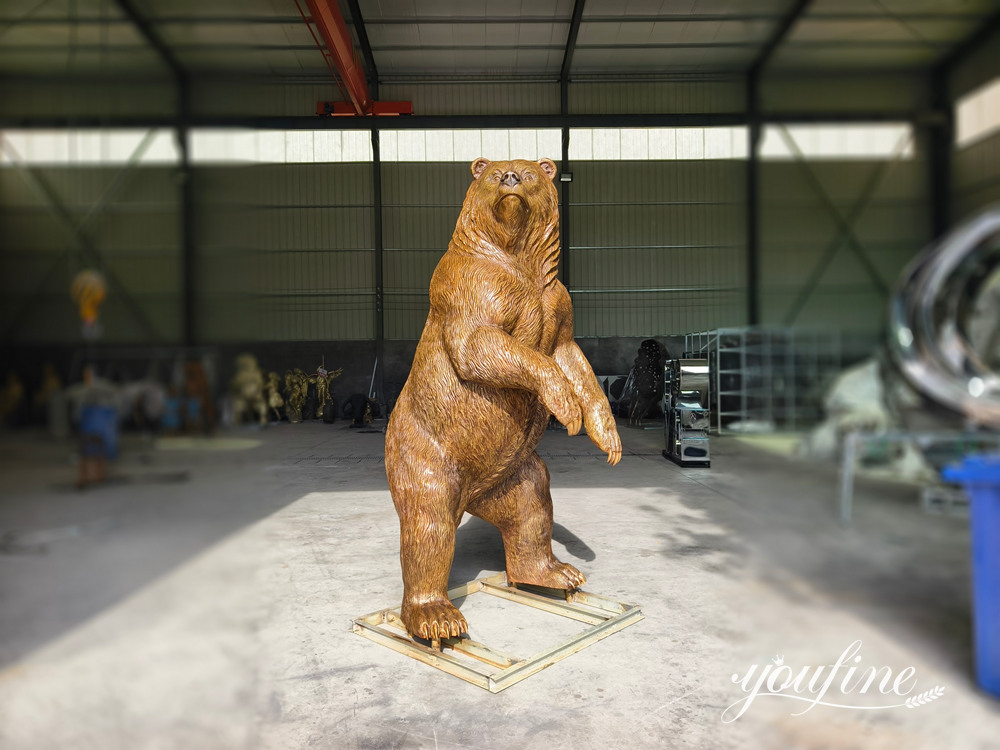
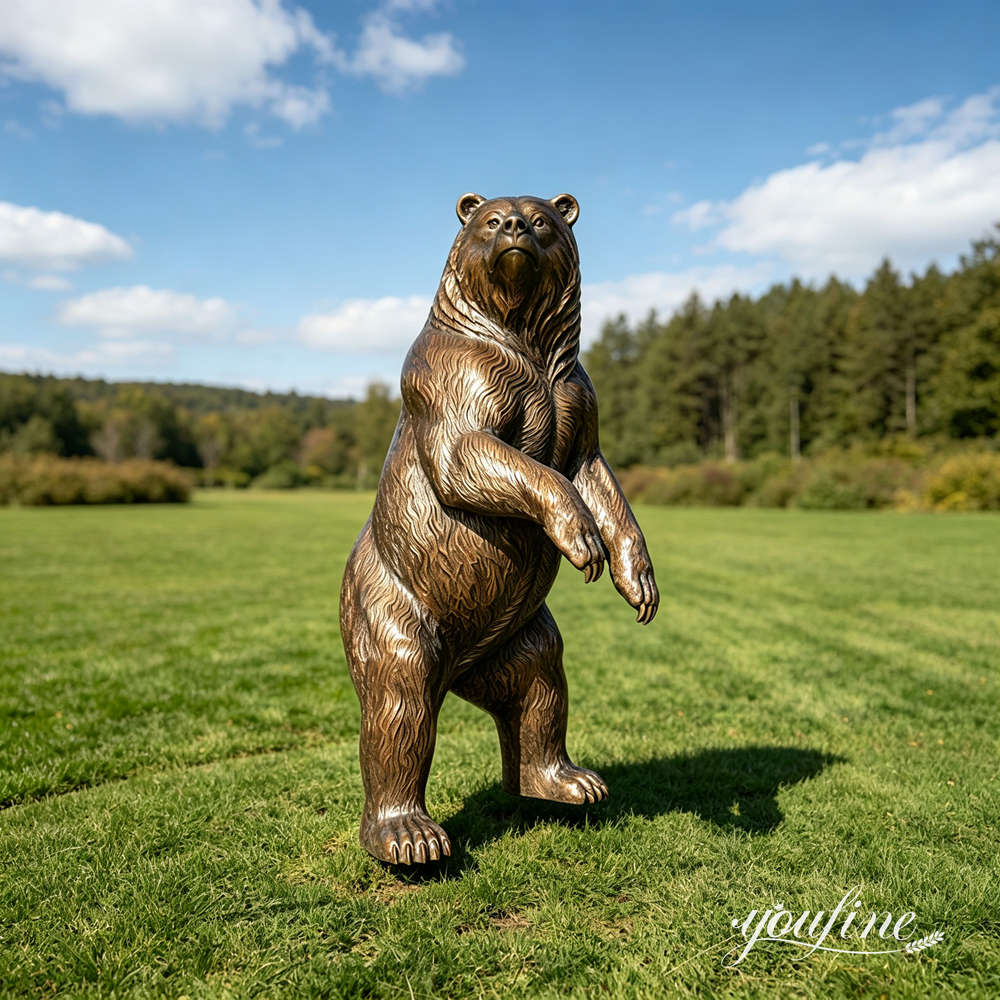
Two standing bears with different warm finishes
The bear photographed in our workshop has an overall golden tone. On the bear shown on a lawn, darker recesses make the lighter fur ridges across the shoulders and forelegs stand out. Look at the foreleg on each sculpture to see how the contrast follows the direction of the fur. Workshop and outdoor lighting affect how bright each finish appears. Request photographs in consistent lighting when approving a specific shade.
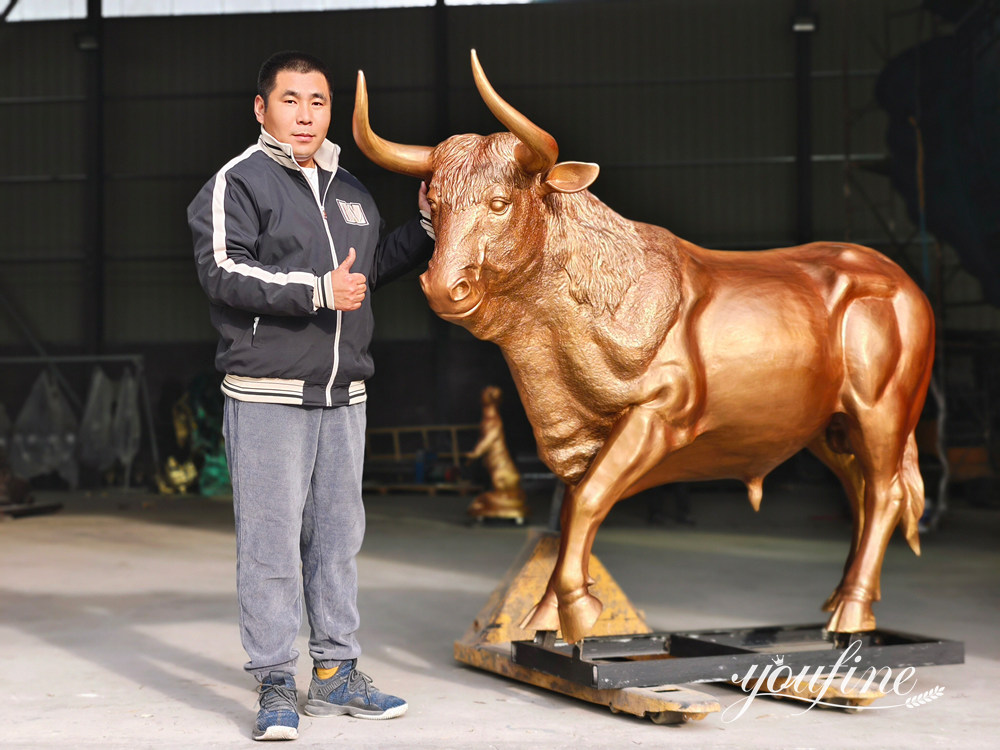
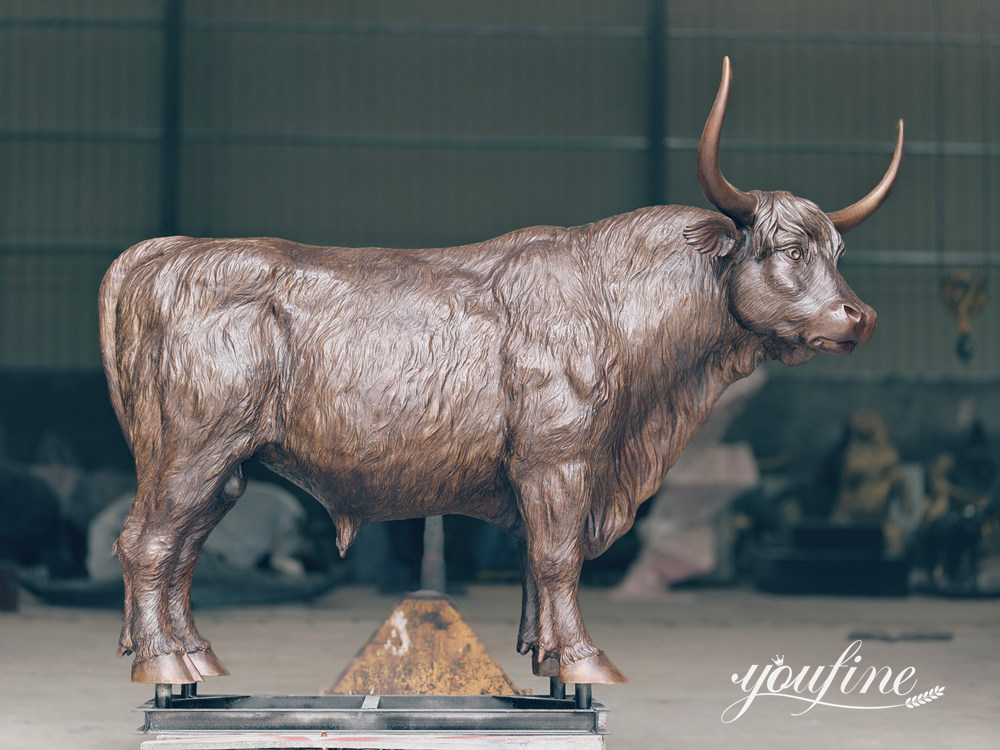
Golden bull and Highland cattle
On the bull, broad highlights travel across the shoulder and flank, drawing attention to the animal’s mass. On the Highland cattle sculpture, smaller shifts in tone follow the long strands of hair. For a sculpture seen from a distance, review the color across broad surfaces. For close viewing, check the coat, muzzle, and horns.
Dark Brown, Black, and Green in an Outdoor Setting
Dark brown and near-black
Our deep brown bear on a branch shows how a dark finish can retain fine detail. Recessed fur appears almost black in places, while raised strands catch the light. If you want a similar effect, ask for a dark base and identify the areas where you want brighter accents.
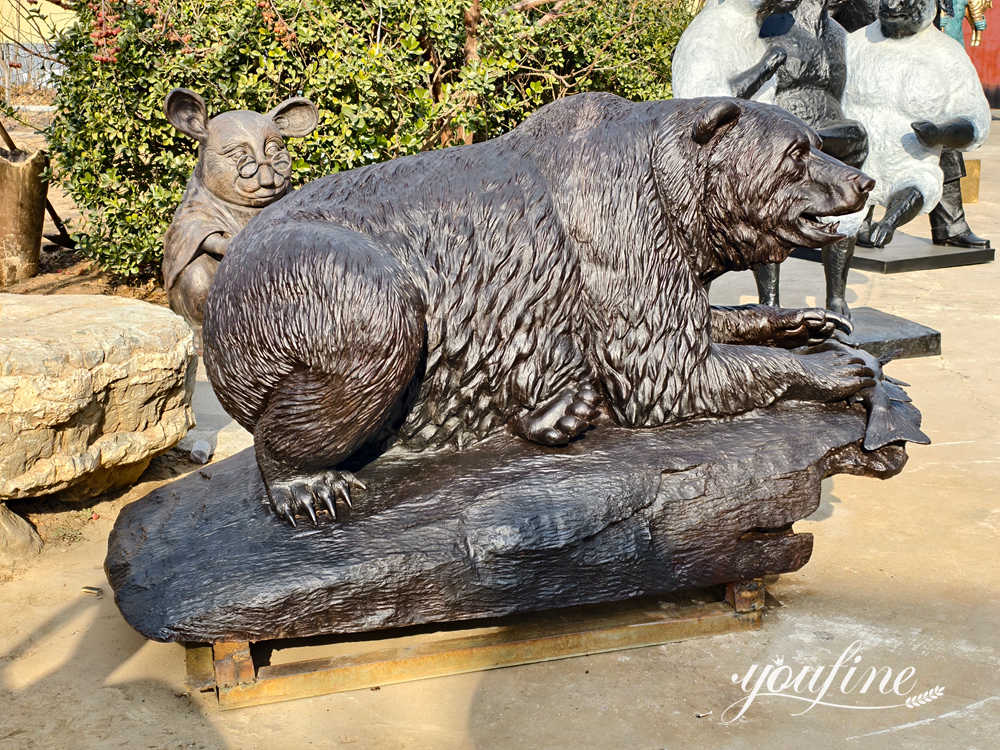
A black or near-black finish can make an animal’s outline clear against pale stone, gravel, or an open lawn. For a shaded location, check the sculpture from the main viewing point. A small highlight on the brow or muzzle can help the expression remain visible.
Antique green
An antique green patina can suit a sculpture intended to feel established in a courtyard or garden. Our green patina bronze elephant shows this finish on a completed animal sculpture. If your site is surrounded by evergreen planting, compare the reference with a photo of the intended spot. Green may read clearly against pale paving and appear quieter against foliage.
How YouFine Uses Multiple Colors to Bring Out Animal Features
A custom finish can be as subtle as a warmer shoulder or as specific as a fawn’s markings. At YouFine, our patina artists work on individual areas so the color follows the sculpted form.
Stags with two approaches to brown
On the dark brown stag pictured above, warmer accents sit across the shoulders, torso, and hindquarters. On the warm brown stag, the shift between the body and the darker neck and legs creates a distinct coat pattern. Specify where you want the darker neck to transition into the body color.
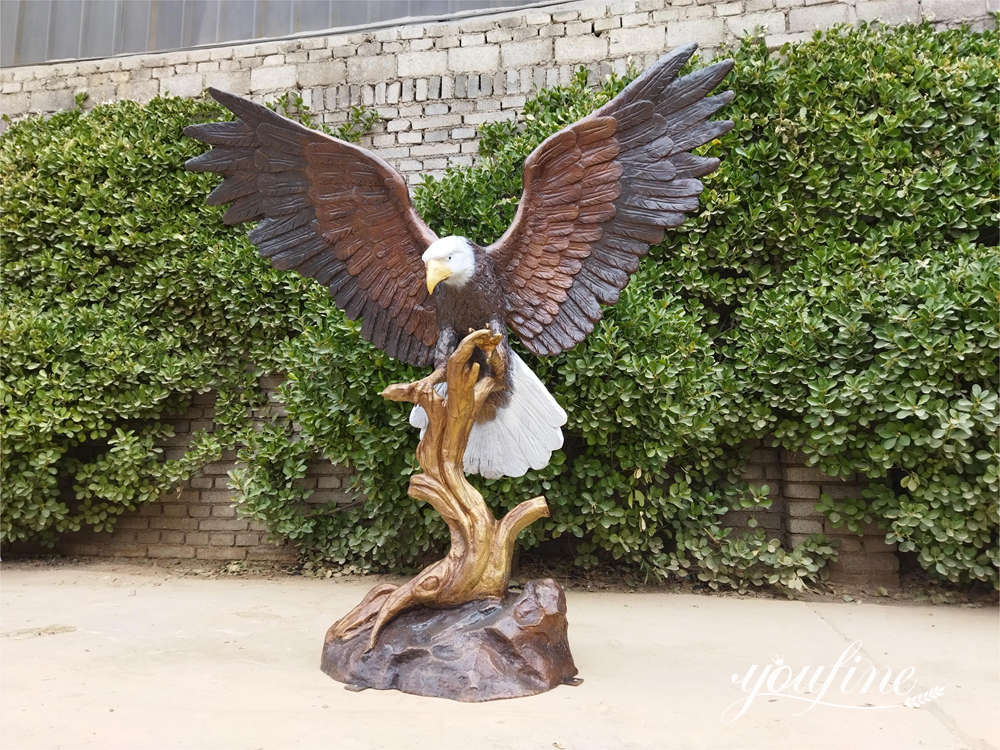
A bald eagle with distinct feather groups
The white head and tail, yellow beak, and brown wings make the species recognizable at a glance. Darker outer feathers help define the spread of the wings. When approving a custom finish like this, check a full front view for balance and close-ups for the transitions between feather groups.
A doe with two spotted fawns
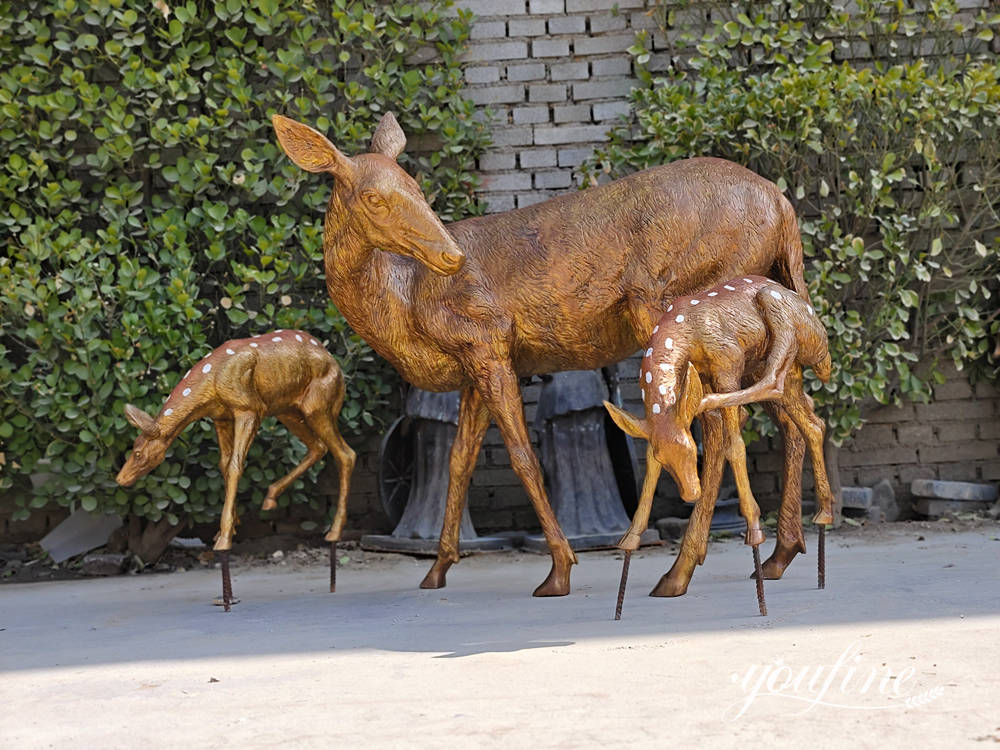
The fawns’ light spots stand out against their warm coats, while the doe’s more subdued coloring helps the group read as a family. For a specific animal or species, reference photos from several angles help our artists see where markings begin, fade, or continue around the body.
How Hot Patination Works at the YouFine Foundry
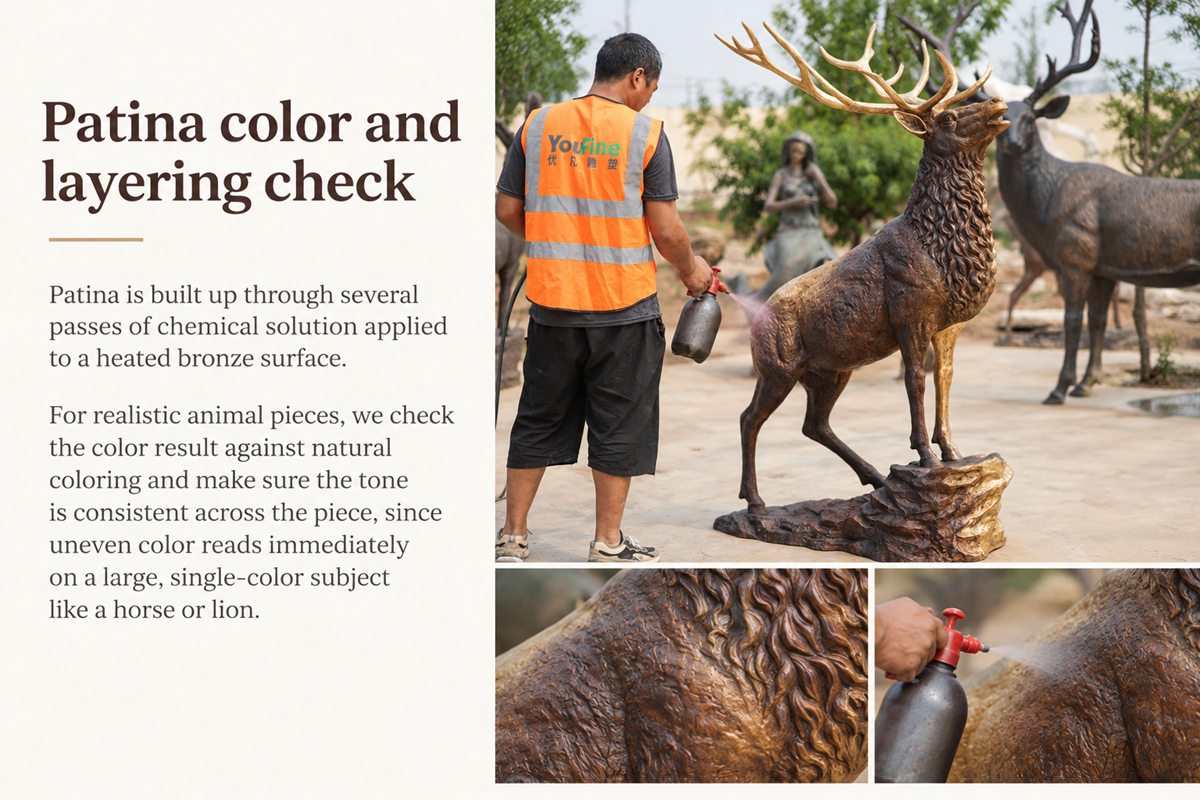
Our patina artists use a torch to warm the bronze and apply chemical solutions that react with the metal surface. By adjusting the solution blends and working in stages, they develop the overall tone, deepen selected areas, and blend transitions. On a textured piece, this can mean keeping recesses darker so the raised fur remains visible. For more complex coloration, our artists work through individual regions to follow the anatomy.
A finished appearance can combine several surface treatments. For a commission with white markings, vivid colors, or bright metallic accents, ask our team to confirm the treatment specified for each area and its outdoor care requirements.
A patina can be created at the foundry or develop through exposure over time. An applied finish establishes the starting appearance before delivery. The surface can subsequently change with exposure, its protective coating, and maintenance. Getty’s guide to patina on bronze sculpture explains both natural and applied patinas.
Will the Color Change Outdoors?
Yes. A sheltered sculpture and one exposed to rain, irrigation, or salt can weather differently. Some finishes gradually mellow, while exposure can also create uneven changes. Green can be an intended finish from the start or develop through outdoor exposure. Protective coatings and regular maintenance help preserve the intended surface appearance. The Canadian Conservation Institute’s outdoor-object guidance discusses the effects of exposure and protective wax on patinated bronze.
Before ordering, tell us if the sculpture will sit near a pool or fountain, in a coastal location, or where irrigation regularly wets it. Ask which protective finish is specified and what care it requires. Patina and the protective coating have separate functions in the finished surface. Our bronze animal sculpture quality-check guide covers reviewing the color and protective finish before shipment.
How to Choose and Approve a Custom Patina
- Show us the installation site. Send a photo from the main viewing point so we can understand the background, lighting, and viewing distance.
- Choose a base color and describe the areas that matter. For example, “Warm brown across the stag’s body, a darker neck and lower legs, and soft highlights across the shoulders. Keep the neck transition gradual.”
- Review the whole sculpture and close-ups. Request consistent daylight photographs, including the face, fur, feather edges, and specified markings.
For landscape projects, our outdoor animal sculpture specification guide explains how to coordinate finish references with site information and the approval process.
Send YouFine a finish reference, your preferred animal design, approximate dimensions, and site photographs. Point out the details you want to carry over, such as the shoulder highlights on a bear, the darker neck of a stag, or the feather contrast on an eagle. Those references give our patina artists a clear starting point for your custom sculpture.