After more than ten years of casting bronze animal sculptures, we receive similar questions almost every month: a customer has paid a high price for what was sold as a “bronze” animal statue, only to realize later that something does not feel right. Sometimes the piece is surprisingly light; sometimes the surface paint chips away and reveals a pale base underneath.
As a professional foundry specializing in cast bronze animal sculptures, we want to share the practical identification methods we use in daily production and inspection. This guide will help you recognize the three most common bronze imitations on the market: bronze-painted resin, brass, and cold-cast bronze.
1. First, Understand What the Four Materials Really Are
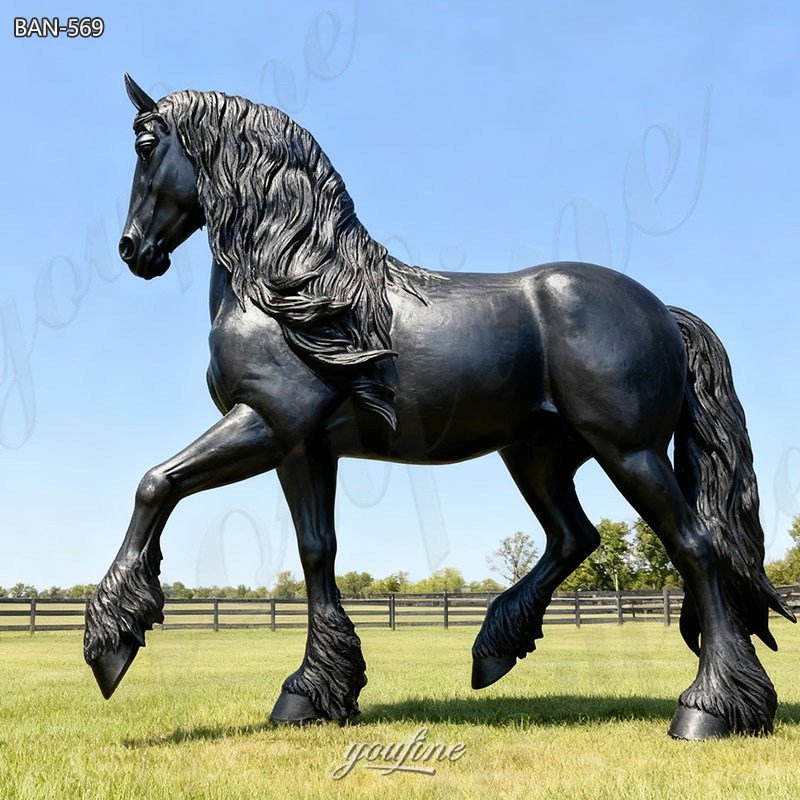
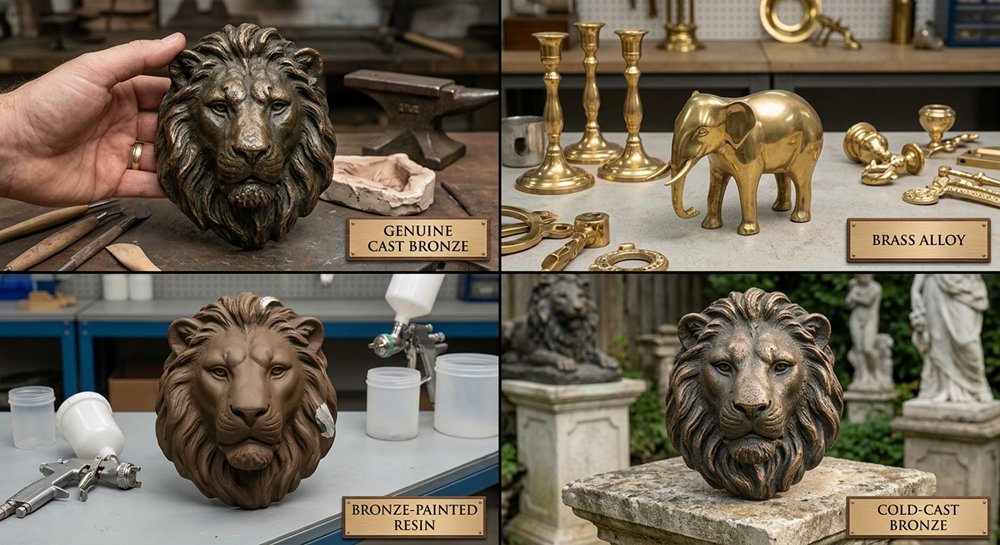
Genuine Bronze / Cast Bronze
Genuine bronze is a copper-based alloy traditionally made primarily from copper and tin. In sculpture casting, bronze commonly contains a high percentage of copper, often around 85%–95%, depending on the specific alloy formula.
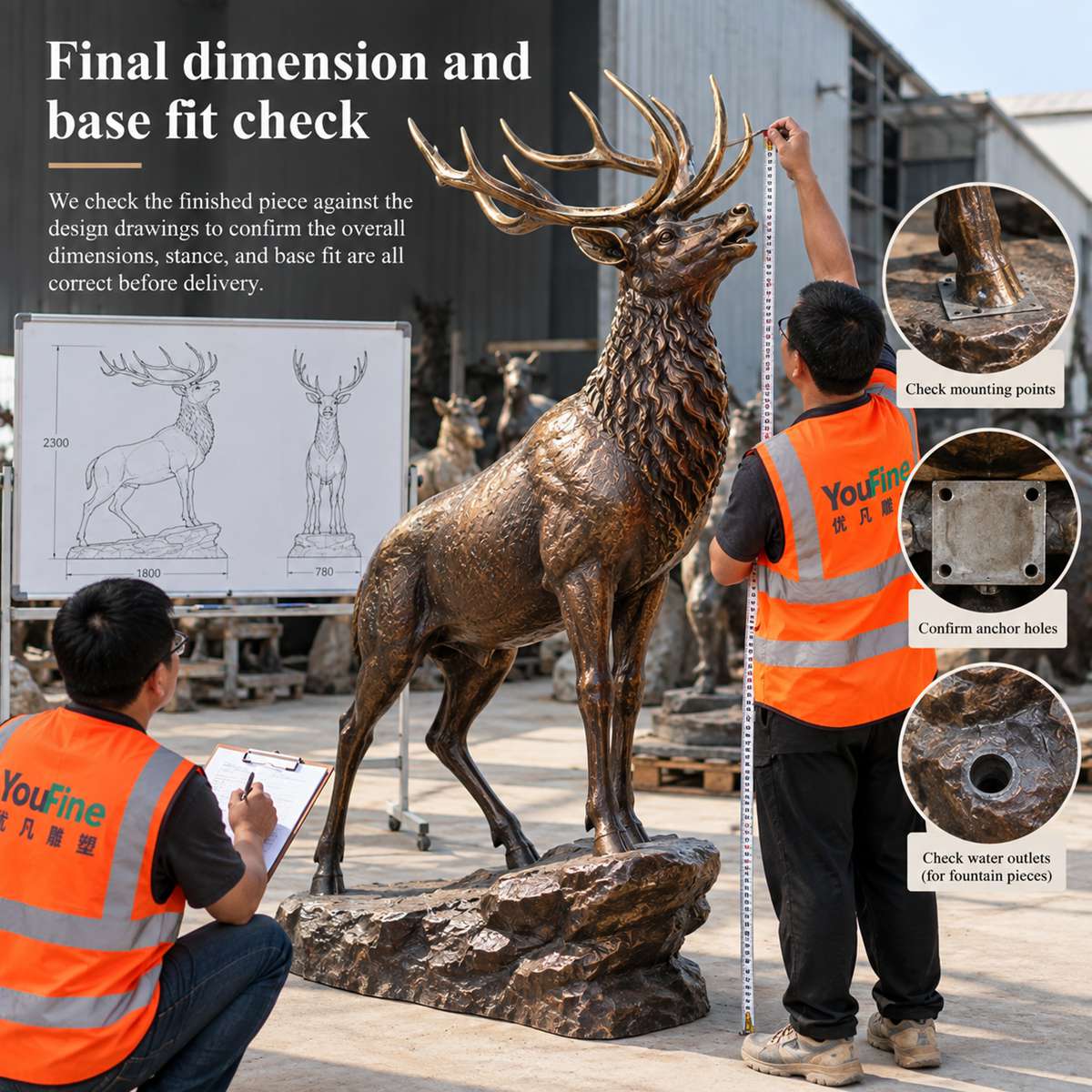
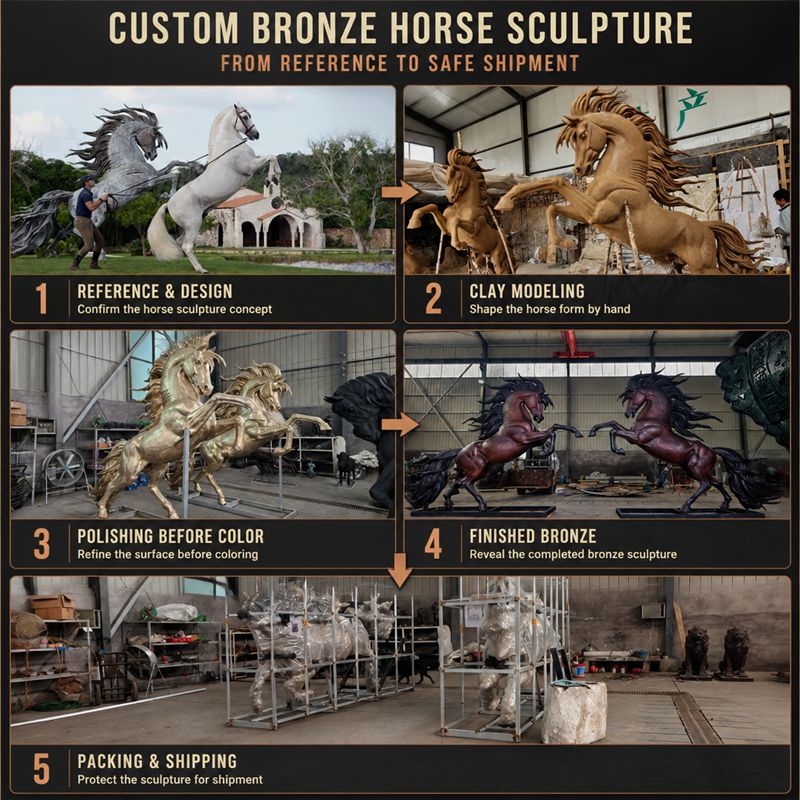
In our factory, we use the lost-wax casting process. A single animal sculpture goes through many steps, including clay modeling, wax reproduction, mold making, shell building, metal pouring, welding, chasing, polishing, and patination. Bronze has a density of roughly 8.7–8.9 g/cm³, so it feels heavy in the hand. When tapped, it produces a clear metallic ring. For collectors and outdoor sculpture buyers, genuine cast bronze is widely regarded as the most durable and valuable material.
Brass
Brass is an alloy of copper and zinc. Its color is usually a clear lemon yellow or golden yellow, which is very different from the reddish-brown, rose-gold, or deep bronze tones of true bronze. Brass is commonly used for candlesticks, hardware, decorative fittings, and practical objects, but it is less commonly used for fine art sculpture casting.
Bronze-Painted Resin
Bronze-painted resin is simply resin coated with bronze-colored paint. It is inexpensive and fast to produce, but the core material is still plastic. Its weight, sound, surface texture, and long-term durability are completely different from genuine metal.
Cold-Cast Bronze
Cold-cast bronze, also called bonded bronze or bronze resin, is made by mixing resin with bronze powder (usually 5%–30% by weight) and casting the mixture into a mold. The surface is often treated with an antique finish.
Among the three imitations, cold-cast bronze looks the closest to real bronze. Many so-called “museum reproductions” or “limited-edition collectibles” are actually made with this process. However, the sculpture’s body is still resin. When placed outdoors, cold-cast bronze may age, fade, or crack over time, while a genuine bronze sculpture can last for generations.
2. Key Differences at a Glance
| Material | Main Composition | Density & Weight | Surface Color & Patina | Sound When Tapped | Weather Resistance & Price |
| Genuine Bronze / Cast Bronze | Copper-tin alloy, often about 85%–95% copper | About 8.7–8.9 g/cm³; heavy and solid in the hand | Golden bronze to rose-gold; develops a natural patina and may form green oxidation | Clear metallic ring with a lingering resonance | Excellent outdoor durability; can last 100+ years; high price |
| Brass | Copper-zinc alloy | Similar density to bronze, although hollow pieces may feel lighter | Distinct lemon-yellow or golden color; oxidation can often be polished away | Clear sound, usually higher-pitched and shorter than bronze | Good weather resistance; medium to lower price |
| Bronze-Painted Resin | Polyester resin with bronze-colored paint | Lightweight; has a plastic-like feel compared with solid bronze | Flat, uniform painted surface; chips may expose a white or light-colored base | Dull “thud,” similar to plastic | Limited outdoor durability; may fade or deteriorate within a few years; low price |
| Cold-Cast Bronze | Resin mixed with approximately 5%–30% bronze powder | Often only about one-third to one-quarter the weight of real bronze of a similar size | Antique-style surface finish; wear may reveal gray-white resin | Dull, short sound closer to plastic than metal | Moderate to limited outdoor durability; may age or crack over time; medium to lower price |
Note: The figures above are based on common sculpture foundry practice and public technical references. They are intended as practical buying guidance rather than laboratory certification.
3. Our Eight-Step Identification Method
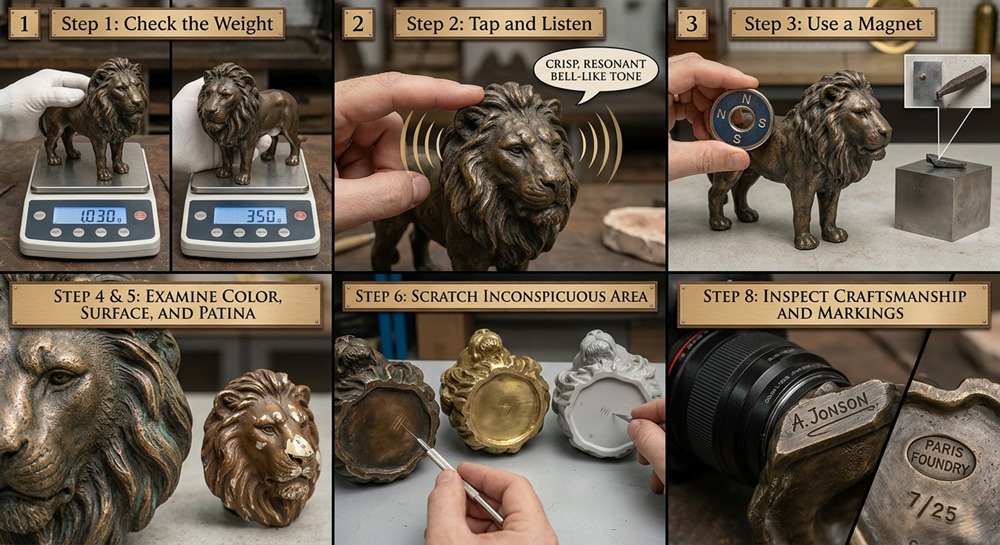
Step 1: Check the Weight — The Most Reliable First Test
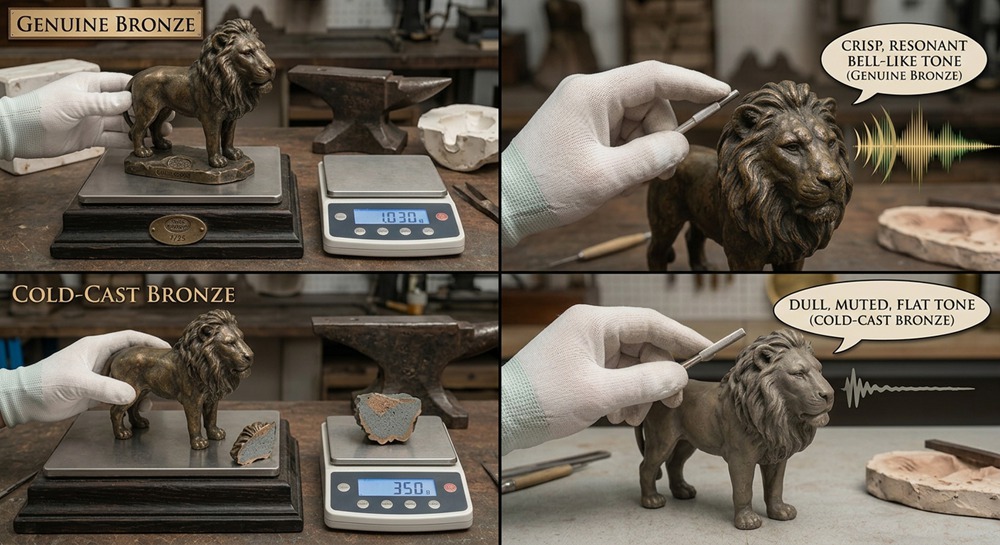
For animal sculptures of the same size, genuine cast bronze is usually three to four times heavier than cold-cast bronze. For example, a bronze sculpture around 15 cm high may weigh approximately 680–1,130 g, while a cold-cast bronze piece of similar size may weigh only around 230–400 g.
If a large “bronze horse” can be lifted effortlessly with one hand, it is very unlikely to be a solid genuine bronze sculpture.
Step 2: Tap and Listen — A Highly Practical Test
Gently tap the sculpture with your finger or a small metal object. Genuine bronze produces a crisp, bell-like metallic sound with a longer resonance. Resin and cold-cast bronze produce a dull, muted sound, closer to plastic. Brass may also sound clear, but the tone is usually higher and the resonance shorter.
This sound test is one of the most direct and widely used methods in the sculpture trade.
Step 3: Use a Magnet — But Know Its Limits
Copper alloys are non-ferrous. Genuine bronze, brass, and cold-cast bronze normally do not attract a magnet. A magnet can help you rule out iron, cast iron, or steel-filled imitations, but it cannot distinguish genuine bronze from brass, resin, or cold-cast bronze.
In short: if a magnet sticks, the object is not bronze. If it does not stick, further tests are still needed.
Step 4: Examine the Color
Genuine bronze ranges from golden bronze to rose-gold and reddish-brown tones, depending on the copper content and patina. The color often appears deep and layered.
Brass is more obviously yellow or gold. Bronze-painted resin usually has a uniform, flat paint color and lacks the natural metallic depth of cast bronze.
Step 5: Look Closely at the Surface and Patina
A natural bronze patina develops over time. Green, brown, and dark tones often blend gradually into the metal surface. It should look integrated, not simply painted on.
Imitation patina is usually sprayed or brushed onto the surface. It may look too even, too flat, or too artificial. If the surface chips and reveals a white or grey-white base, the piece is likely resin or cold-cast bronze.
Step 6: Scratch an Inconspicuous Area — The Decisive Test
If the owner agrees, lightly scratch a hidden area such as the underside of the base.
- Genuine bronze will reveal bright golden or reddish copper-colored metal underneath.
- Brass will reveal a bright yellow metal surface.
- Resin will reveal a white plastic base.
- Cold-cast bronze will reveal grey-white resin mixed with bronze powder.
This is a destructive test, so it should only be done with permission and in a non-visible area.
Step 7: Feel the Temperature — A Secondary Clue
Metal conducts heat quickly. Genuine bronze and brass usually feel cool when first touched. Resin and cold-cast bronze warm up faster in the hand.
However, this test is affected by room temperature and storage conditions, so it should only be used as supporting evidence.
Step 8: Inspect Craftsmanship, Signature, and Edition Number
Genuine cast bronze sculptures usually show sharper details, cleaner chasing, and more refined finishing. The traces of lost-wax casting and hand finishing should look natural. A quality bronze sculpture may also include an artist’s signature, a foundry mark, or an edition number such as “7/25.”
Imitations often have softer details, blurred textures, and less careful finishing. Some “limited edition” labels are simply marketing language rather than proof of quality.
4. Four Common Misunderstandings
Misunderstanding 1: “If a Magnet Does Not Stick, It Must Be Bronze”
Not true. A magnet only helps identify iron or steel. Resin, brass, and cold-cast bronze are also usually non-magnetic. Passing the magnet test does not prove that a sculpture is genuine bronze.
Misunderstanding 2: “If a Hollow Bronze Sculpture Feels Light, It Must Be Fake”
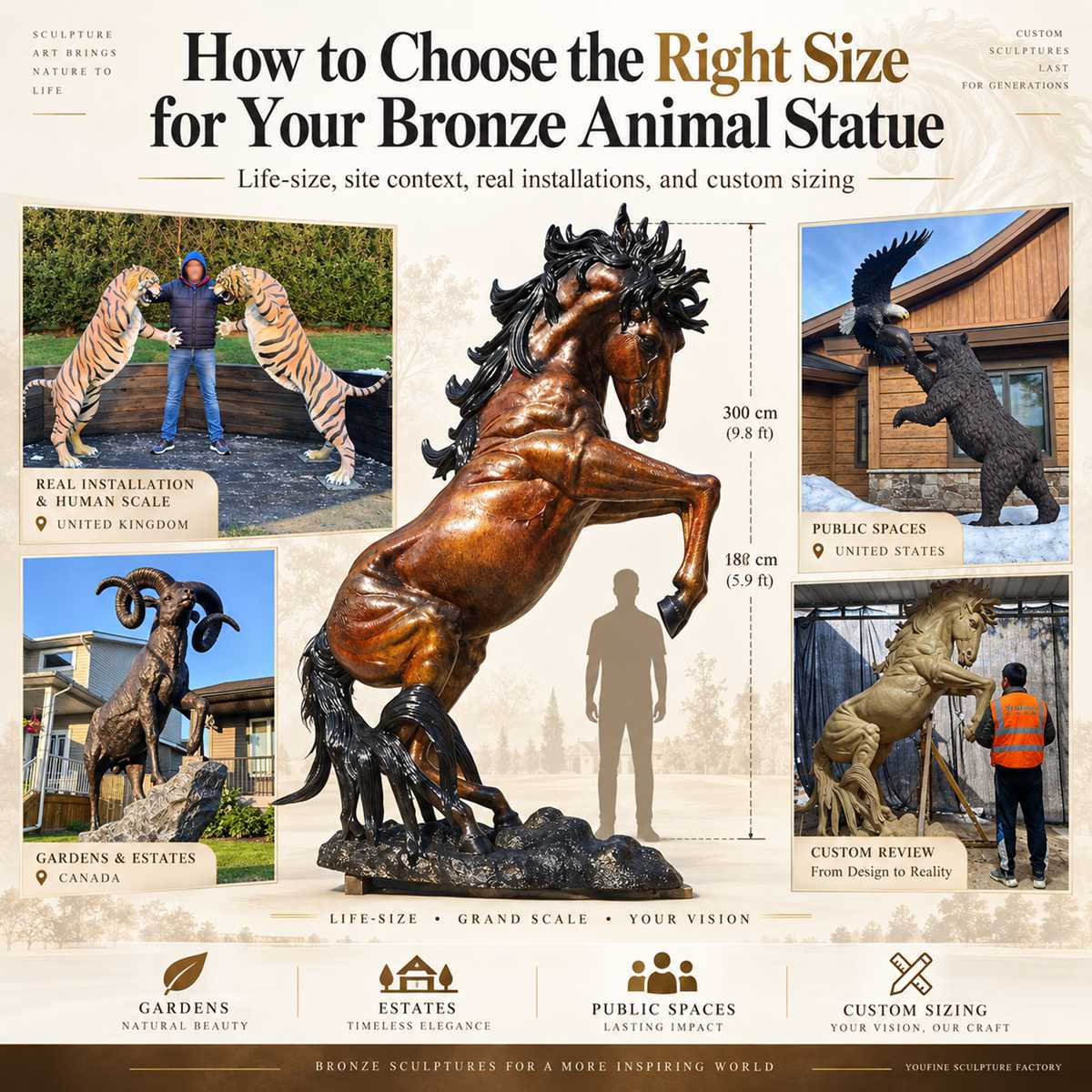
Large outdoor bronze sculptures are commonly hollow-cast to control cost, reduce weight, and improve structural safety. A hollow bronze sculpture can be genuine bronze. Weight is important, but it should not be the only basis for judgment.
Misunderstanding 3: “Green Patina Means It Is Old Bronze”
Artificial patination can imitate green oxidation very convincingly. You need to examine whether the patina looks naturally integrated with the metal surface, or whether it looks like a painted layer sitting on top.
Misunderstanding 4: “Cold-Cast Bronze Looks the Same, So It Is the Same”
Cold-cast bronze can look very close to real bronze, especially in photographs. But weight and sound are difficult to fake. Start with the weight test, then use the tapping test. These two steps alone can eliminate many imitations.
5. Why We Use Genuine Cast Bronze for Animal Sculptures
Long Life and Outdoor Durability
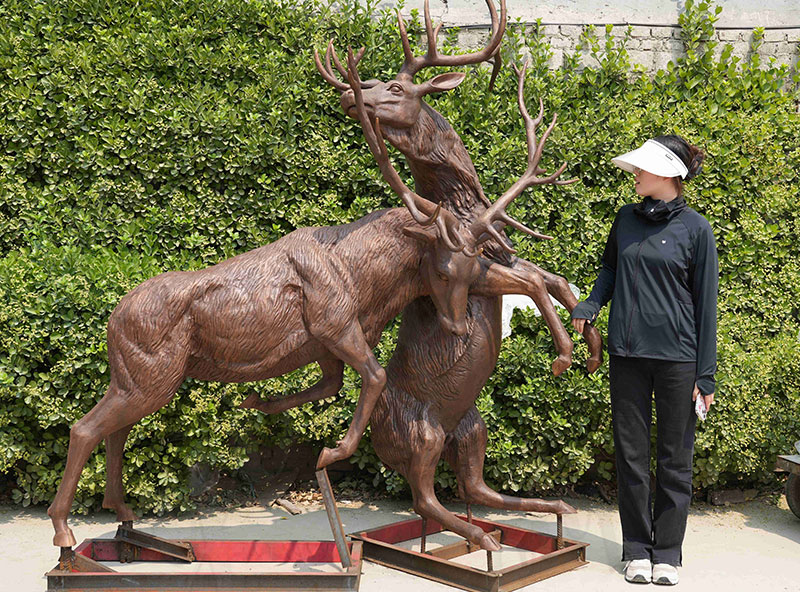
Genuine bronze alloys resist oxidation and weathering extremely well. Large outdoor bronze animal sculptures can last for more than a century and develop a richer character over time. Resin-based materials, by contrast, may fade, age, or crack after years of outdoor exposure.
Superior Texture and Detail
Lost-wax casting can reproduce fine details such as fur, muscles, skin folds, feathers, and facial expressions. The density, touch, and visual depth of real metal cannot be fully replaced by resin.
Collectible and Long-Term Value
Genuine bronze has higher material value and requires a more complex production process. Signed and numbered editions can add further collectible value.
Repairability
A genuine bronze sculpture can often be repaired, repatinated, rewelded, or even recast if necessary. Once a resin sculpture is cracked or badly damaged, restoration is much more limited.

6. Final Advice for Buyers
Identifying the material of a sculpture is not mysterious. Use a combination of four practical checks: weight, sound, surface patina, and craftsmanship. When these tests are used together, most imitations are easy to recognize.
If you are choosing an animal sculpture for a garden, hotel, villa, public space, or private collection, we recommend visiting the foundry whenever possible. Seeing the lost-wax casting process in person is the most convincing proof. We stand behind our bronze casting process because we believe every sculpture you buy should be a genuine bronze artwork that can be enjoyed for generations.
Supporting References
- Getty Conservation Institute, Guidelines for the Technical Examination of Bronze Sculpture. This reference explains that bronze is generally understood as a copper-based alloy, often with tin as the main alloying element, and provides technical context for examining bronze sculpture.
https://www.getty.edu/publications/bronze-guidelines/vol-1/2/ - Encyclopaedia Britannica, Bronze — alloy. Britannica describes bronze as a copper-tin alloy and gives commonly cited composition information for modern bronze.
https://www.britannica.com/technology/bronze-alloy - Musée Rodin, Lost-wax bronze casting. This source describes the lost-wax bronze casting process used for sculpture production.
https://www.musee-rodin.fr/en/resources/techniques/lost-wax-bronze-casting - Sequoia Brass & Copper, Metal Comparisons: Brass vs Bronze. This reference explains the difference between brass and bronze, including brass as a copper-zinc alloy and its typical yellow-gold appearance.
https://www.sequoia-brass-copper.com/blog/brass-vs-bronze/ - Tanya Russell Sculpture, The Difference Between Foundry Bronze Metal and Cold Cast Bronze Resin. This article discusses the difference between foundry-cast bronze and cold-cast bronze resin in sculpture applications.
https://tanyarussell.com/animal-sculptures-tanya-russell/animal-sculptor/the-difference-between-foundry-bronze-metal-and-cold-cast-bronze-resin/