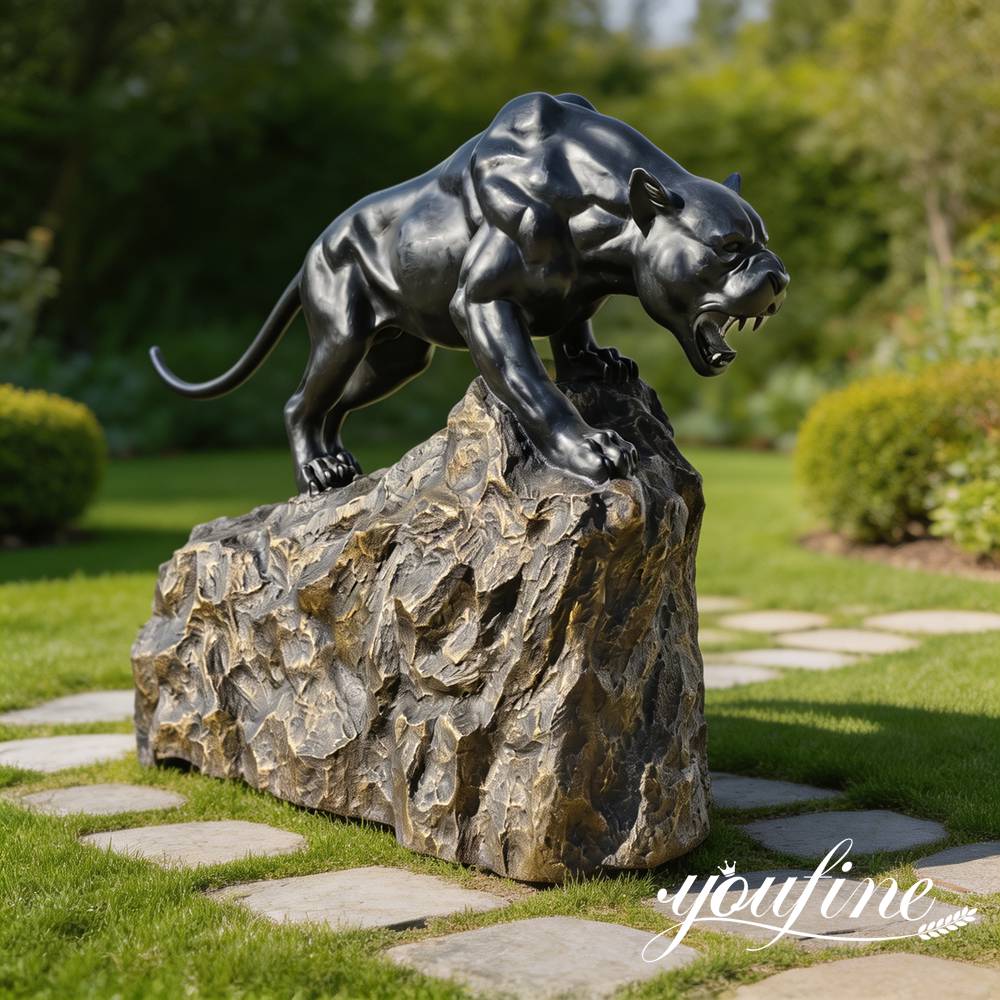
A bronze sculpture can look impressive in a product photo but still have problems that are difficult or expensive to correct after installation.
The proportions may feel slightly wrong. A weld line may become visible under the patina. The sculpture may not fit the prepared base. Outdoor exposure may also reveal surface problems that were not obvious before shipping.
This is especially important when buying realistic animal sculptures. Small differences in a horse’s leg position, an eagle’s feathers, or an elk’s antlers can change the whole appearance.
If you are ordering a bronze sculpture, especially a custom or large outdoor piece, here are 12 important points you should check during production and before shipment.
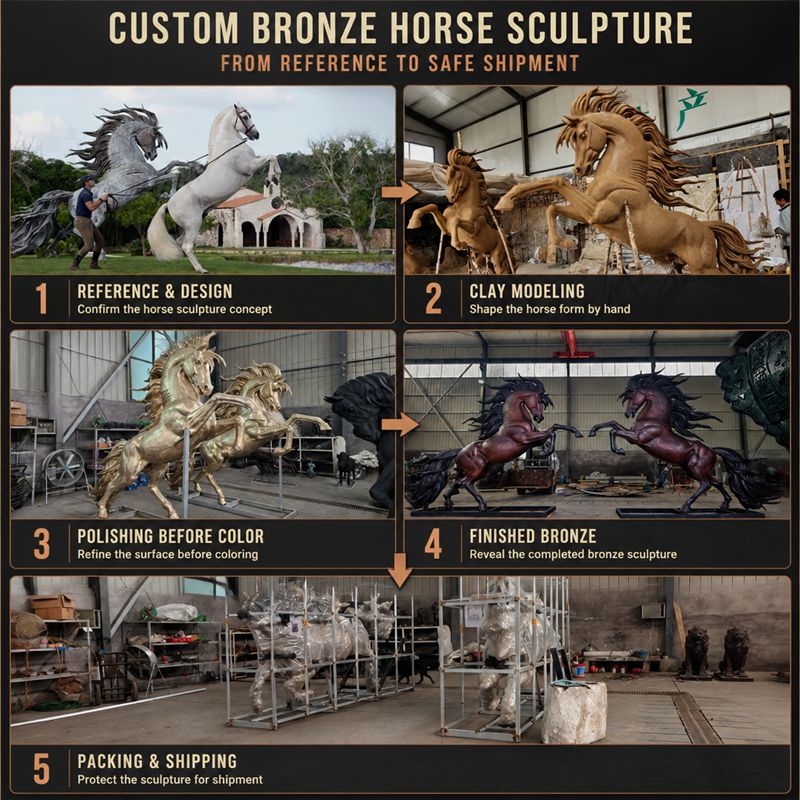
1. Check the Clay Model Before Mold-Making
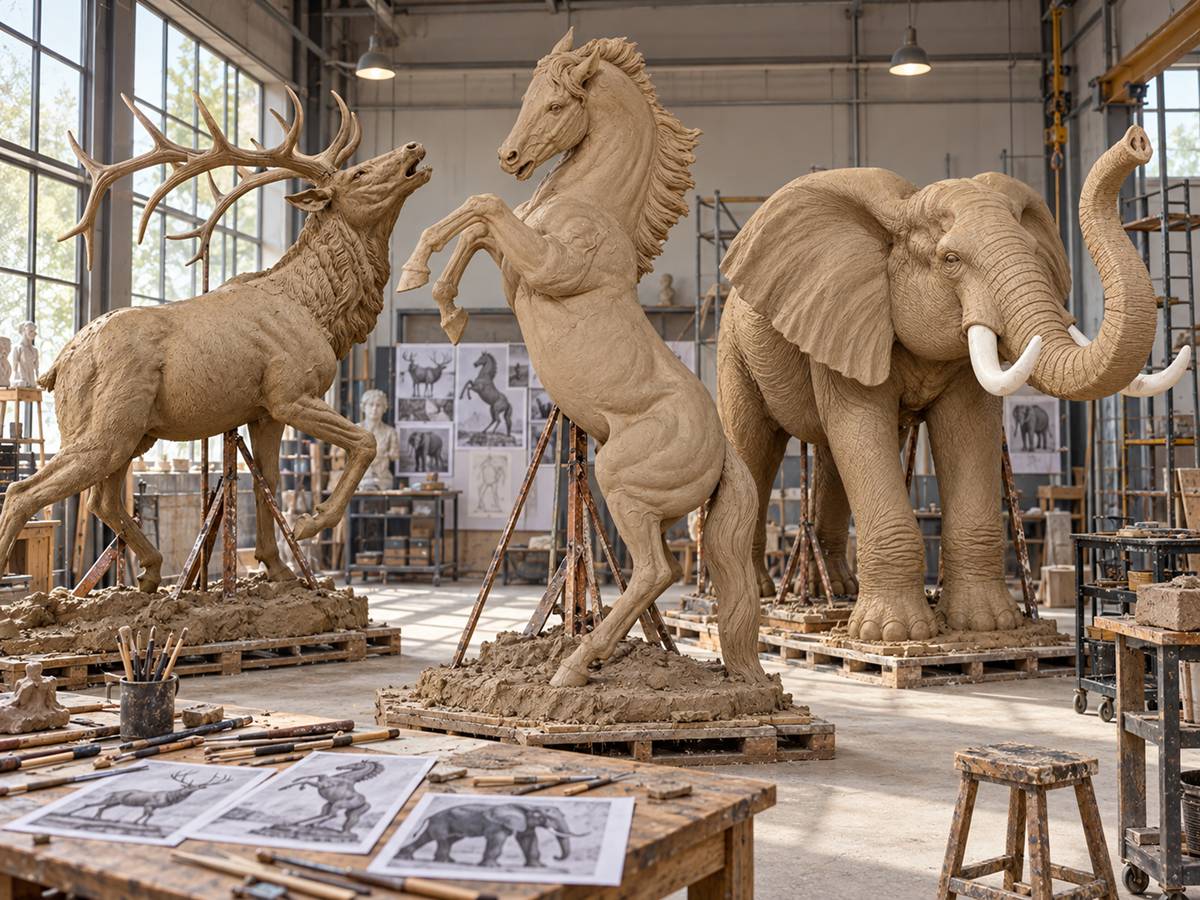
For a custom bronze sculpture, the clay model is one of the most important approval stages.
Before you approve it, look carefully at:
- overall proportions
- body posture
- head size and angle
- leg position
- facial expression
- important anatomical features
For animal sculptures, compare the model with your reference photos.
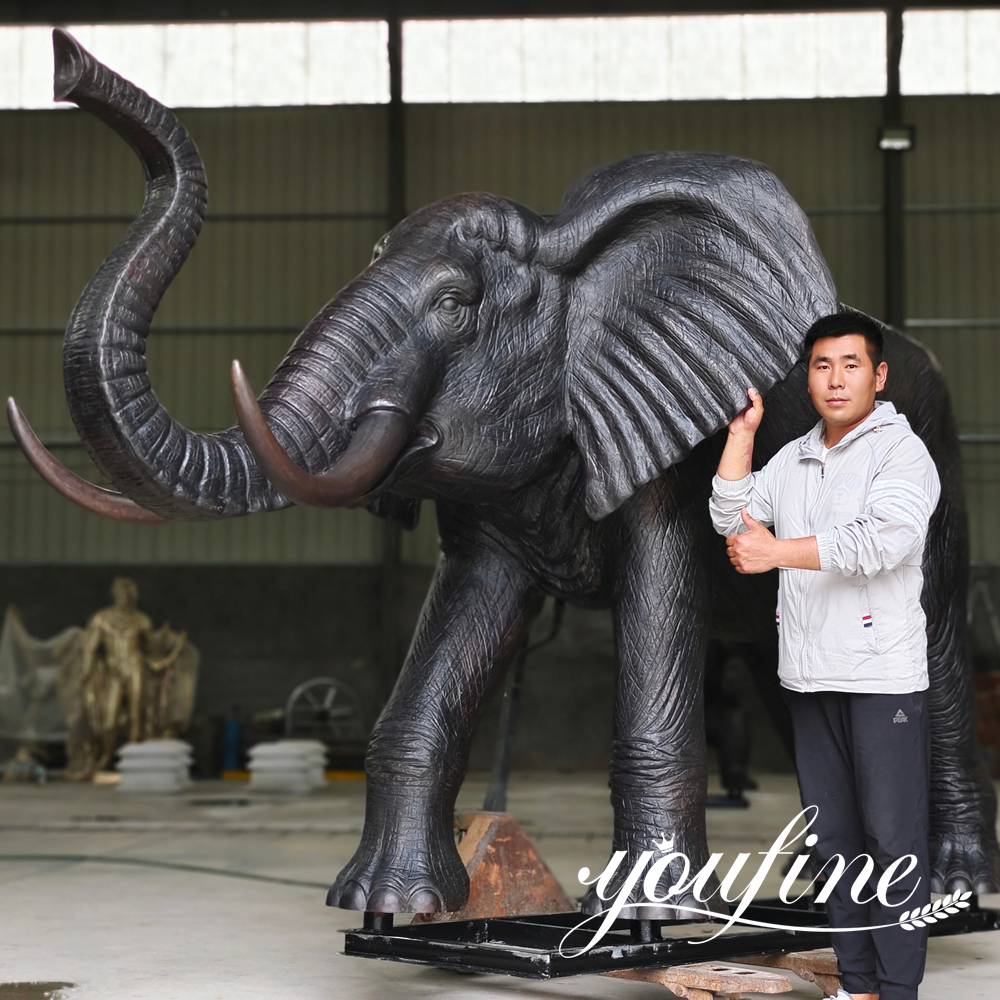
A horse should have convincing muscle structure and leg proportions. An elephant needs the correct body mass, ear shape, and trunk curve. Deer and elk should have antlers that match the intended species and age.
What you should do: Ask for clear photos or videos of the clay model from several angles before approving mold-making.
This is the best stage to request proportion or pose changes. Once casting begins, major corrections become much more difficult.
2. Pay Attention to Whether Fine Details Are Preserved
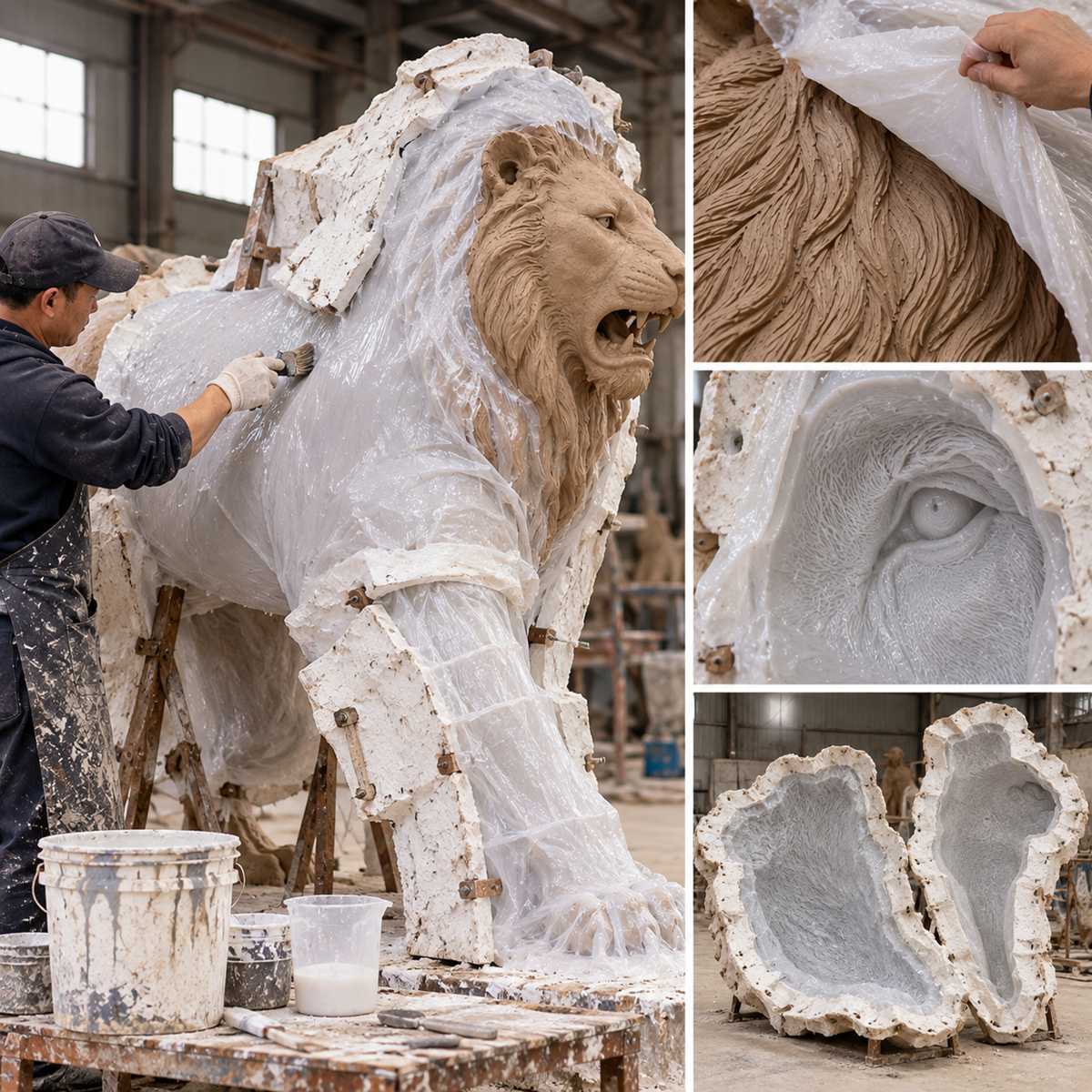
After the clay model is approved, a silicone mold is made from it.
This stage affects how much surface detail reaches the final bronze sculpture.
For realistic animal sculptures, look at details such as:
- fur texture
- feather layers
- mane and hair
- skin folds
- claws and paws
- shell texture
- facial details
For example, a bear should not end up with flat, generic fur. An eagle or crane should still show clear feather layering. A lion’s mane should have depth rather than looking like one solid mass.
What you should do: Ask whether the sculpture is made from a detailed silicone mold and request close-up production photos when possible.
3. Check the Wax Model Before Casting
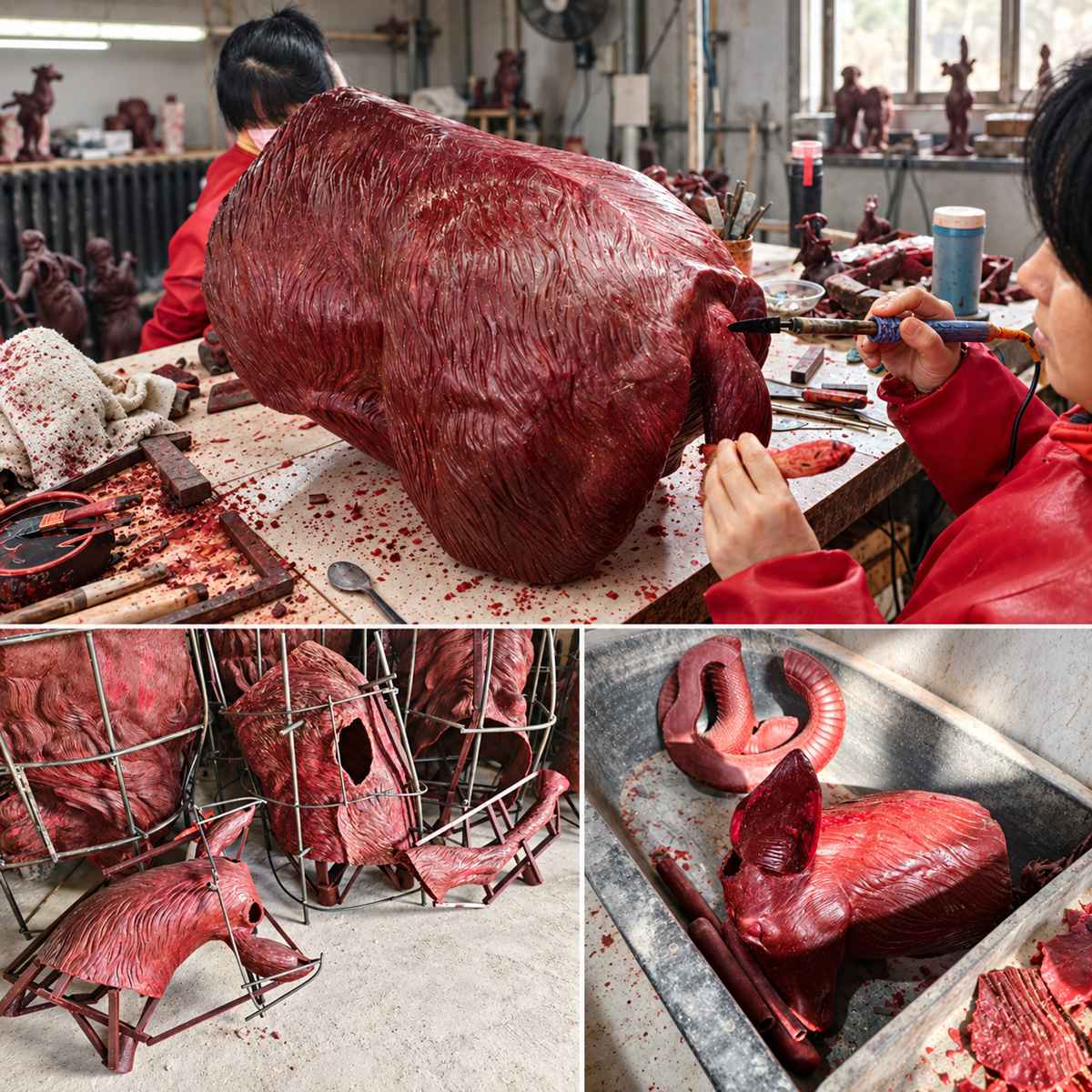
The wax model is another useful stage for customer inspection.
After the wax is removed from the silicone mold, craftsmen usually refine it by hand. Fine details can still be corrected at this point.
Look particularly closely at:
- eyes
- mouth
- ears
- fur direction
- feathers
- hooves
- paws
- horns and antlers
For a tiger, the body form and fur flow should still look natural. For a swan, individual feather forms should remain visible.
What you should do: For highly detailed or portrait-style work, ask to review wax-stage photos before the piece moves into casting.
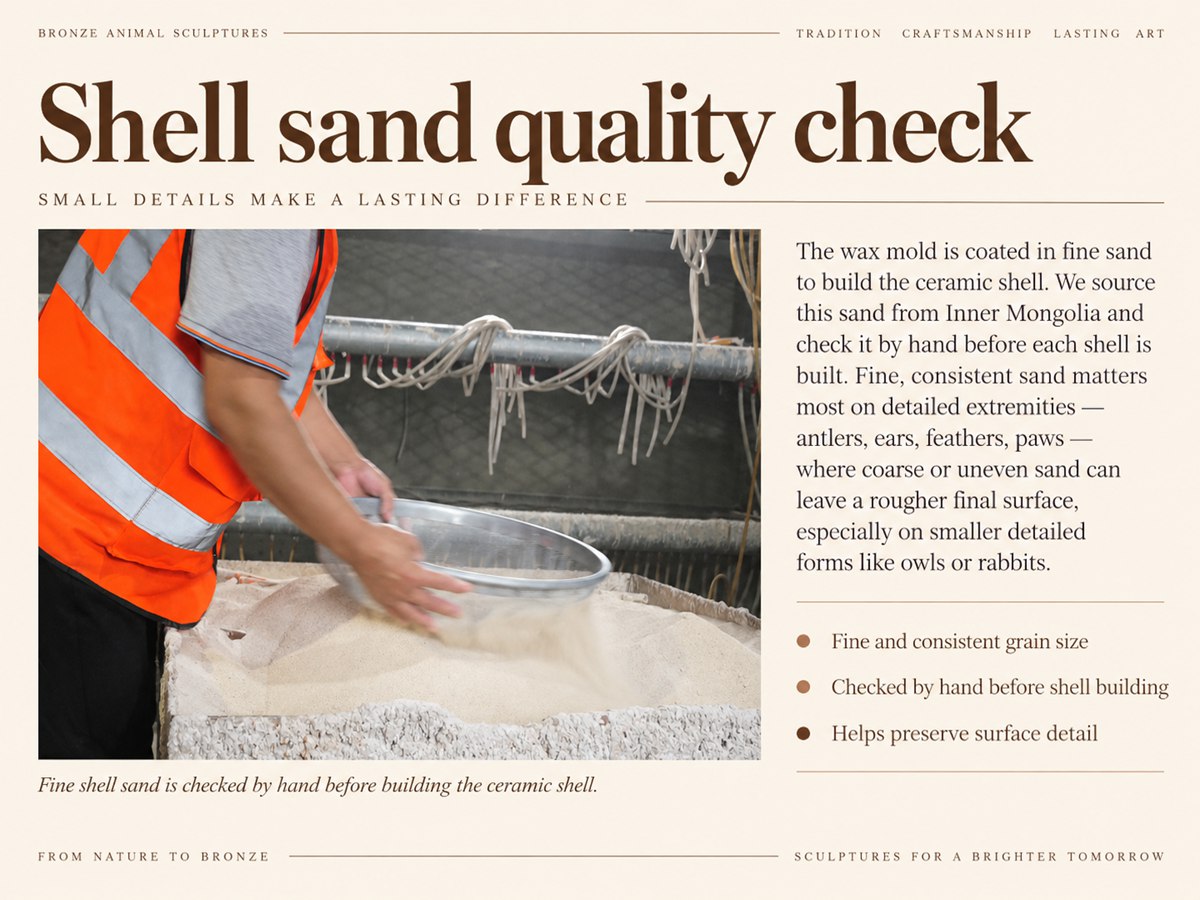
4. Ask About the Ceramic Shell Quality
Lost-wax bronze casting requires a ceramic shell around the wax model.
This may sound like a technical detail, but shell quality can directly affect the final surface.
Fine areas such as:
- antlers
- ears
- bird beaks
- paws
- feathers
- horns
are particularly sensitive.
Poor shell materials can create a rougher bronze surface and make fine details harder to reproduce.
This matters even more on smaller, detailed subjects such as owls and rabbits.
What you should do: Ask your supplier what type of shell material and casting process they use rather than judging the sculpture only from the finished product photo.
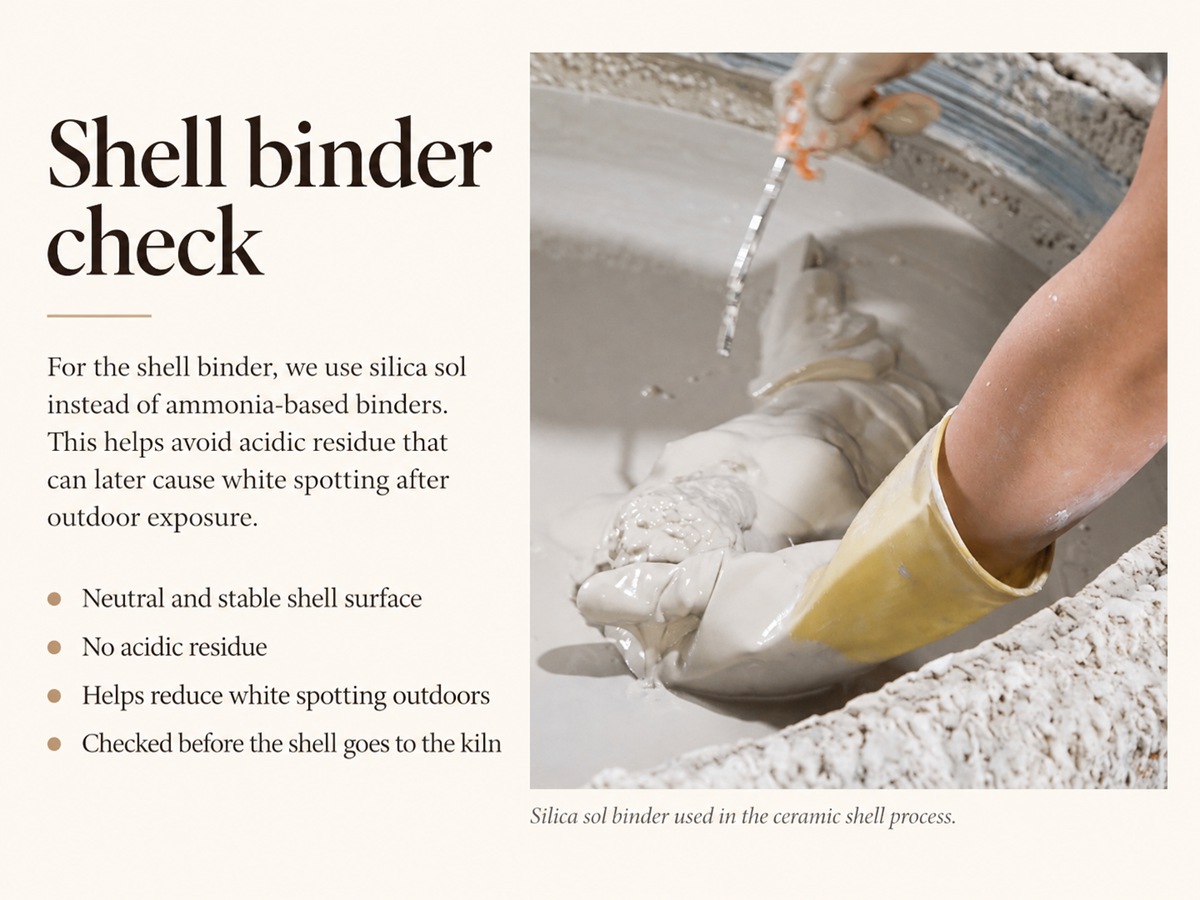
5. Ask What Binder Is Used for Outdoor Bronze
If your sculpture will be placed outdoors, the casting materials deserve extra attention.
One issue that customers sometimes notice only after installation is white spotting or other surface changes after rain.
At our foundry, we use silica sol in the ceramic shell process rather than ammonia-based binders. This helps reduce the risk of unwanted acidic residue affecting the finished bronze surface.
This is particularly relevant for sculptures installed in:
- gardens
- farms
- ranch entrances
- resorts
- schools
- public plazas
- outdoor fountains
What you should do: If the sculpture is intended for permanent outdoor use, ask about the lost-wax casting materials and outdoor surface protection before placing the order.
6. Inspect the Raw Casting for Defects
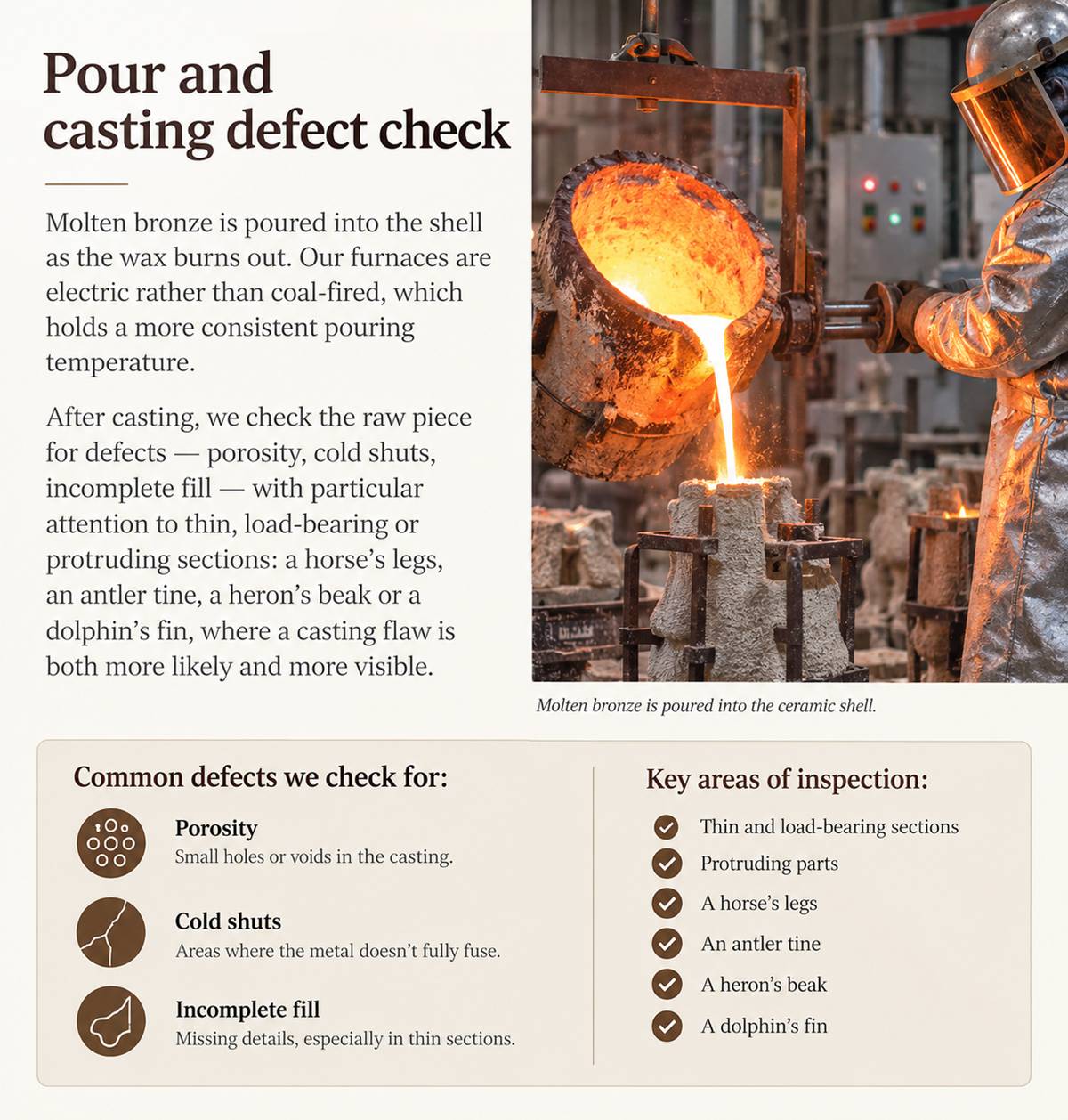
Casting defects are much easier to deal with in the workshop than after finishing.
Common problems can include:
- porosity
- incomplete filling
- cold shuts
- cracks
- weak thin sections
Pay special attention to narrow or projecting parts.
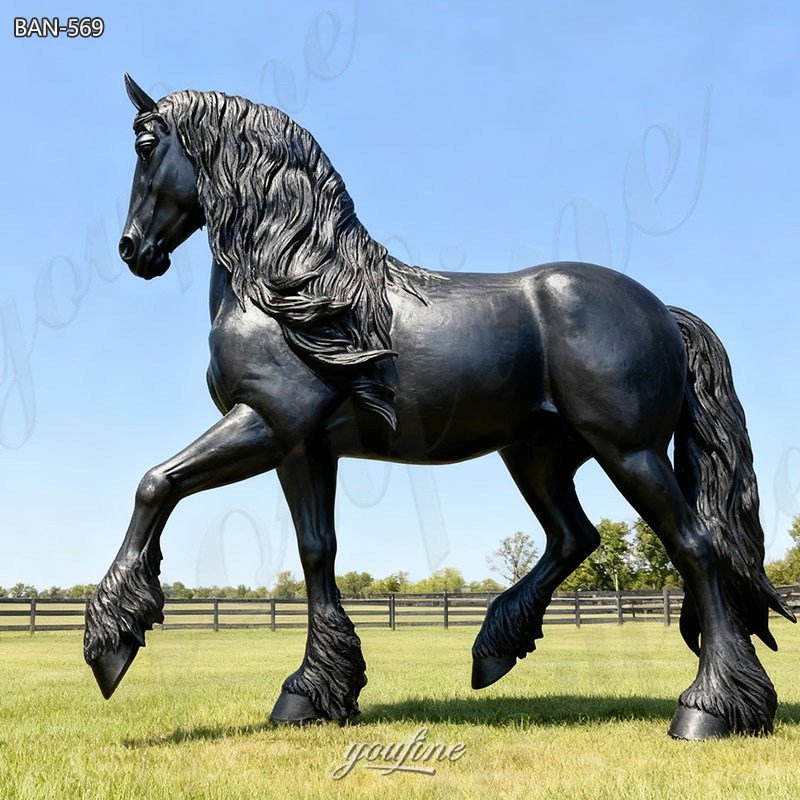
On a bronze horse, the legs may carry much of the visual and structural load. On a heron, the beak and legs are relatively thin. On a dolphin, fins can be vulnerable areas.
What you should do: For large custom projects, ask for photos of the bronze before final polishing and patina so you can see the basic casting quality.
7. Check the Welding on Large Sculptures
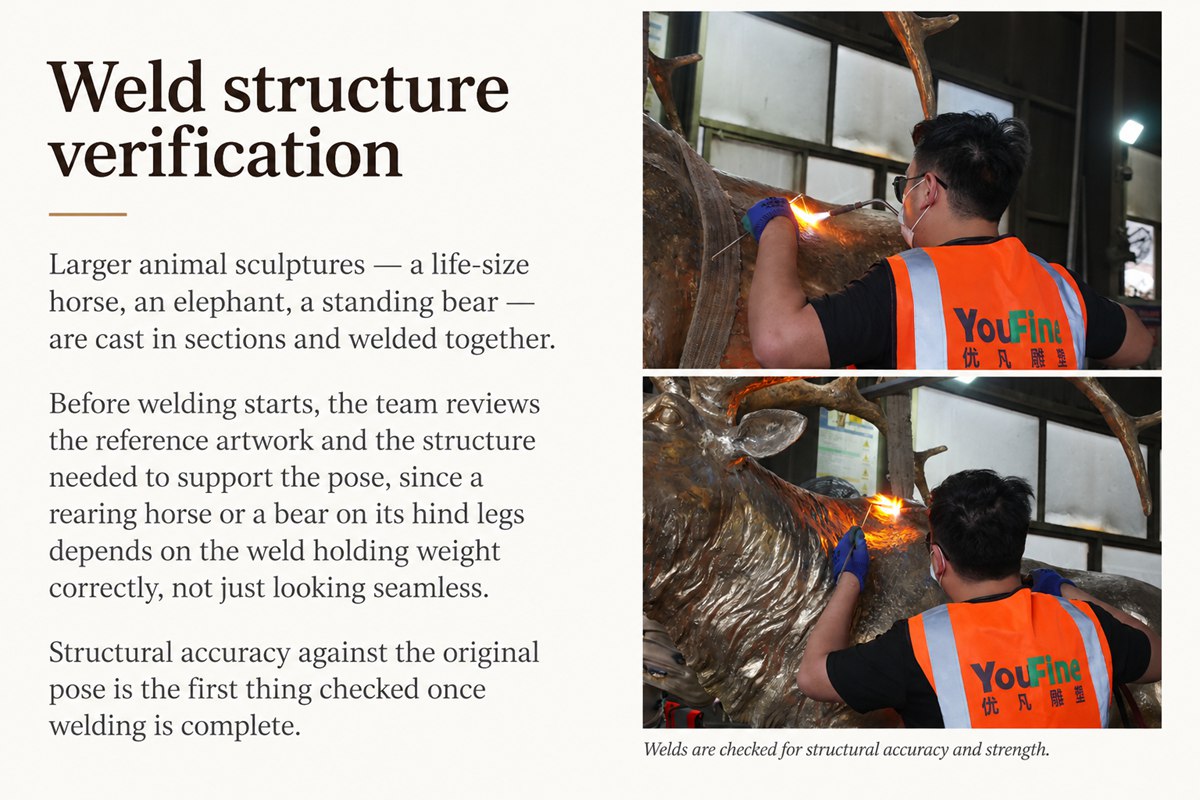
Life-size and monumental bronze sculptures are usually not cast in one single piece.
A large horse, elephant, bear, or other animal may be cast in several sections and then welded together.
The important question is not only whether the weld is invisible.
The finished sculpture should also maintain:
- the original pose
- correct body proportions
- proper balance
- structural strength
For sculptures with demanding poses, such as a rearing horse or standing bear, internal structure and weld quality become especially important.
What you should do: Ask for production photos during assembly, especially for large sculptures or designs supported by only a few legs or contact points.
8. Look Closely at the Polishing
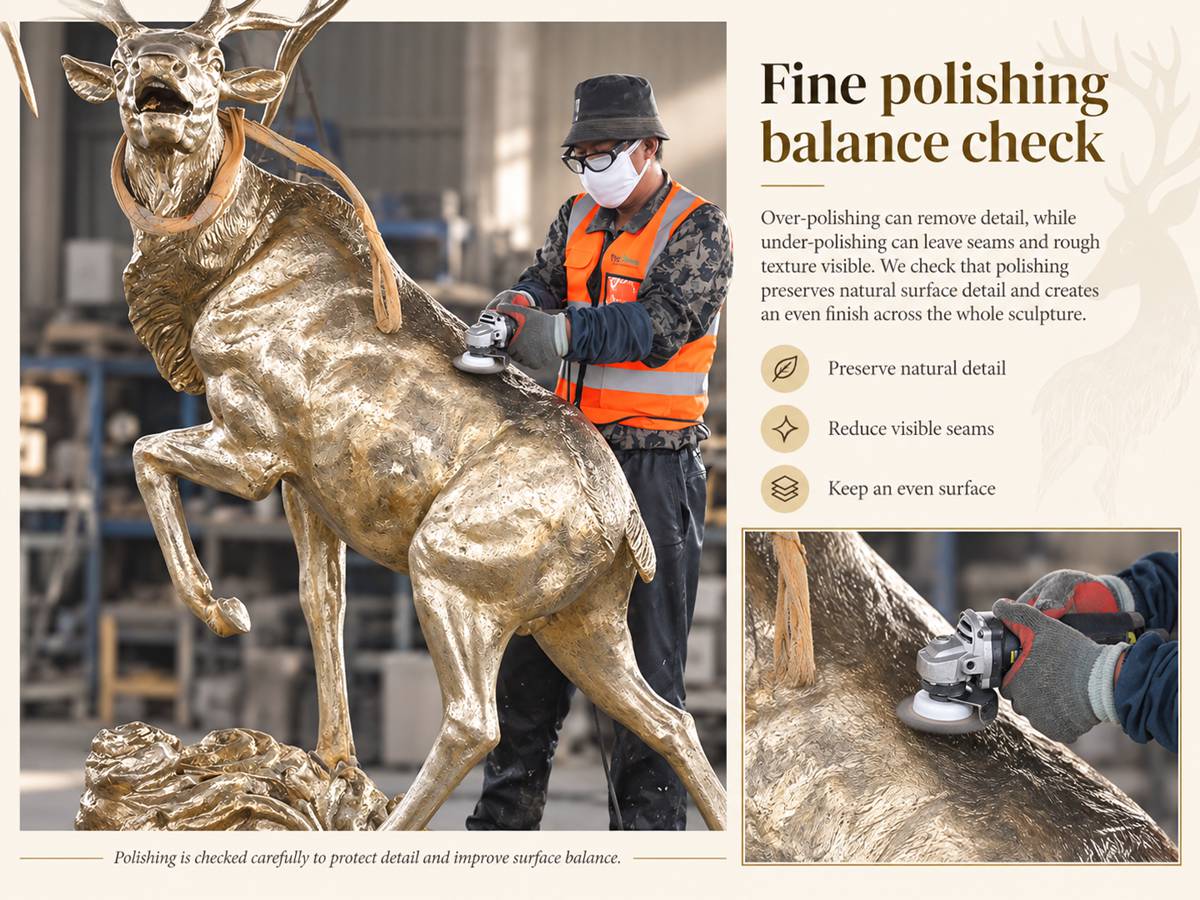
Good polishing should hide casting joints without removing the details that make the sculpture look realistic.
Too much polishing can flatten:
- fur
- wrinkles
- feather edges
- muscle definition
- small facial details
Too little polishing can leave:
- visible weld lines
- grinding marks
- rough casting texture
What you should do: Ask for close-up photos under good lighting rather than approving the sculpture only from one distant front-view image.
A bronze animal should still have texture and depth after polishing.
9. Confirm the Patina Color Before Shipment
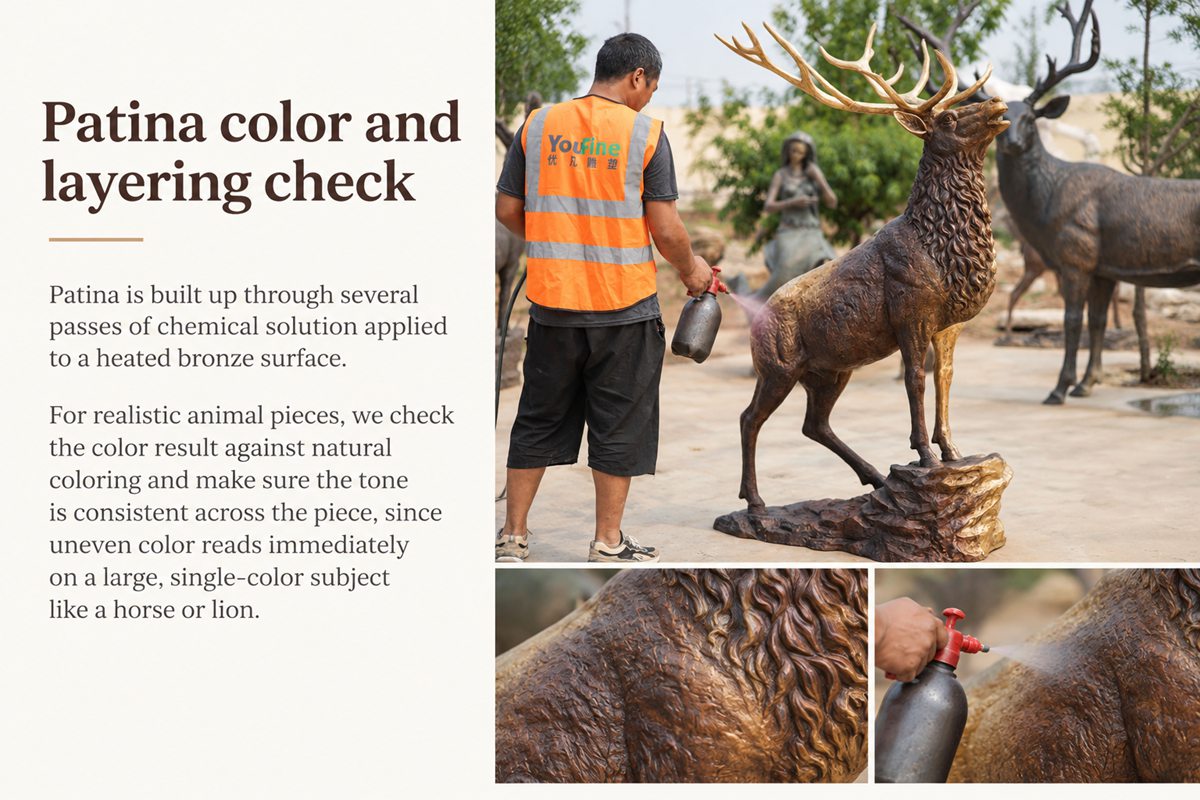
Patina can change the personality of a bronze sculpture dramatically.
Even when two sculptures use the same bronze alloy, different patinas can make them look completely different.
Before shipment, confirm:
- overall color
- dark and light areas
- whether the finish is matte or slightly glossy
- whether highlights are intentionally polished
- whether the color is even where it should be
For realistic animal sculptures, the color should also suit the subject and the client’s preference.
A bear or bull may work well with a deeper dark brown patina, while deer, horses, birds, or decorative sculptures may use warmer bronze tones.
What you should do: Do not approve a patina only from a small phone photo if color is important to your project. Ask for several photos or a short video under natural or neutral lighting.
10. Confirm the Outdoor Protective Finish
Patina alone is not the final layer.
Outdoor bronze sculpture normally needs a protective wax or suitable clear coating.
This layer helps protect the surface from:
- rain
- moisture
- dirt
- fingerprints
- environmental exposure
Coverage is especially important around protruding parts such as ears, horns, tails, antlers, and wingtips.
What you should do: Ask what protective finish is applied and whether any maintenance will be required after installation.
For outdoor sculptures, also ask your supplier how often they recommend cleaning and re-waxing the surface.
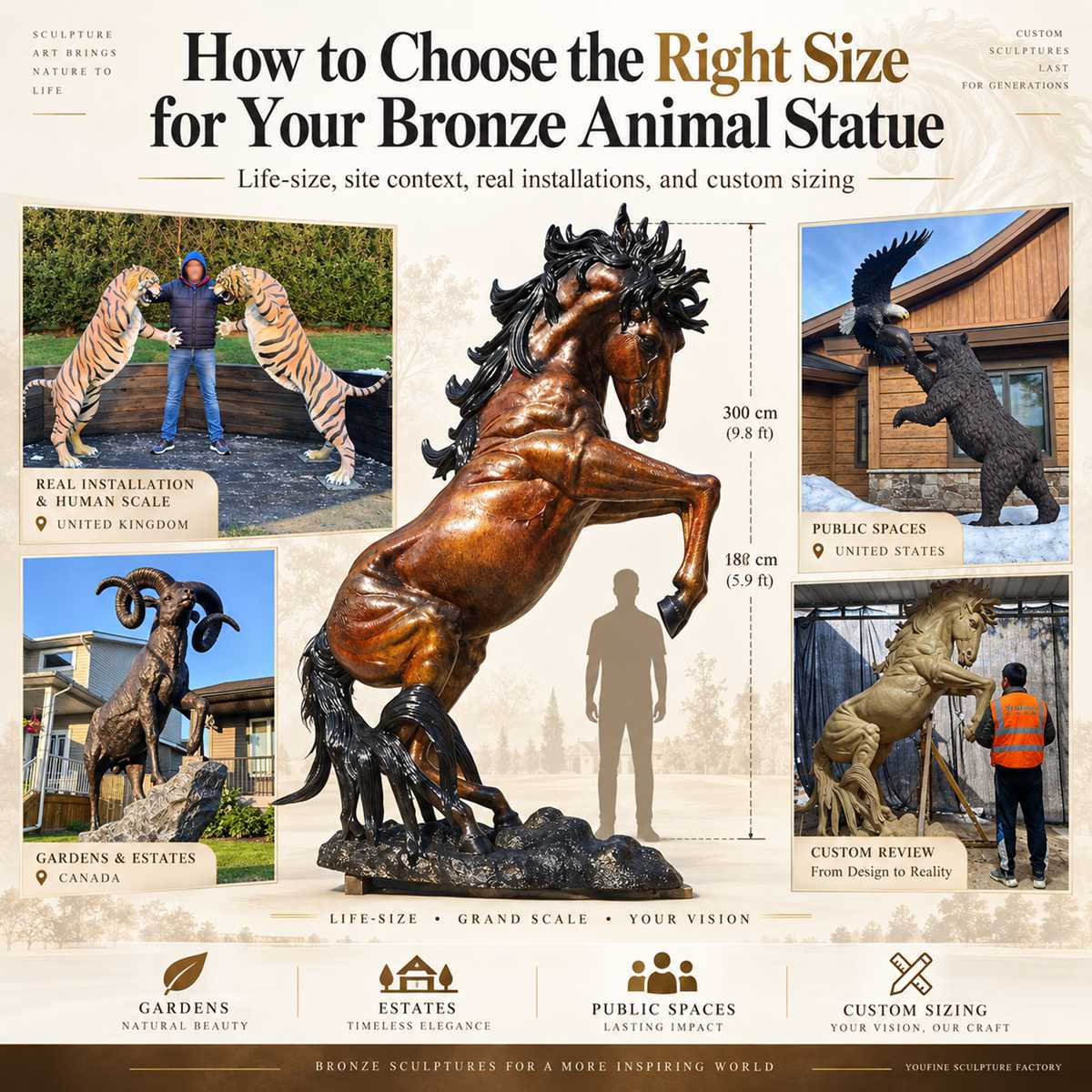
11. Verify the Final Size and Installation Points
Do not assume that an approved drawing automatically guarantees that every installation dimension is correct.
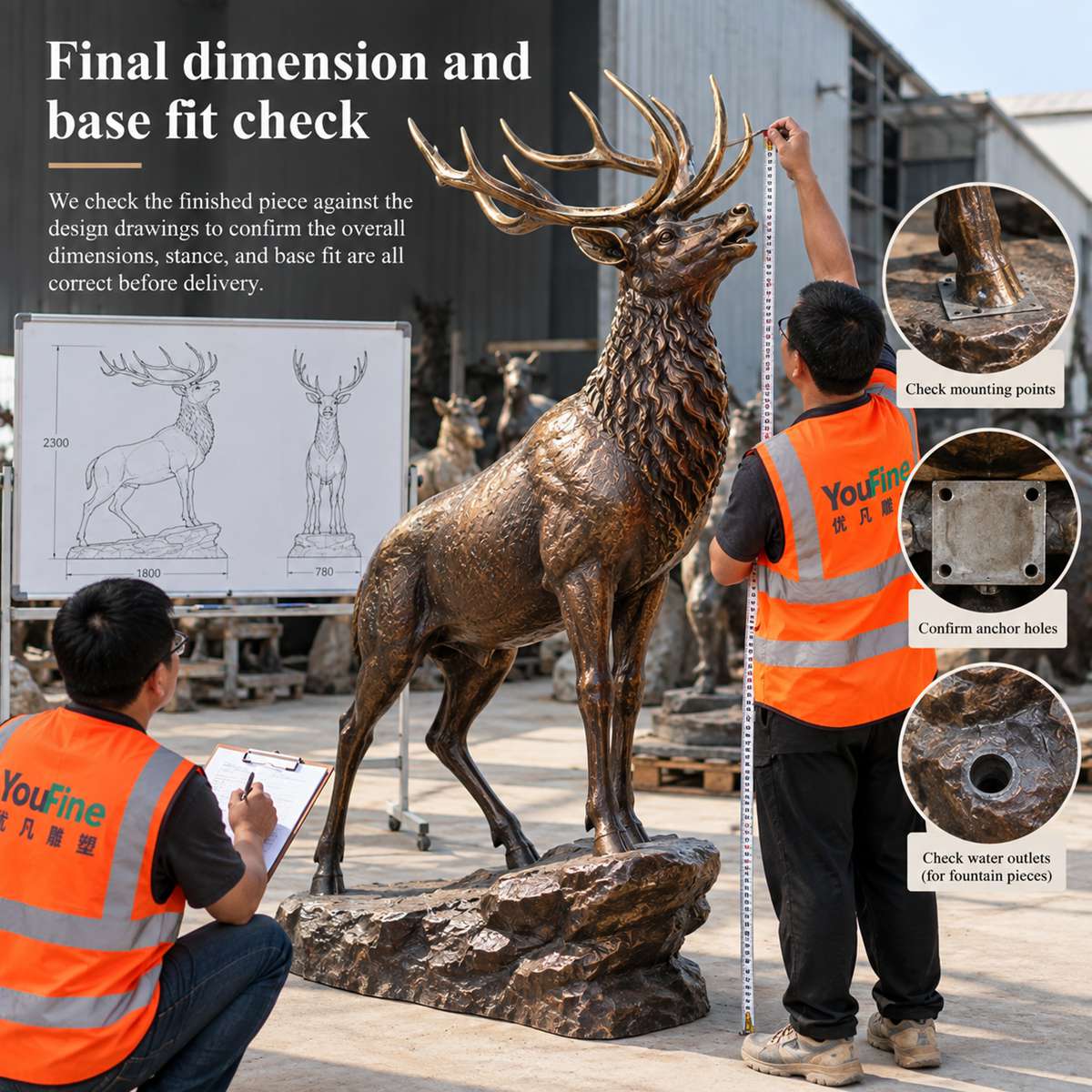
Before shipment, confirm the actual finished:
- height
- width
- length
- footprint
- base dimensions
- anchor-hole positions
This is especially important if your contractor has already prepared a concrete foundation, stone pedestal, or steel mounting plate.
For an equestrian sculpture, the mounting points need to match the pedestal accurately.
For a fountain sculpture, water inlet and outlet positions should also be confirmed.
What you should do: Ask for a final dimension sheet and base or anchor drawing before the sculpture leaves the factory.
Correcting an anchor position in the workshop is simple. Correcting it after a several-hundred-kilogram sculpture arrives on site is not.
12. Check the Sculpture and Packing Before Shipping
Your final inspection should happen before the crate is closed.
Ask for photos or video showing the complete finished sculpture under good lighting.
Look for:
- scratches
- patina inconsistencies
- polishing marks
- stains
- damaged details
- missing accessories
- incorrect base parts
You should also pay attention to how vulnerable parts are packed.
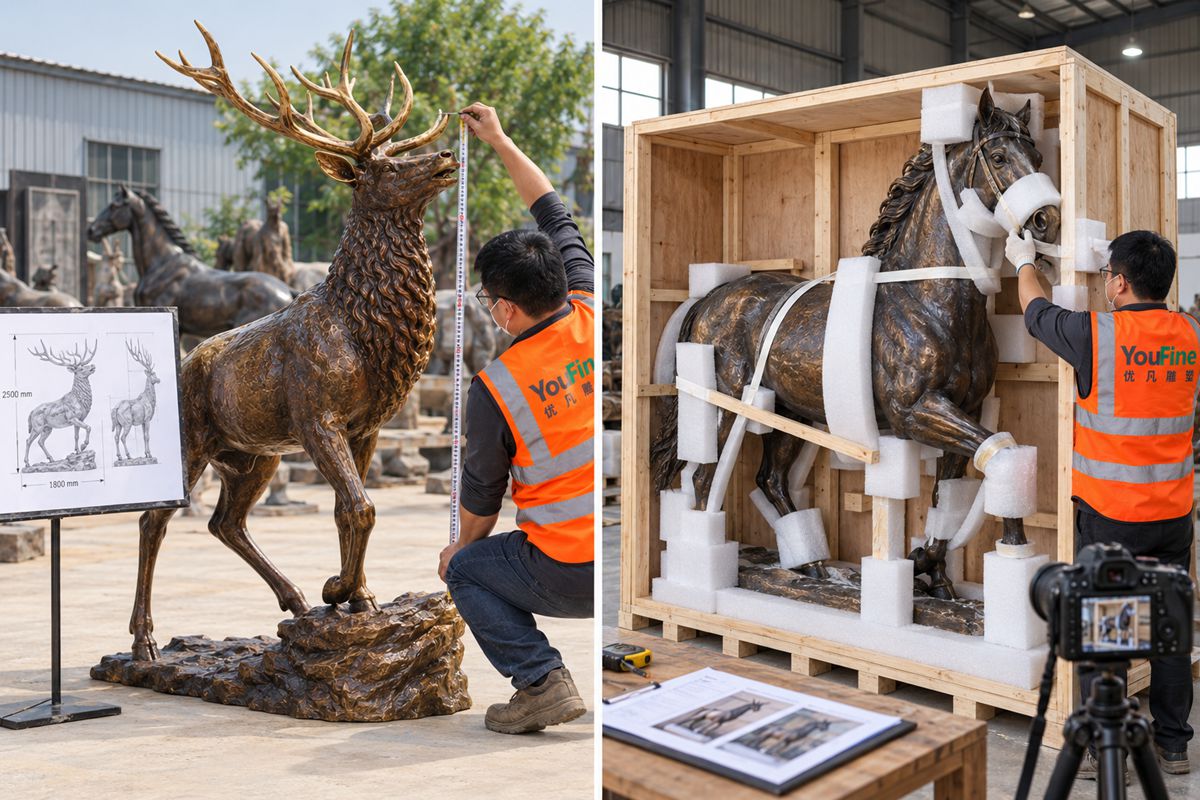
Antlers, horns, ears, tails, wings, and long bird beaks should not simply be wrapped together with the body. They should be individually protected and supported.
The crate should also be designed around the sculpture’s size and weight, with internal supports preventing the sculpture from moving during transportation.
What you should do: Ask your supplier to provide finished-product and packing photos before the crate is sealed.
Keep these images. They give you a useful record of the sculpture’s condition before international shipping.
You can also view examples of finished projects and installed sculptures in our client installation gallery.
What Should You Ask Your Bronze Sculpture Supplier?
You do not need to become a bronze casting expert before buying a sculpture.
But for a custom, life-size, or monumental piece, I recommend asking your supplier to show you the work at several important stages:
- clay model approval
- wax or detail inspection when necessary
- bronze casting and assembly
- polishing
- patina
- final dimensions
- installation points
- finished sculpture before packing
- packing before shipment
A reliable supplier should be comfortable showing you the production process rather than asking you to wait until the sculpture is completely finished.
For us, these checks are not only factory procedures. They are also opportunities for the client to confirm that the sculpture is moving in the right direction before the next stage begins.
That is particularly important for wildlife sculptures, realistic animal portraits, school mascots, memorial sculptures, and other pieces where proportions and small details carry a large part of the final visual effect.
Final Advice Before You Approve Shipment
Before you approve a bronze sculpture for shipment, do not look only at whether it is “beautiful.”
Check whether it matches what you originally ordered.
Compare the finished piece with your approved reference and confirm:
- design
- proportions
- details
- patina
- dimensions
- mounting method
- accessories
- packing
The best time to discover a problem is while the sculpture is still inside the foundry.
Once it has been packed, shipped internationally, unloaded, and installed, even a small correction can become much more complicated.
For that reason, we recommend keeping a clear photo and video record throughout production and confirming the important stages before the sculpture moves forward.