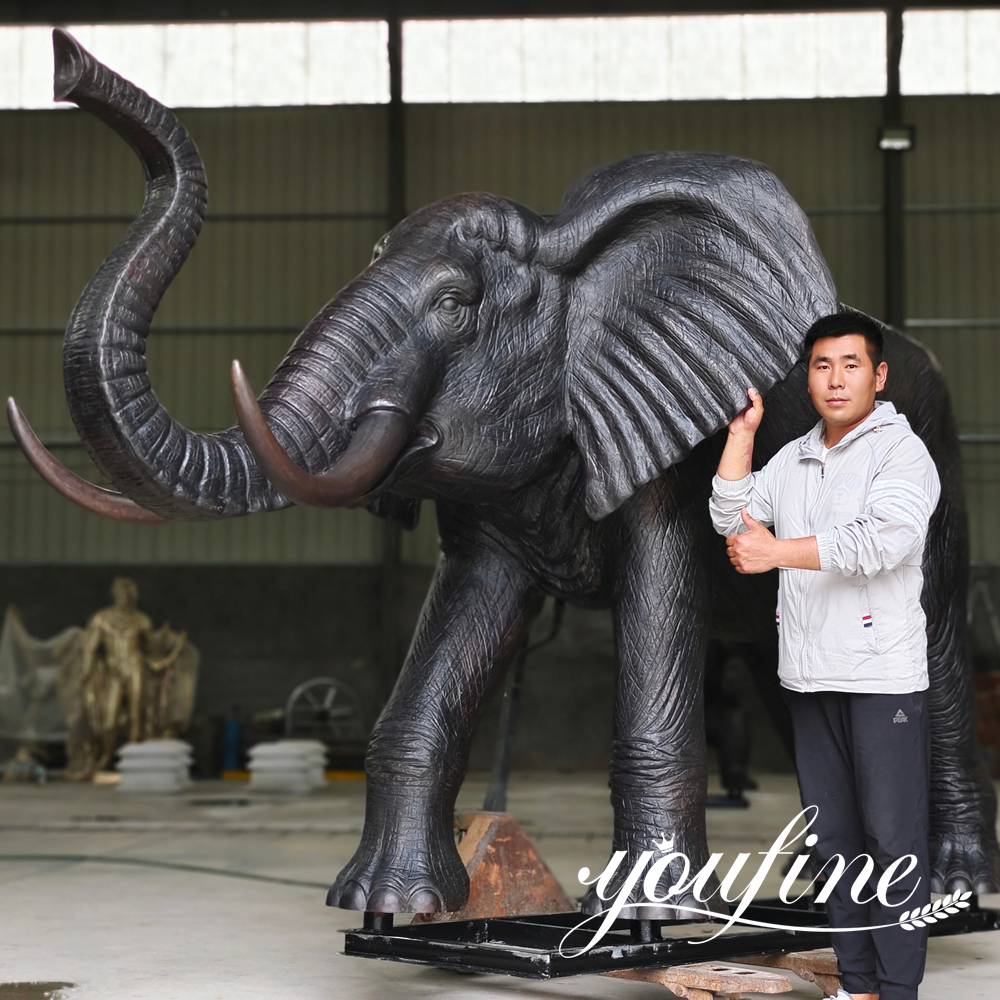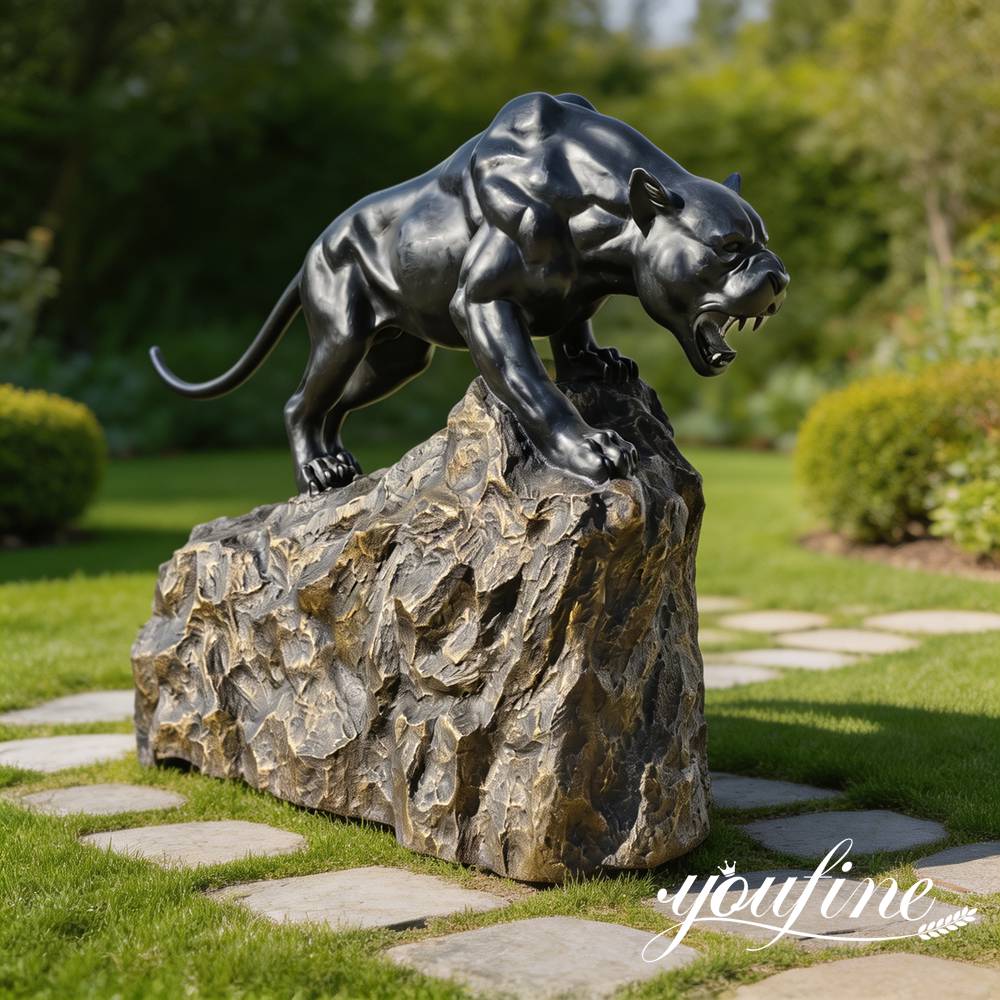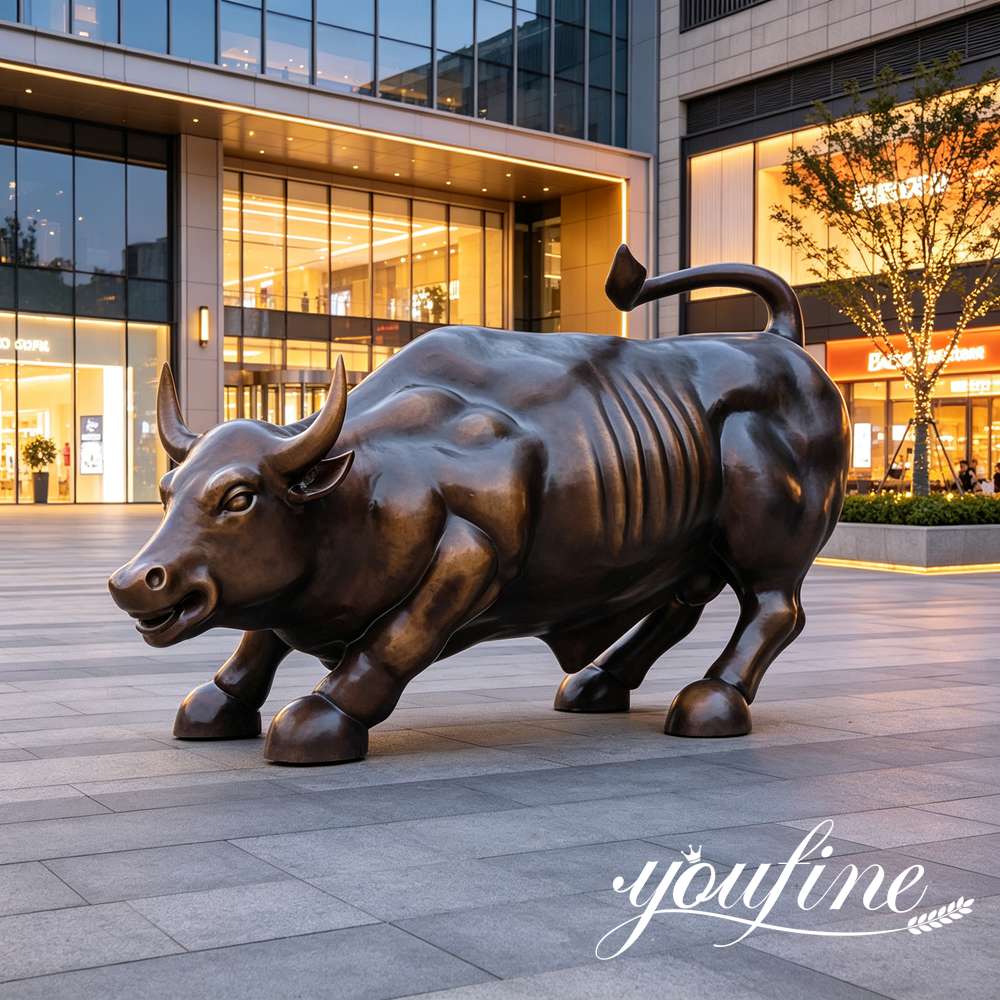
After ten years of working with animal sculpture projects and helping sculpture lovers in different countries prepare custom ideas, I have learned one important lesson: a sculpture quotation is only as accurate as the information behind it.
Many customers begin with a simple message: “Can you quote this picture?” A reference photo is a good starting point, but it is not enough for a responsible final price. A sculpture factory or studio needs to understand the size, material, surface effect, installation environment, design boundaries, shipping destination, and production complexity before giving a quotation that truly matches your expectations.
At You Fine Art Sculpture, I often help private owners, collectors, artists, hotel project teams, commercial space designers, and public art stakeholders organize their inquiry materials before pricing. My goal in this article is not to make the quotation process complicated. It is to help you avoid repeated price changes, unclear assumptions, and disappointing results.
If you are preparing to ask for a custom sculpture quote, the checklist below will help you send clearer information and receive a more accurate response.
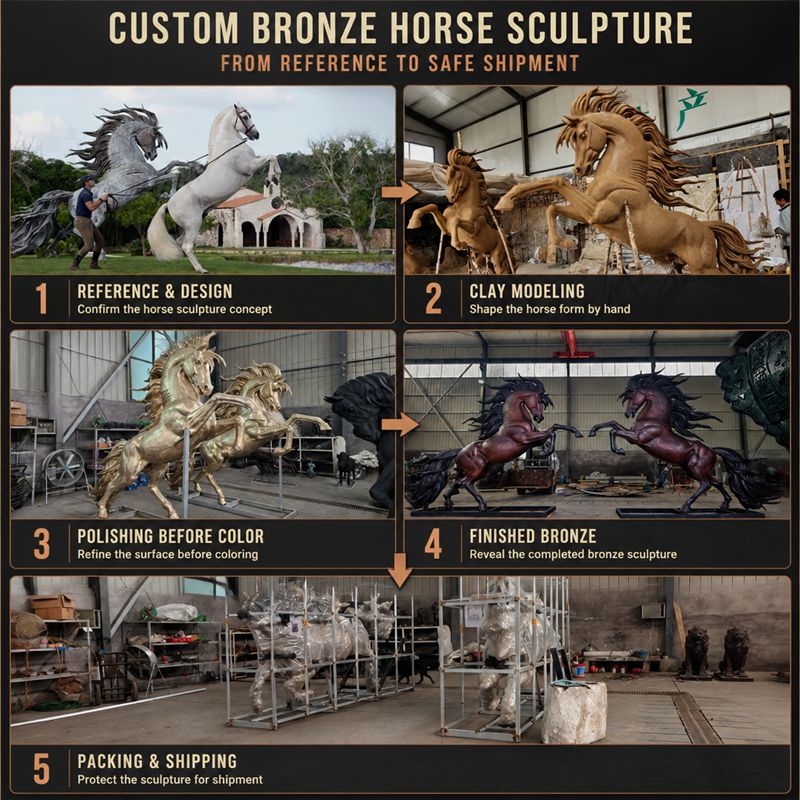
Why One Reference Image Is Not Enough
A single image can show the basic idea, but it cannot answer many pricing questions.
For example, a photo may show a bronze horse, a stainless steel abstract form, a marble lion, or a fiberglass character sculpture. But the supplier still does not know:
- How large you want the final sculpture to be
- Whether it will be placed indoors or outdoors
- Whether the finish should be polished, matte, painted, patinated, antique, or natural
- Whether the sculpture is only inspired by the photo or must closely match it
- Whether internal support or special installation hardware is needed
- Whether the surface details are simple or highly refined
- Whether shipping, packing, or installation support should be included
This is why two suppliers may give very different prices for the same photo. They may be assuming different sizes, materials, finish standards, structure, or scope of work.
A fast quote is not always the most professional quote. Sometimes it is only a rough estimate based on many assumptions. That can be useful at an early stage, but it should not be treated as a final production price.
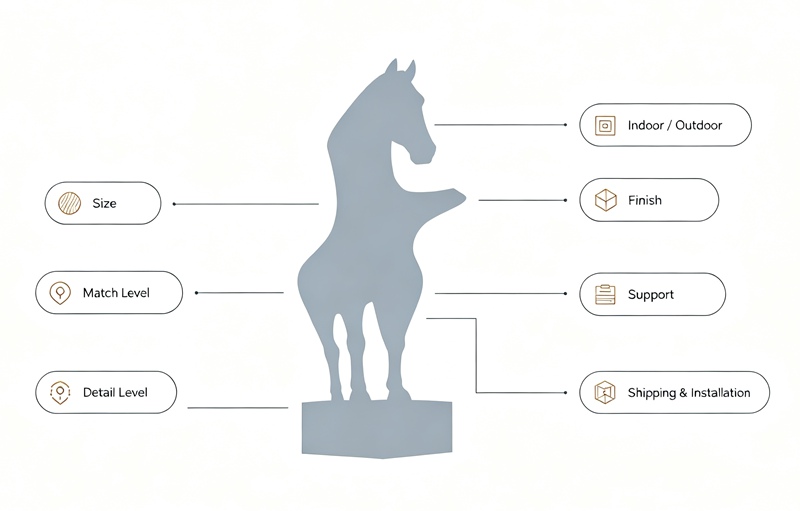
The Three Most Important Confirmation Points
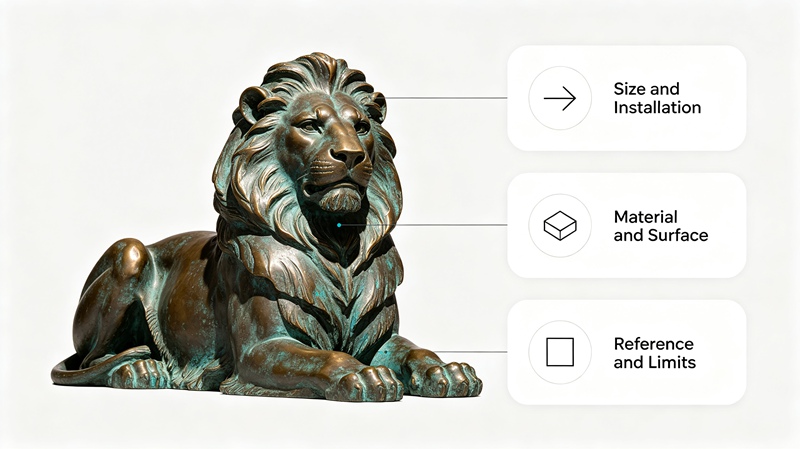
Before a sculpture supplier can prepare a more accurate quotation, I usually focus on three key confirmation points.
| Confirmation Point | What You Should Send | Why It Affects the Quote |
|---|---|---|
| Size and installation location | Height, width, depth, site photos, indoor or outdoor use | Size affects material, structure, mold work, finishing time, packing, and transport |
| Material and surface effect | Bronze, stainless steel, marble, fiberglass, painted finish, patina, mirror polish, matte finish | Material name alone is not enough; surface treatment can change labor and production method |
| Reference images and style boundaries | Photos, sketches, renderings, drawings, notes about realism or abstraction | The supplier needs to know whether the sculpture is a close copy, loose inspiration, enlargement, or original design |
If you can confirm these three points early, the quotation will usually become much clearer. Missing one of them often leads to later revisions.
1. Send Reference Images, Sketches, or Renderings
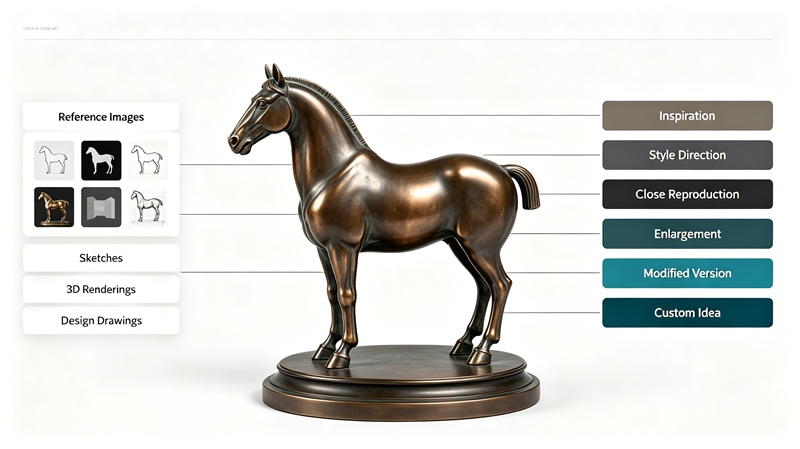
Reference materials are the starting point of a sculpture quote. You can send:
- Inspiration photos
- Hand sketches
- 3D renderings
- Design drawings
- Photos of an existing artwork
- Site concept images
- Mood boards showing the atmosphere you want
If your project is an animal sculpture, I recommend sending multiple angles whenever possible. For realistic animal sculptures, side view, front view, back view, head details, body posture, fur texture, and expression all help. For abstract or modern work, it is helpful to show the overall form, preferred line direction, and level of simplification.
However, a rendering is not automatically a final price. A concept image may show the desired visual effect, but the quotation still depends on confirmed size, material, structure, finish, installation, and production method.
Clarify How Closely the Sculpture Should Match the Reference
This point is very important. A supplier needs to know whether your reference image is:
- A general inspiration
- A style direction
- A close reproduction
- An enlargement of an artist’s work
- A modified version of an existing design
- A new custom sculpture based on your idea
These options have different levels of design work and production control.
For example, enlarging an artist’s small animal sculpture requires clearer reference materials and style boundaries than making a decorative garden animal inspired by several photos. A close reproduction also requires more attention to proportion, texture, posture, and finish.
2. Confirm the Desired Dimensions
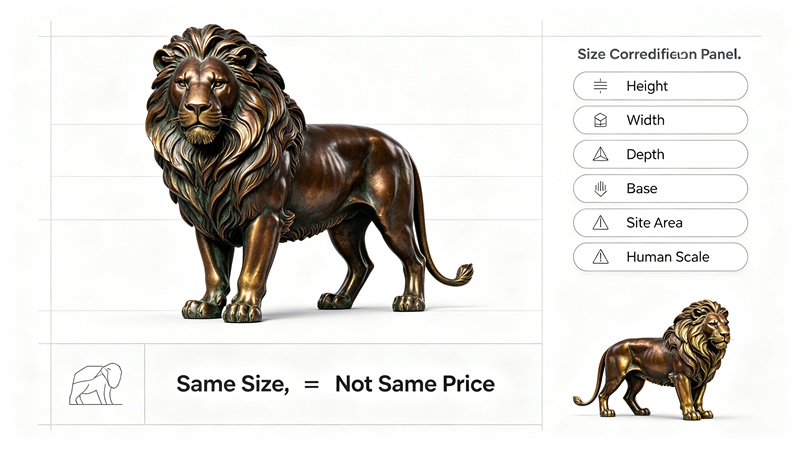
Size is one of the biggest cost factors in sculpture production. A sculpture with the same shape but different dimensions can require very different material volume, mold work, internal support, surface finishing time, packing method, and shipping plan.
When you send an inquiry, try to provide:
- Overall height
- Overall width
- Overall depth
- Base or pedestal size, if needed
- Human scale reference, if exact dimensions are not decided
- Site size or available installation area
If you are not sure about the final size, you can say, for example:
- “I want it about adult human height.”
- “It should fit beside a villa entrance.”
- “It will be placed in the center of a hotel lobby.”
- “The sculpture should be visible from a road or plaza.”
- “I need advice between two possible sizes.”
This gives the supplier enough context to guide the next discussion.
Same Size Does Not Mean Same Price
Many buyers assume that sculptures with similar dimensions should have similar prices. In reality, that is not always true.
Two sculptures may both be 2 meters tall, but one may be a simple abstract fiberglass form while the other may be a highly detailed bronze animal with complex anatomy, horns, fur texture, and a special patina. Their production workload can be very different.
Here is a practical comparison:
| Example Factor | Simpler Sculpture | More Complex Sculpture |
|---|---|---|
| Shape | Smooth abstract form | Detailed animal anatomy or human figure |
| Surface | Single painted or matte surface | Layered patina, hand texture, polished areas |
| Structure | Basic support | More complex internal frame or fixing points |
| Mold Work | Fewer parts | More mold sections and detail control |
| Finishing | Shorter finishing process | Longer hand-finishing and adjustment |
The practical meaning is simple: size matters, but size alone does not define the price.
3. Describe the Installation Location
Please tell the supplier where the sculpture will be placed, such as:
- Private garden
- Villa entrance
- Estate landscape
- Hotel lobby
- Commercial space
- Sales center
- Plaza
- Park
- Public art site
- Museum or gallery
- Indoor courtyard
- Rooftop or terrace
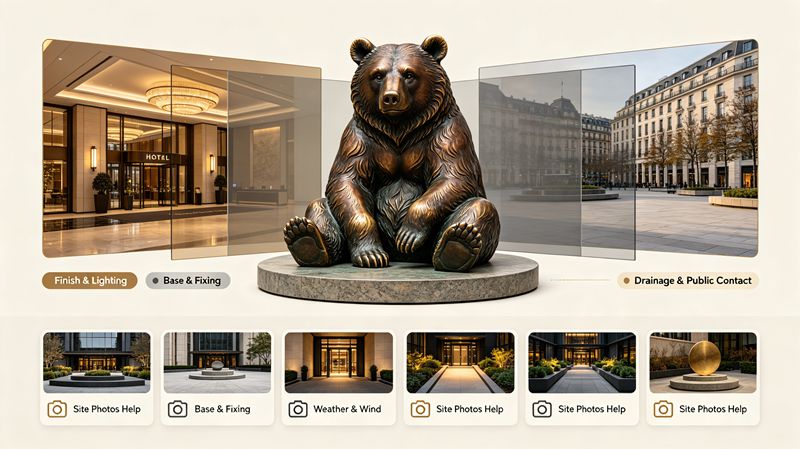
Indoor and outdoor sculptures may need different considerations. A hotel lobby sculpture may focus more on visual finish, lighting effect, and visitor viewing distance. An outdoor garden or plaza sculpture may need to consider weather exposure, public contact, base fixing, drainage, wind, and long-term surface performance.
Send Site Photos If Available
Site photos are very useful. If possible, send:
- Wide view of the installation area
- Close view of the ground or base
- Entrance or access route
- Surrounding buildings, plants, or walls
- Photos showing lighting conditions
- Any existing pedestal, platform, or foundation
These details help the supplier understand not only how to make the sculpture, but also how it may need to be packed, delivered, and installed.
4. Choose the Material, but Do Not Stop There
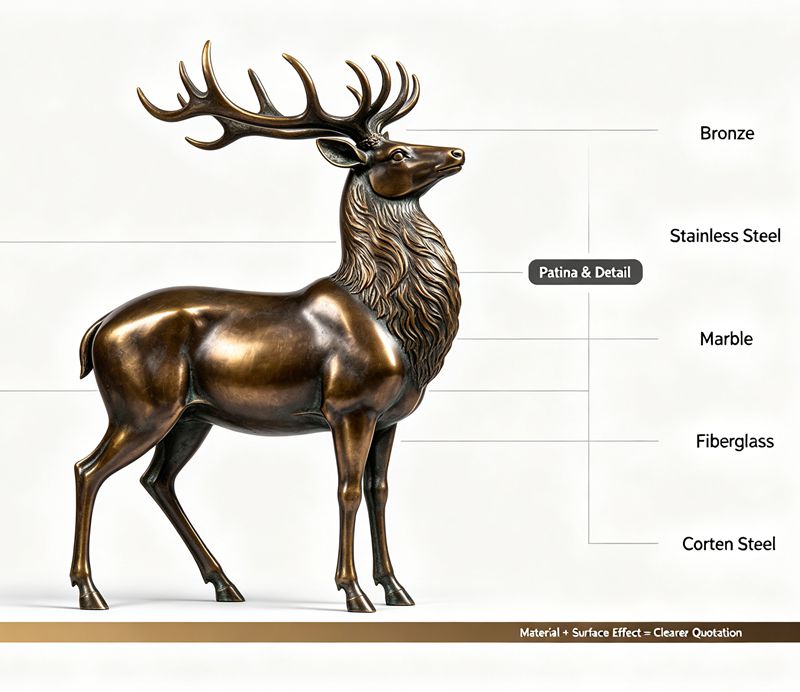
It is helpful to say whether you prefer bronze, stainless steel, marble, fiberglass, resin, corten steel, or another material. But the material name alone is not enough for an accurate quotation.
For example, “bronze sculpture” can include different casting methods, surface textures, patina effects, and detail levels. “Stainless steel sculpture” can mean brushed, matte, painted, or mirror polished. “Marble sculpture” can vary by stone type, carving detail, surface texture, and block selection.
Use this table as a simple guide:
| Material | Common Use | Information Still Needed |
|---|---|---|
| Bronze | Classical figures, animals, memorials, garden sculptures | Patina color, texture level, detail, base, indoor or outdoor use |
| Stainless steel | Modern abstract sculpture, public art, commercial spaces | Mirror polish, brushed finish, painted effect, thickness and structure expectations |
| Marble or stone | Classical sculpture, garden art, architectural decoration | Stone color, carving detail, natural texture, size, installation condition |
| Fiberglass | Lightweight decorative sculpture, themed spaces, commercial displays | Paint finish, reinforcement needs, indoor or outdoor use, surface smoothness |
| Corten steel | Outdoor modern sculpture and landscape features | Rust surface expectation, thickness concept, installation method |
After you name the material, also explain the surface effect you want. That is often where many quotation differences appear.
5. Define the Surface Finish
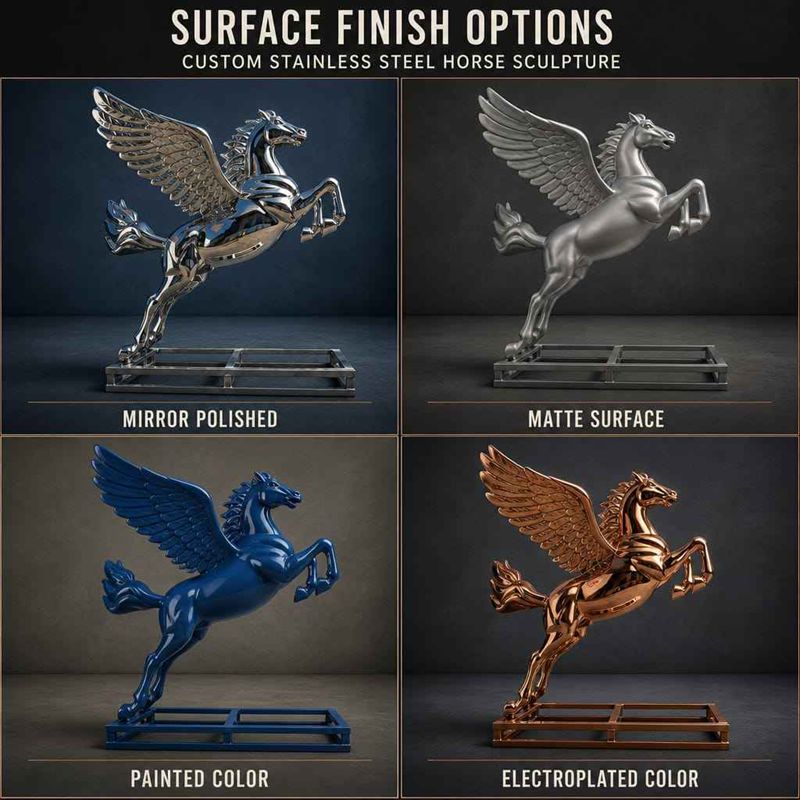
Surface finish strongly affects both appearance and labor. It is also one of the most common reasons for price differences between suppliers.
Common sculpture finishes include:
- Polished
- Mirror polished
- Matte
- Brushed
- Painted
- Antique
- Patina
- Natural stone texture
- Hammered texture
- Smooth modern surface
- Rough hand-made texture
For bronze animal sculpture, for example, a simple dark patina is not the same as a layered antique effect with highlighted details. For stainless steel, a mirror finish usually requires more careful surface preparation than a simple matte or brushed effect.
If you have a finish sample or reference photo, send it. Words like “gold,” “antique,” “modern,” or “natural” can mean different things to different people. A visual reference reduces misunderstanding.
6. Explain the Style and Detail Level
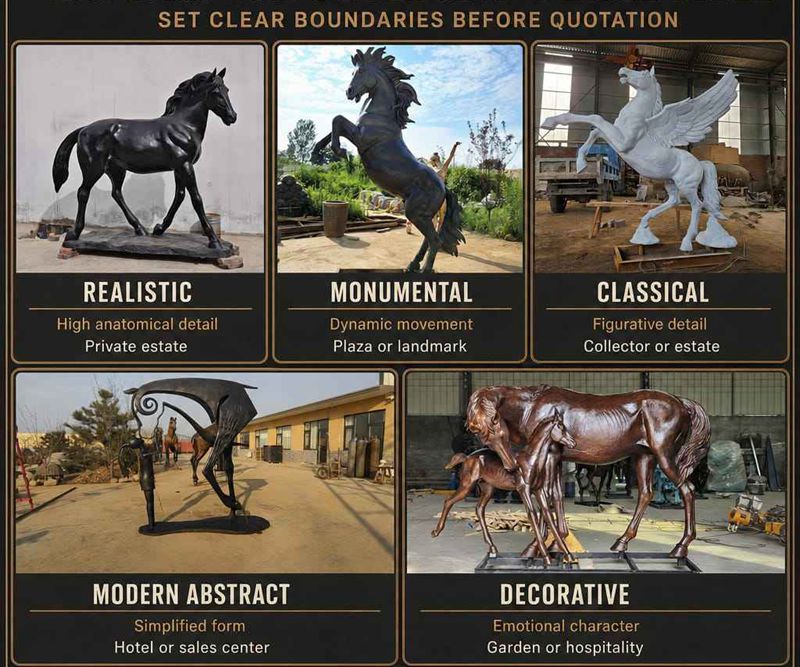
A sculpture quotation depends heavily on style. Tell the supplier which direction you prefer:
- Realistic
- Semi-realistic
- Abstract
- Classical
- Modern
- Minimalist
- Cartoon style
- Decorative
- Monumental
- Close copy of a reference
- Loose inspiration from several images
For animal sculptures, details such as muscle shape, facial expression, fur texture, feathers, scales, or movement can change production work. A realistic eagle, lion, horse, deer, dog, or bull usually needs more modeling control than a simplified decorative version.
If the sculpture is for a collector or private estate, the emotional and artistic effect may be very important. If it is for a hotel, plaza, or sales center, the sculpture may need to match the architecture, viewing distance, and brand atmosphere.
Clear style boundaries help reduce mismatch between your imagination and the final result. They do not guarantee that every detail will be identical to a rendering, but they give the production team a clearer target.
7. Share Installation Method or Site Requirements
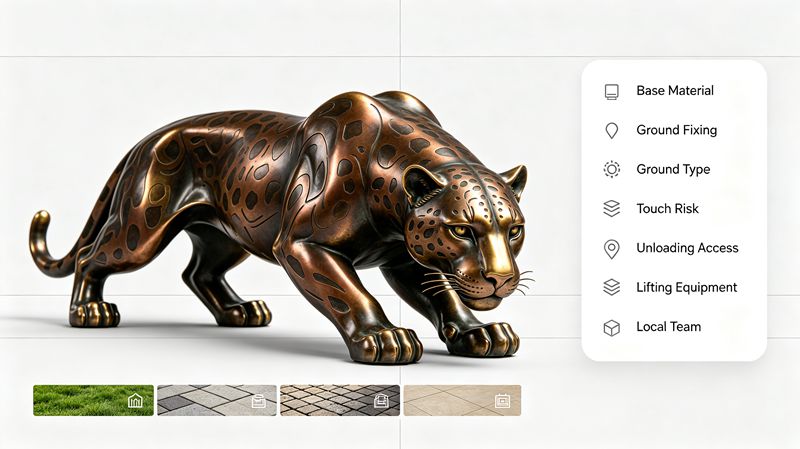
If you already know how the sculpture should be installed, include that information in your inquiry.
Useful details include:
- Whether it needs a base or pedestal
- Whether the base should be stone, metal, concrete, or another material
- Whether the sculpture should be fixed to the ground
- Ground condition, such as grass, concrete, stone paving, or indoor flooring
- Whether people can touch or climb near the sculpture
- Whether the site has limited access for unloading
- Whether a crane, forklift, or special handling may be needed
- Whether local installation teams will handle the final placement
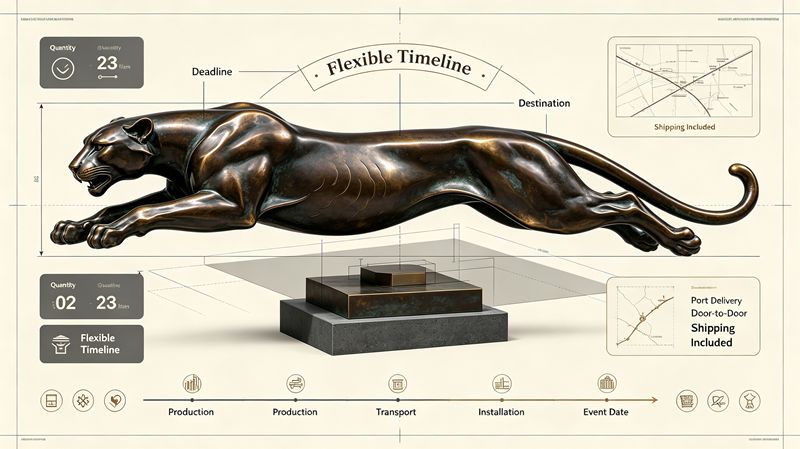
8. Provide Quantity, Deadline, and Shipping Destination
If you want a more complete cost estimate, do not forget the basic project information.
Please include:
- Quantity
- Expected delivery time or project deadline
- Destination country and city
- Whether you need shipping included
- Whether you need door-to-door delivery or only port delivery
- Whether installation guidance is required
A single sculpture for a private garden is different from multiple sculptures for a commercial space or park. Shipping destination also matters because packing method and transport planning depend on size, weight, material, and route.
If your deadline is flexible, say so. If it is connected to a hotel opening, exhibition, real estate launch, birthday, memorial date, or public project schedule, mention that clearly. A supplier can then review whether the expected timeline is practical before production begins.
Why Very Low Quotes Can Be Risky
It is natural to compare prices. I also understand that every buyer has a budget. But when one quotation is much lower than others, it is worth checking what is included and what has been assumed.
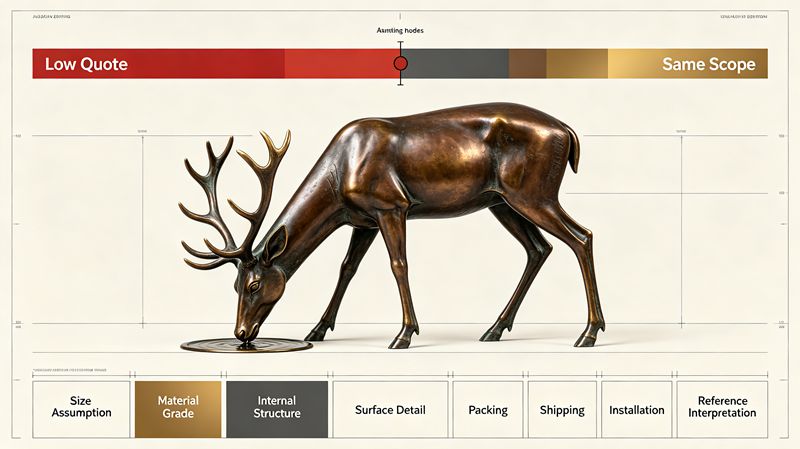
A very low quotation may mean:
- The supplier assumed a smaller size
- The finish standard is different
- The material or thickness expectation is different
- The internal structure is simplified
- Surface detail has been reduced
- Packing is basic or not included
- Shipping is not included
- Installation considerations are missing
- The reference image was interpreted loosely
- The supplier did not fully understand the final effect you want
This does not mean the highest price is always best. It means the quotation should match the same scope. When comparing suppliers, make sure each one is pricing the same material, size, finish, detail level, installation requirement, and shipping condition.
How Long Does a Proper Sculpture Quote Take?
A simple preliminary estimate may sometimes be prepared faster, especially if the project is straightforward and the size, material, and finish are already clear.
A more accurate quotation takes more review. The supplier may need to check the design complexity, production method, mold needs, material use, surface finish, internal structure, packing, and shipping requirements. If key information is missing, the supplier should ask questions before giving a final number.
In my opinion, this is a positive sign. Careful questions usually mean the supplier is trying to understand the real project rather than giving a quick number based on assumptions.
A Practical Sculpture Quote Checklist
Before you send your inquiry, you can copy and complete this checklist.
| Information to Send | Your Notes |
|---|---|
| Reference images, sketches, or renderings | |
| Desired height, width, and depth | |
| Indoor or outdoor use | |
| Installation location type | |
| Site photos or drawings | |
| Preferred material | |
| Surface finish reference | |
| Style direction | |
| Close copy or loose inspiration | |
| Quantity | |
| Deadline or project schedule | |
| Destination country and city | |
| Shipping or installation requirements | |
| Budget range, if available |
You do not need to have every answer before starting the conversation. But the more details you provide, the more accurate and useful the quotation can be.
Final Summary
An accurate sculpture quote is not based on one image alone. It depends on a clear project scope.
If you want a more reliable quotation, prepare these details first: reference images, final or approximate dimensions, installation location, indoor or outdoor use, preferred material, surface finish, style direction, quantity, deadline, and destination.
The most important points are size and installation location, material and surface effect, and reference images with clear style boundaries. Once these are confirmed, the supplier can better understand the real work behind your sculpture idea.
From my experience, clear inquiry materials save time for both the buyer and the supplier. They also help reduce repeated revisions and make the final sculpture closer to the effect you want.
If you are preparing a custom sculpture project, you can contact You Fine Art Sculpture for an inquiry checklist template or send your current photos, sketches, dimensions, and site information for review. I will help you organize the key details before preparing the next quotation step.

Frequently Asked Questions
1. Can I get an accurate sculpture quote from one photo?
Usually, no. One photo can start the discussion, but an accurate quote needs size, material, finish, installation location, style expectations, quantity, and shipping destination. Without those details, the price is only a rough estimate.
2. Why do different suppliers give very different prices for the same sculpture idea?
They may be assuming different materials, sizes, finish standards, structure, detail levels, packing methods, or shipping conditions. Before comparing prices, make sure each supplier is quoting the same scope.
3. Is material the biggest factor in sculpture pricing?
Material is important, but it is not the only factor. Size, surface finish, production complexity, internal structure, mold work, hand detailing, installation needs, and shipping can also strongly affect the final quotation.
4. Do I need a 3D rendering before asking for a quote?
Not always. A rendering helps communicate the desired effect, but reference photos, sketches, dimensions, and style notes can also begin the quotation process. For complex custom projects, a rendering or model may become useful later.
5. What if I do not know the exact size yet?
You can provide an approximate size or explain the site relationship. For example, tell the supplier whether the sculpture should fit a garden corner, stand at a villa entrance, fill a hotel lobby, or be visible in a public plaza.
6. How can I avoid hidden costs or later price revisions?
Send complete information early and ask what the quote includes. Check material, size, finish, base, packing, shipping, installation support, and design scope. Clear confirmation before production reduces later changes.