Whether placed at a ranch entrance, equestrian club, memorial park, or private estate, a life size bronze horse statue creates a strong sense of power, motion, and timeless elegance. But behind this impressive appearance is a complex and highly skilled manufacturing process.
Many people naturally wonder: how is such a large and realistic bronze horse made, and what makes it durable enough for long-term outdoor display?
The answer is that it is not made in a single step. A life size bronze horse statue is created through a series of precise stages, including clay modeling, mold making, wax casting, fine sand shell and silica sol casting, bronze pouring, welding and assembly, surface refinement, and final patina finishing.
Each step plays a critical role in shaping the final quality, strength, and artistic detail of the sculpture.
In the following sections, we will walk through the full process step by step inside a professional bronze foundry.

Why Making a Horse Statue Is More Difficult Than Ordinary Sculptures
At first glance, some people may think that making a bronze horse is no different from making any other bronze sculpture. In reality, horse statues are among the most technically demanding bronze artworks, especially when they are produced at life size or larger.
Accurate Horse Anatomy Is Essential
A horse is an animal full of visible muscle tension and dynamic energy.
Its neck arch, chest depth, shoulder strength, leg tendons, and facial spirit all determine whether the sculpture feels powerful or lifeless.
Even a slight mistake in body proportion can make the horse appear weak, stiff, or unrealistic. That is why experienced sculptors must have a deep understanding of horse anatomy before the bronze casting process even begins.
Large Dimensions Require Structural Engineering
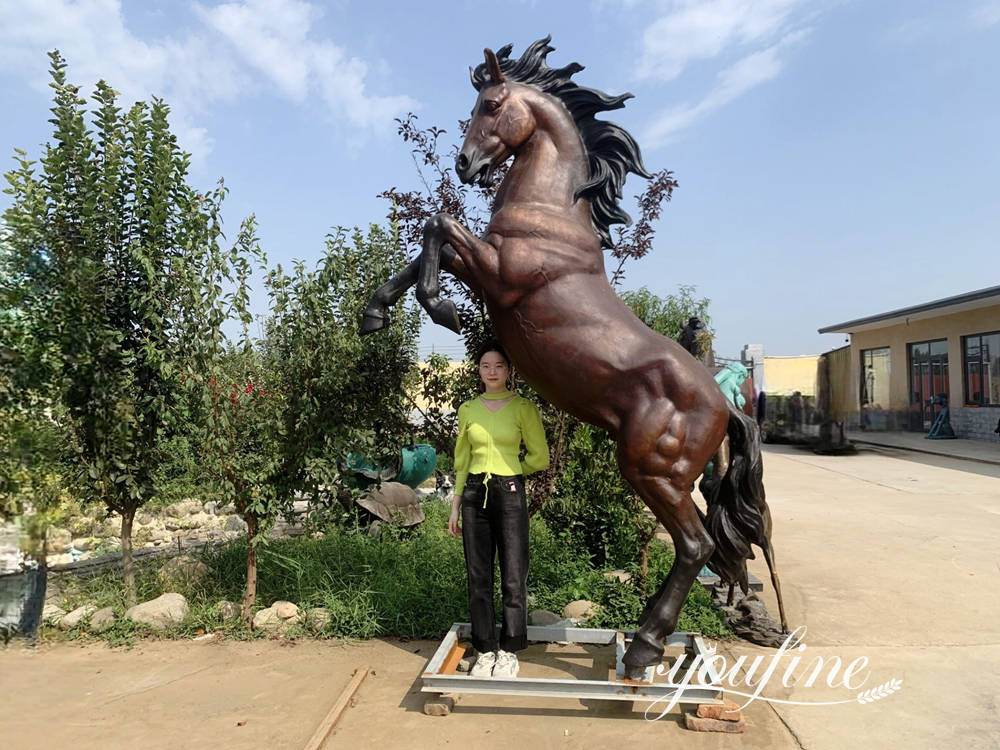
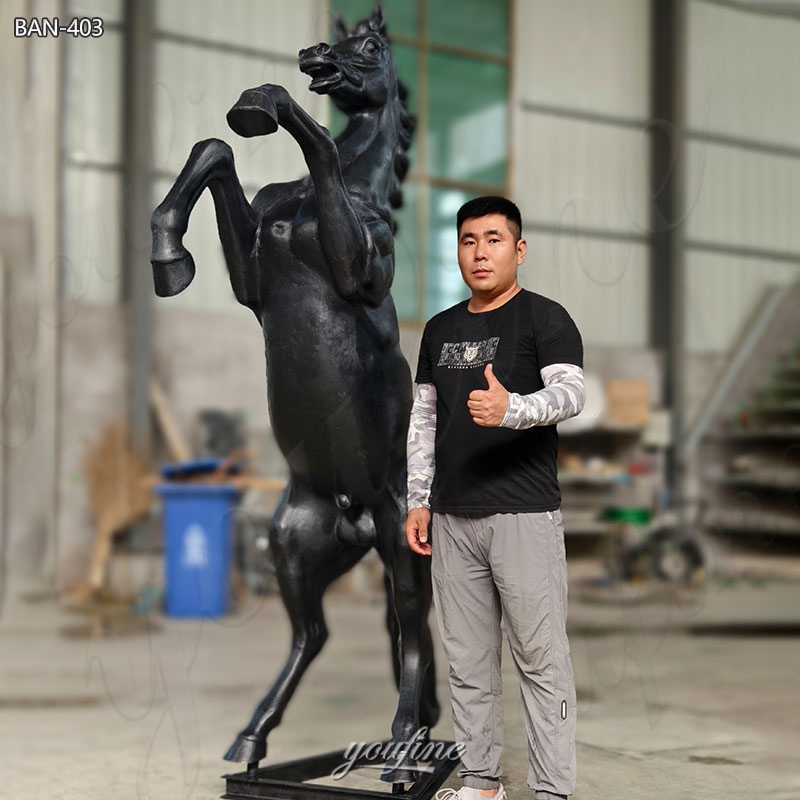
A typical life size bronze horse statue often measures:
- 2.3m to 3m in body length
- 1.8m to 2.4m in total height
At this scale, the finished bronze sculpture can weigh several hundred kilograms.
This means the foundry must carefully calculate:
- internal support structure
- center of gravity
- hoof load-bearing capacity
- long-term outdoor stability
Without these considerations, a large horse sculpture may deform, lean, or even crack after installation.
Dynamic Horse Poses Are Much Harder to Produce
Standing horses are already challenging.
Running horses, rearing horses, or one-leg support horses are even more difficult because the force distribution becomes highly concentrated.
Professional bronze foundries must solve both artistic movement and engineering safety at the same time.
For this reason, a truly successful life size bronze horse statue is never the result of simple casting—it is the result of a carefully controlled foundry system.
Step 1 – Sculpting the Full-Scale Clay Horse Model
Every great bronze horse statue begins not with bronze, but with clay.
Before any mold can be made, sculptors must first build a full-size clay horse model according to the customer’s design, horse breed reference, or desired action pose.
Building the Internal Steel Armature
Because the sculpture is life size, artisans first weld a strong steel framework that matches the exact dimensions of the future horse. This steel armature serves as the skeleton that supports the clay during sculpting.
Hand Sculpting Every Muscle and Detail
After the frame is complete, sculptors gradually apply clay layer by layer and begin shaping the horse by hand:
- the powerful chest
- the flowing neck muscles
- the stretched abdomen
- the tense hind legs
- the veins and tendons
- the mane and tail movement
- the nostrils, ears, and eyes
This is the most artistic part of the entire process because the clay model determines nearly all of the final visual quality.
If the clay horse lacks spirit, no amount of later bronze work can fully fix it.
That is why experienced bronze foundries invest heavily in highly trained sculptors at this first stage.

Step 2 – Dividing the Horse and Making Silicone Molds
Once the full-scale clay horse is approved, the next step is model making.
Many first-time buyers assume that such a large bronze horse can be cast in one piece. In fact, this is impossible.
A life size horse statue must be scientifically divided into several separate casting sections, usually including:
- head
- neck
- torso
- four legs
- tail
Depending on the horse pose, some sculptures may be divided into even more sections.
Capturing Every Surface Detail
Skilled workers carefully brush liquid silicone rubber over the clay horse. Silicone is flexible enough to capture:
- muscle lines
- hair textures
- skin folds
- facial expression details
After the silicone layer cures, a hard fiberglass or plaster mother mold is built outside it to keep the shape stable.
This combination creates a precise negative mold that records every sculpted detail from the original clay horse.

Step 3 – Creating Hollow Wax Horse Replicas
After the silicone molds are finished, artisans begin the famous lost-wax preparation.
Hot melted wax is poured into each mold section and evenly rotated so the wax coats the inner surface. After cooling, workers remove the mold and obtain a hollow wax replica of each horse part.
These wax pieces are not random temporary copies. They are exact duplicates of the future bronze horse.
Why the Wax Stage Is So Important
The thickness of the wax shell usually determines the thickness of the final bronze wall.
If the wax layer is uneven:
- some areas may become too thin and fragile
- some areas may become too thick and unnecessarily heavy
Therefore, foundry workers must carefully control the wax thickness while also hand repairing all minor imperfections.
At this stage, artisans also sharpen details such as:
- hair strands
- veins
- nostril edges
- muscle transitions
The more refined the wax horse becomes, the more vivid the final bronze casting will appear.

Step 4 – Building Fine Sand Shell Molds with Silica Sol Technique
Once the hollow wax horse sections are completed, they must be transformed into heat-resistant casting molds that can withstand molten bronze at extremely high temperatures. This stage is one of the most important hidden factors affecting the final bronze surface quality.
Wrapping the Wax Horse with Fine Mongolian Sand Slurry
Unlike rough ordinary shell methods, YouFine foundry uses specially selected fine sand imported from Mongolia.
This sand has an extremely delicate grain size, which allows it to capture:
- subtle hair textures
- soft muscle transitions
- facial expression details
- skin fold lines
Workers repeatedly coat the wax shell with sand slurry, allowing each layer to dry naturally before applying the next.
Layer by layer, the wax horse becomes enclosed in a dense and highly heat-resistant sand shell.
Because the sand particles are finer and more uniform, the final bronze surface can achieve a much cleaner and smoother texture after casting.
Upgraded Silica Sol Shell-Making Technique
In this shell-making process, we also use advanced silica sol investment casting technology.
Silica sol acts as a superior binder inside the shell slurry, greatly improving:
- shell density
- shell strength
- mold permeability
- casting surface purity
More importantly, silica sol technology can effectively reduce common bronze casting surface problems such as:
- white spots
- green oxidation stains
- surface impurities
- pinhole defects
These imperfections are often seen in low-grade bronze sculptures made with traditional rough shell materials.
By using a finer sand shell combined with silica sol, the molten bronze can cool more evenly and maintain a purer metal surface, which provides a much better foundation for the later polishing and patina coloring process.
The True Lost-Wax Moment
After the multilayer sand shell becomes fully dry and strong enough, it is heated in a high-temperature kiln.
The wax inside slowly melts away and drains out through the reserved channels, leaving behind a hollow cavity between the shell walls.
This hollow cavity is the exact negative form of the future bronze horse section.
At this moment, the temporary wax horse disappears, and the professional bronze casting mold is officially ready.
This is the heart of the traditional lost-wax casting process, but with modern upgraded shell materials that greatly improve the final quality of monumental bronze sculptures.

Step 5 – Pouring Molten Bronze into the Horse Molds
This is one of the most dramatic stages in the foundry. Solid bronze ingots are placed into the furnace and heated until they become glowing liquid metal. The temperature usually reaches over 1150°C. At this point, every ceramic shell must be prepared in advance because molten bronze cools quickly and must be poured with precision.
Experienced foundry workers carefully lift the crucible and pour the liquid bronze into each shell horse mold through the reserved channels. As the molten metal flows into every internal cavity, the temporary wax horse is officially reborn as bronze. After pouring, the molds are left to cool naturally for many hours until the metal becomes fully solid.
This step not only requires technical skill but also strict safety control, because the entire casting quality depends on whether the bronze fills every detail smoothly and evenly.

Step 6 – Breaking the Shell and Revealing Raw Bronze Parts
After cooling, the ceramic shell is broken away by hand or machine. For the first time, the raw bronze horse sections appear. At this moment, the sculpture is still far from beautiful.
The surface usually contains:
- sand shell residue
- oxidation marks
- rough pouring channels
- unfinished edges
- Workers then:
- cut off all bronze sprues
- remove impurities
- sandblast the surface
- inspect every part for shrinkage holes or casting defects
Only after this cleaning stage can the bronze pieces move on to assembly.
Step 7 – Welding All Bronze Sections into One Complete Horse
Because the horse was cast in many separate sections, these parts must now be joined into a single sculpture.
Master welders carefully align:
- head to neck
- neck to torso
- torso to legs
- tail to body
- and weld every bronze section together.
For large life size horse statues, hidden internal steel reinforcement is often added to improve long-term structural strength, especially in:
- raised front legs
- thin ankle areas
- concentrated hoof support points
Why Welding Quality Matters So Much
Many low-quality bronze statues look acceptable when new, but after years outdoors, invisible weak welds begin to crack.
That is why professional foundries spend extensive time on:
- full seam welding
- repeated structural grinding
- stress testing
After welding, artisans grind the seams until the joints become visually invisible.
The sculpture should appear as if it were cast as one natural body.

Step 8 – Polishing and Hand Refining Every Surface Detail
After welding, the life size bronze horse has finally become one complete body—but the work is still not finished.
Even with highly skilled welding, some tiny joints, grinding marks, and lost textures will naturally appear where different bronze sections were connected. If these areas are left untreated, the sculpture will look rough and artificial.
This is where the hand chasing stage becomes extremely important.
Experienced artisans use a variety of small metal tools to manually restore and refine:
- mane hair flow
- tail hair texture
- skin wrinkles
- muscle transitions
- veins and tendons
- nostrils
- eyelids
- ear edges
In other words, sculptors must re-carve the life and movement back into the bronze horse.
This stage often requires many days of patient handwork, because the goal is not only to hide all welding traces, but also to ensure that the final bronze horse looks completely natural from every viewing angle.
A high-quality bronze horse statue should never reveal where the bronze parts were originally cast separately.

Step 9 – Applying Chemical Patina for a Timeless Bronze Finish
Raw bronze is only the beginning.
Without professional coloring treatment, bronze surfaces look dull and unfinished. More importantly, they lack the artistic warmth and outdoor weather resistance that customers expect from monumental sculptures.
That is why every handmade bronze horse statue enters the patina coloring stage.
Heating and Chemical Coloring
Artisans first heat the bronze surface evenly with fire or industrial burners.
Then special patina chemicals are brushed or sprayed onto the heated metal. Under controlled temperature, the bronze reacts chemically and gradually develops rich artistic colors.
Common horse statue finishes include:
- classic antique brown
- dark walnut bronze
- black bronze
- green antique bronze
Because the patina is created through chemical reaction rather than simple paint, the color penetrates naturally into the metal surface and creates a far deeper, more authentic appearance.
Protective Wax Sealing
After the desired patina color is completed, a layer of protective wax or special outdoor sealant is applied.
This final protection helps the sculpture resist:
- rain
- UV exposure
- oxidation
- temperature changes
As a result, a professionally patinated bronze horse statue can remain beautiful outdoors for decades with only minimal maintenance.

Step 10 – Factory Trial Assembly, Balance Testing, and Secure Packing
For small decorative bronzes, finishing may stop after coloring.
But for a monumental life size horse statue, professional foundries know that one final step is absolutely necessary before shipment: full factory inspection and trial assembly.
Pre-Installation in the Foundry
Before packing, the entire bronze horse is assembled and stood up inside the factory to test:
- overall balance
- hoof stability
- weld integrity
- installation bolt positions
- center of gravity
- transportation safety
This pre-installation process allows technicians to discover and solve any hidden structural issues before the sculpture reaches the customer.
For dynamic horse poses such as rearing or running horses, this testing step is especially critical.
Export Packing for Long-Distance Shipping
After the inspection is passed, the sculpture is packed carefully with:
- thick foam wrapping
- waterproof protection
- strong wooden crates
- internal anti-shock reinforcement
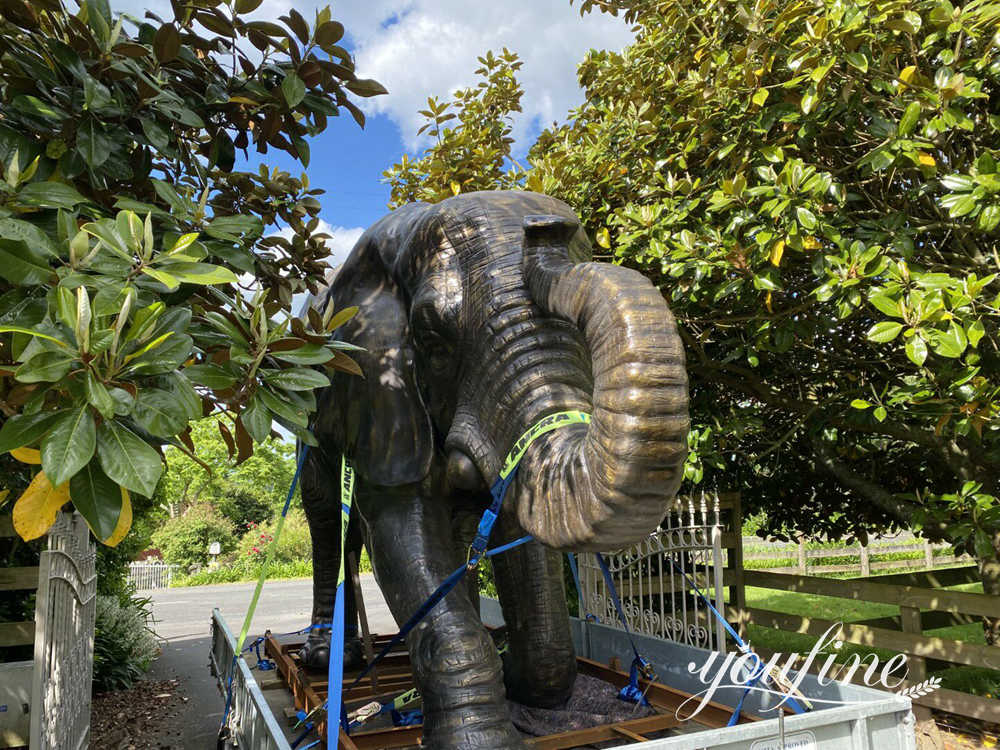
This ensures the life size bronze horse can travel safely to gardens, ranches, parks, estates, and equestrian projects around the world.

How Long Does It Take to Make a Life Size Bronze Horse Statue?
Because each stage requires hand craftsmanship, making a full-size bronze horse is never a quick industrial job.
Below is the typical production timeline inside a professional bronze foundry:
| Production Stage | Estimated Time |
| Full Size Clay Model | 15–30 Days |
| Silicone Mold Making | 7–10 Days |
| Wax Replica Preparation | 5–7 Days |
| Ceramic Shell Building | 7–10 Days |
| Bronze Pouring & Cooling | 2–3 Days |
| Welding & Structural Assembly | 7–15 Days |
| Hand Chasing & Surface Refining | 7–12 Days |
| Patina Coloring & Wax Protection | 3–5 Days |
| Factory Inspection & Packing | 2–3 Days |
So in most cases, a handmade life size bronze horse statue requires approximately 45 to 75 days from sculpting to shipment, depending on the complexity of the pose and level of detail.
This is precisely why truly fine bronze horses always carry much higher artistic value than mass-produced decorative castings.
YouFine Can Help Shorten the Production Time
However, one of YouFine’s biggest advantages is that we do not always need to start the clay sculpting process from zero.
After more than 40 years of producing bronze animal sculptures, we have accumulated a large collection of ready-made and highly popular life size horse sculpture clay models, including:
- standing horses
- running horses
- rearing horses
- grazing horses
- jumping horses
- memorial horse poses
These mature clay models have already been tested in actual bronze production and are loved by customers worldwide.
If clients choose one of these existing horse designs, we can directly move into the mold-making or adjustment stage instead of spending weeks on a completely new clay sculpture.
This means:
- shorter production cycle
- lower sculpting cost
- faster project delivery
- more reliable final details
In many cases, using YouFine’s existing life size horse clay models can save customers 15 to 30 days of production time while still allowing flexible customization in size, patina color, or base design.
For urgent ranch, estate, memorial, or landscape projects, this is often a highly practical solution.

Custom Life Size Bronze Horse Statues at YouFine
With more than 40 years of bronze casting experience, YouFine has created numerous life size and larger-than-life bronze horse statues for ranch entrances, private estates, equestrian clubs, memorial parks, and public landscape projects. Our advantages include:
- experienced animal artists with deep horse anatomy knowledge
- hundreds of ready-made horse clay models available
- custom standing, running, rearing, and jumping horse designs
- 40 year experiences in lost-wax bronze casting
- strict welding and structural reinforcement
- worldwide secure shipping
From the first clay model to the final bronze patina, every horse sculpture is handmade inside our own foundry to ensure museum-level detail and long-term outdoor durability.
If you are looking for a realistic custom bronze horse statue, YouFine can help transform your vision into a timeless monumental artwork.

FAQ
- How much does a life size bronze horse statue weigh?
Most life size bronze horse statues weigh between 300 kg and 800 kg, depending on bronze thickness, pose complexity, and internal steel reinforcement.
- Will a bronze horse statue rust outdoors?
No. Bronze does not rust like iron. With professional patina treatment and wax protection, it can withstand outdoor weather for many decades.
- Can a life size bronze horse statue be customized?
Yes. Customers can customize:
- horse breed
- standing or running pose
- color finish
- size
- inscription
- base design
- How long can a bronze horse statue last?
A properly cast bronze horse statue can easily last for generations. Many outdoor bronze sculptures remain intact for over 100 years with basic maintenance.
- Is installation difficult for a large bronze horse?
Not usually. Professional foundries pre-test the installation system and provide anchor bolts plus installation guidance, making onsite assembly straightforward.