Quick Answer: What does a horse statue with raised legs mean?
One leg raised → injured in battle
Two legs raised → died in battle
Four legs on ground → natural death
The horse statue‘s leg position has the meaning that represents the warrior’s safety, injury, or sacrifice in rumors. In China, horses carry symbolic meanings such as “taking the lead” and “achieving instant success.” Once serving as symbols of power and status, horse statues now also embody the positive and aspirational ideals held within people’s hearts through the course of historical evolution.
1. What Do The Various Leg Postures Of Horse Statues Mean?
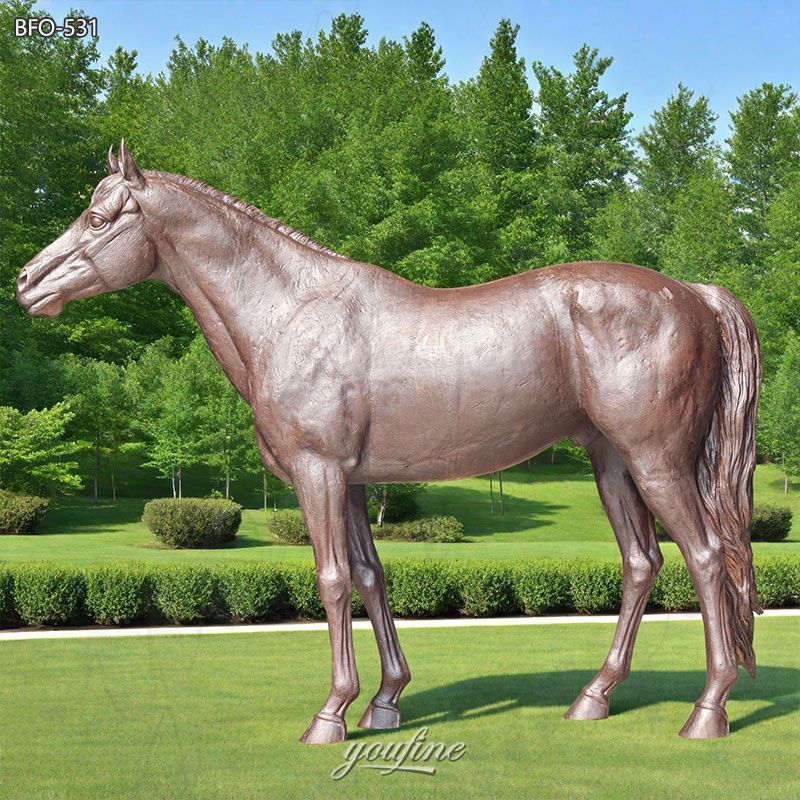
1.1 All Four Legs On The Ground
In military terms, a horse statue with all four legs planted firmly on the ground represents a warrior who died of natural causes.
In everyday life, a horse with a steady, stationary stance is often viewed as a symbol of stability and grounded success. When all four legs are firmly rooted to the earth, the statue expresses the person experiencing a steady, step-by-step approach and achieving their established goals.
1.2 One Front Leg Raised
If a horse statue depicts a single raised leg, it signifies that the rider atop it sustained an injury during battle—this meaning is commonly seen in war memorials from the American Civil War era.

1.3 Two Legs Raised
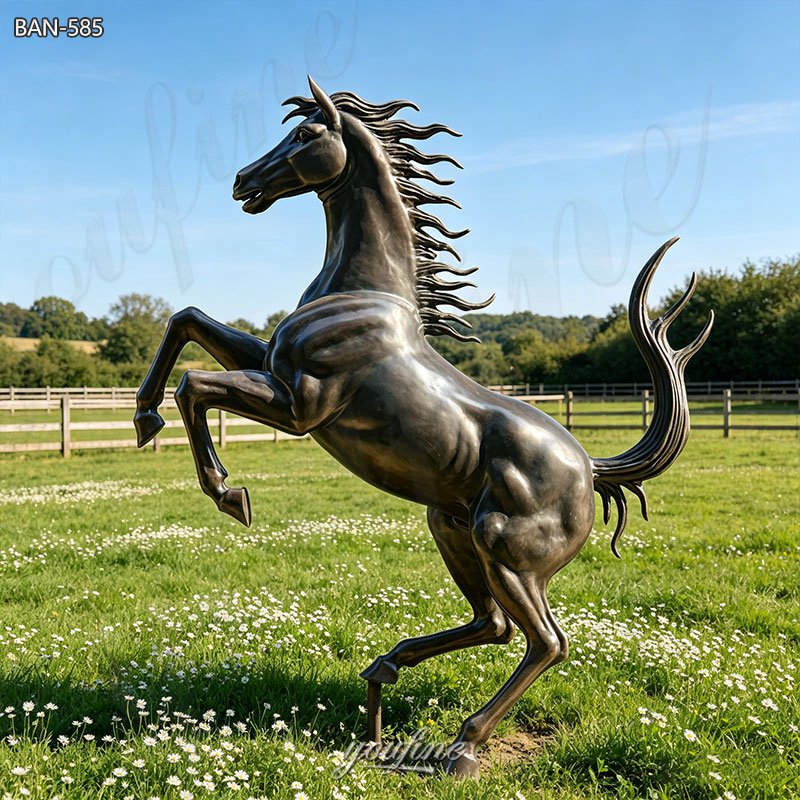
In the “rearing” posture, the horse’s hind hooves remain on the ground while the front hooves are airborne.
It symbolizes victory and triumph when horse statue front legs up. In certain military monuments—particularly those featuring a rider—this rearing posture signifies powerful leadership and the ability to overcome any challenge.
Today, statues of rearing horses are often placed in front of corporate buildings to symbolize vitality, freedom, and the pursuit of exceptional success. If you are interested in a horse statue with front legs up, please refer to this article: “What Exactly Does a Bronze Statue of a Rearing Horse Symbolize?”
However, the horse statue is in a two-legged raised position in war, meaning that the rider atop the horse was unfortunately killed in action during the war.
1.4 A Galloping Horse
This posture is typically associated with speed, ambition, and rapid progress. Particularly within the contexts of the professional world and leadership, a galloping horse is viewed as a symbol of courage, swiftness, and an unwavering determination to forge ahead.

2. Is The Horse Statue Leg Meaning A Myth or Truth?
In historical, the horse statue meaning are widely believed that the leg postures of certain equestrian statues align with the traditional interpretations mentioned above. For instance, in the statue of General Robert E. Lee, his steed stands with all four hooves firmly planted on the ground—and General Lee himself did indeed pass away from natural causes during peacetime.
However, there is no official rule to agree on this point. And there are also instances that do not conform to this pattern; for example, both General George Washington and General Simón Bolívar died of natural causes, yet the horses in their equestrian statues are depicted with one leg raised.
Many historians consider that the horse statue’s leg in war meaning is a popular myth rather than a fact. However, it is widely believed that the horse statue is always interpreted as a symbol of war and has symbols of power, energy, and speed. Within the context of Feng Shui culture, the symbolic significance of horse statues plays a positive role in helping individuals overcome difficulties and guiding them on their path forward.
Consequently, regarding the deeper meanings supposedly embedded in the leg postures of these statues, about the horse statue myth or truth, you are free to form your own conclusions.

3. The Horse Statue In History
3.1 Ancient Roman/Greek Influence
During the era of Ancient Rome, emperors and civil war leaders regarded equestrian statues—particularly those crafted from bronze—as powerful symbols of their identity and status. The surviving statue of Marcus Aurelius stands as a prime example of this tradition.
In ancient Greek mythology, the horse accompanied Poseidon in defeating his enemies and gradually came to symbolize loyalty, courage, and challenging fate.
3.2 Military Symbolism
During times of the American Civil War, the horse sculptors frequently utilized the horse statues to honor and commemorate fallen soldiers. And apply employing the posture of the horse to symbolize the rider’s ultimate fate.
For instance, if the horse is depicted with one leg raised, it symbolizes that the soldier sustained injuries on the battlefield; if the horse has two legs raised, it indicates that the soldier made the ultimate sacrifice in combat.
Conversely, if the horse stands with all four hooves planted on the ground, it signifies that the soldier survived the conflict after the war had ended.
In ancient China, the horse was invariably utilized as a mount, fighting alongside warriors in battle; it served as the very embodiment of the Chinese people’s spirit of unceasing self-strengthening. Simultaneously, it functioned as a means of transportation, thereby encapsulating the spirit of speed and efficiency.
3.3 Symbols of Power and Leadership
As a scarce strategic resource, the horse, whether in the West or the East, has always been a symbol of power and leadership. They convey the idea of harnessing national power by riding horses.
In Feng Shui, horse statues are associated with power and leadership status. They offer inspiration and a spirit of enterprise to those aspiring to advance in their careers. Feng Shui practitioners hold the idea that when correctly positioned, a horse statue can attract fame, recognition, and public acclaim.
4. How To Choose The Right Horse Statue?
If you wish to perpetuate this enduring bond—or if you simply admire the symbolism embodied by equine sculptures—then a bronze horse statue may be exactly what you are looking for.
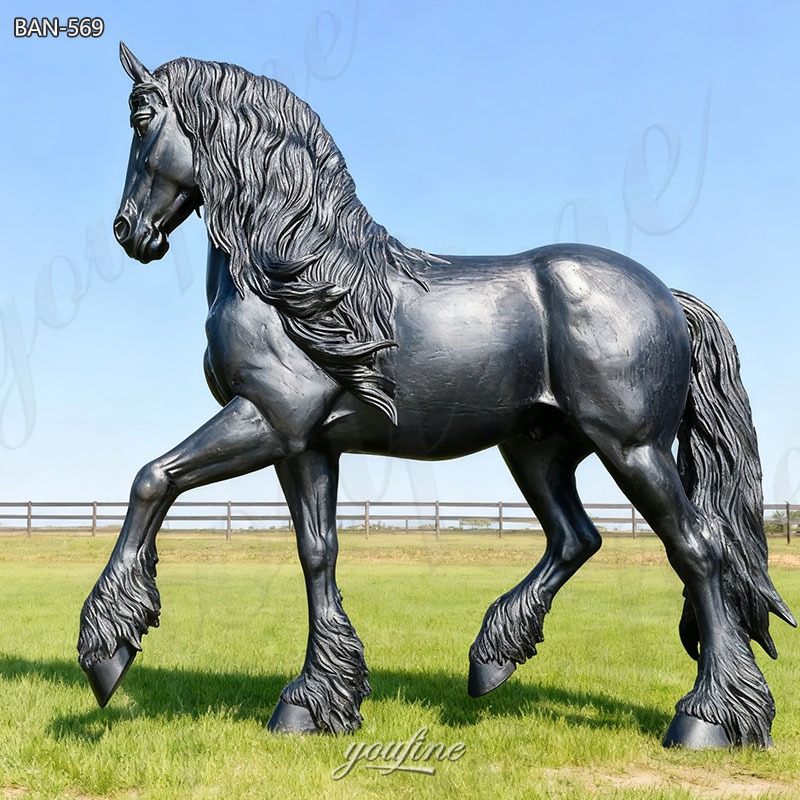
Consider this bronze horse statue from YouFine; its lifelike appearance captures the true spirit and majesty of the horse, allowing you to experience its authentic presence.
4.1 Selection Of Pose
Leaping Horse:
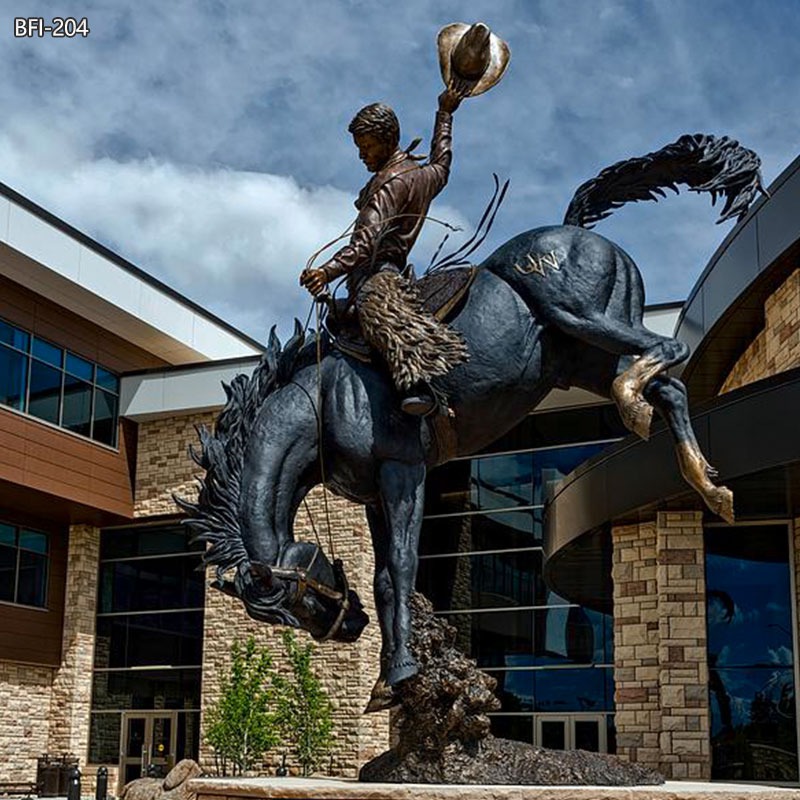
With its two front legs raised high, the leaping horse appears toward success. Through bronze materials used, these horse statues can offer a realistic appearance. They can be a captivating focal point in any home décor.

Running Horse:
Through conveying a resolute determination to move forward and unstoppable momentum, the running horse statue also embodies the inherent freedom and vitality of the horse.

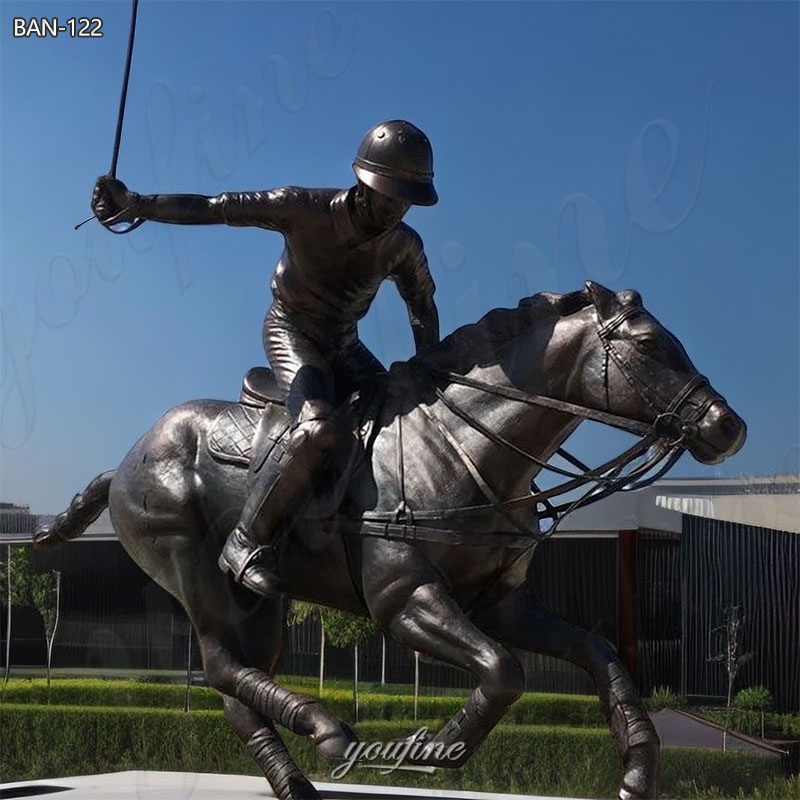
Running Horse with Rider:
Signifying success and career ascent, the running horse accompanied by a rider appears to be imbued with the courage to overcome obstacles and difficulties.
4.2 Where Should You Place A Horse Statue?
In Feng Shui, the placement of a horse statue carries various distinct meanings.
– Southern Sector in front of the house
When placed in the southern sector, a horse statue in Feng Shui symbolizes the enhancement of fame and public recognition. Better to place the horse statue at the front of the house.
-The entrance of the company
Symbolizing a spirit of bold enterprise and swift success, the horse statue also inspires employees to strive for high efficiency and professional achievement.
-Public Square, Station
Embodying concepts of speed, freedom, and forward momentum, a horse sculpture can serve as a cultural symbol for a region, inspiring the public to gallop toward a brighter future.
5 Conclusion
Whether serving as a symbol of power, a vital wartime asset, or a loyal companion, the horse has accompanied us throughout the long course of history. And the horse statue is still loved by people right now; more than a hundred clients select bronze horse statue placement for home decor. If you also love the horse statue, welcome to contact us to select the exquisite bronze horse statue.
YouFine can offer:
Realistic appearance of the statue
Various positions of the horse statue
Much more pre-model in the factory
comprehensive sculpture insurance