Monkey statues are charming, playful, and full of personality, making them popular decorative sculptures in gardens, parks, temples, and homes. But beyond their amusing appearance, many people ask an important question: what does a monkey statue symbolize?
In many cultures, monkey statues represent intelligence, curiosity, protection, wisdom, and good fortune. Monkeys are known for their quick thinking, agility, and playful spirit, which makes them powerful symbolic figures in art and mythology. Depending on cultural traditions, monkey sculptures may also symbolize spiritual devotion, moral awareness, or prosperity.
From ancient religious traditions to modern garden decor, bronze monkey statues carry rich cultural meanings that go far beyond decoration. In this article, we will explore the symbolism of monkey statues, their meanings in different cultures, and why they remain a popular choice for outdoor sculpture and artistic expression.
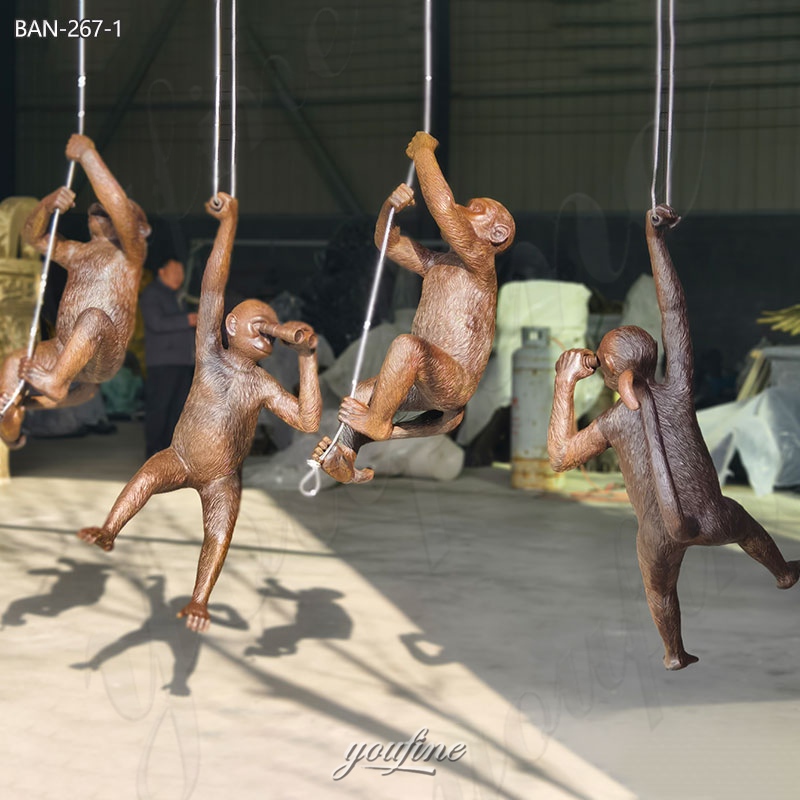
The General Symbolism of Monkey Statues
Across the world, monkeys are admired for their intelligence, adaptability, and lively personalities. Because of these qualities, monkey statues often carry several universal symbolic meanings.
Intelligence and Cleverness
One of the most common symbolic meanings of monkey statues is intelligence. Monkeys are known for their problem-solving abilities and quick learning skills. In nature, they demonstrate creativity when finding food, using tools, or adapting to new environments.
Because of this reputation, monkey statues are often associated with:
- Smart decision-making
- Creativity and innovation
- Strategic thinking
- Mental agility
People sometimes place monkey sculptures in offices or study spaces to symbolize wisdom and intellectual growth.
Curiosity and Exploration
Monkeys are naturally curious animals. They explore their surroundings, interact with objects, and constantly seek new experiences. This behavior has made monkeys symbols of curiosity and exploration.
A monkey statue can therefore represent:
- A desire for knowledge
- An adventurous spirit
- Openness to new opportunities
- Lifelong learning
In artistic symbolism, monkeys remind us to stay curious and approach life with a sense of discovery.
Playfulness and Joy
Another major symbolic meaning of monkeys is joy and playfulness. Their energetic movements, social behavior, and expressive faces make them symbols of happiness and fun.
This is one reason why monkey statues are commonly used in gardens and parks. Their lively poses bring a sense of humor and relaxation to outdoor spaces.
A monkey sculpture in a garden may symbolize:
- A lighthearted lifestyle
- Celebration of nature
- Social connection
- A joyful atmosphere
Protection and Awareness
In some traditions, monkeys are believed to have protective qualities. Their alert nature and quick reactions symbolize vigilance and awareness.
A monkey statue may represent:
- Guarding against negative energy
- Awareness of one’s actions
- Spiritual protection
This symbolism is particularly strong in religious and cultural traditions across Asia.
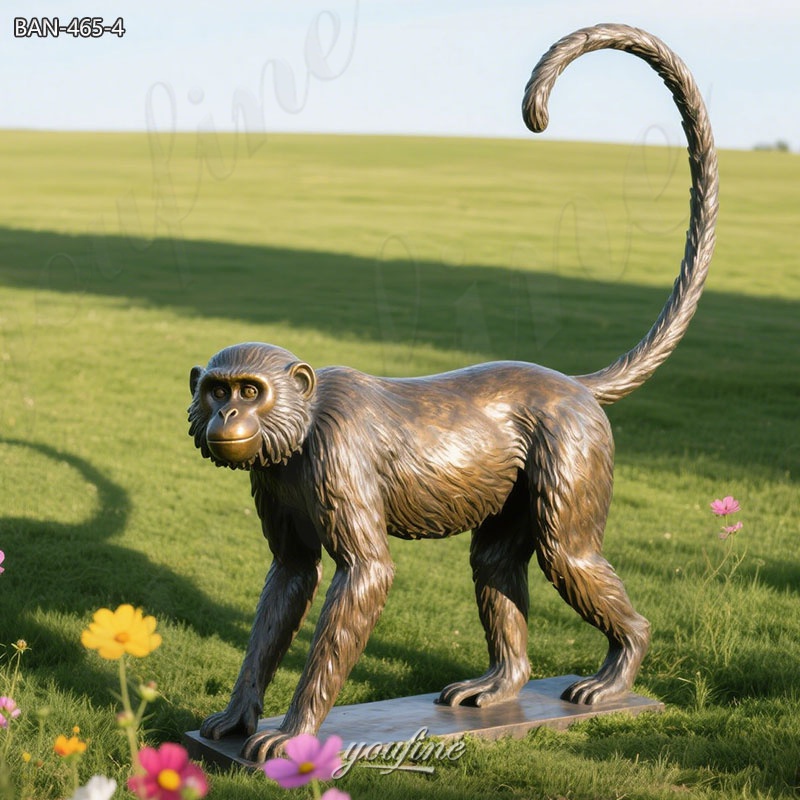
Monkey Symbolism in Different Cultures
The meaning of monkey statues varies widely across cultures. Many civilizations have incorporated monkeys into mythology, religion, and folklore.
Understanding these cultural interpretations helps explain why monkey sculptures appear in temples, shrines, and traditional artworks.
Monkey Symbolism in Hindu Culture
In Hindu tradition, monkeys are closely connected with the powerful deity Hanuman.
Hanuman is one of the most beloved gods in Hindu mythology and is revered as a symbol of:
- Loyalty
- Devotion
- Strength
- Courage
According to ancient texts such as the Ramayana, Hanuman used his incredible powers to help the hero Rama defeat evil forces.
Because of these heroic qualities, statues of Hanuman are commonly placed in temples and homes. They are believed to provide:
- Spiritual protection
- Strength during difficult times
- Faith and perseverance
This connection gives monkey statues deep religious significance in many parts of South Asia.

Monkey Symbolism in Japanese Culture
In Japan, monkeys have a unique symbolic meaning connected with moral wisdom. One of the most famous representations is the image of the Three Wise Monkeys.
These three monkeys cover their eyes, ears, and mouth, representing the principle:
“See no evil, hear no evil, speak no evil.”
This symbol teaches the importance of moral discipline and avoiding harmful behavior.
Statues of the Three Wise Monkeys often represent:
- Ethical living
- Self-control
- Spiritual awareness
- Protection from negative influences
These famous carvings can be found at the historic Tōshō-gū Shrine, where they have become one of the most recognized symbolic artworks in Japanese culture.
Because of this symbolism, monkey statues in Japan are often seen as guardians of wisdom and morality.

Monkey Symbolism in Chinese Culture
In Chinese culture, monkeys are strongly associated with intelligence, ambition, and success. The monkey is one of the twelve animals in the Chinese zodiac and represents people who are clever, energetic, and resourceful.
Individuals born in the Year of the Monkey are traditionally believed to be:
- Intelligent
- Witty
- Innovative
- Charismatic
Monkey statues in Chinese art often symbolize good fortune and success in career or business.
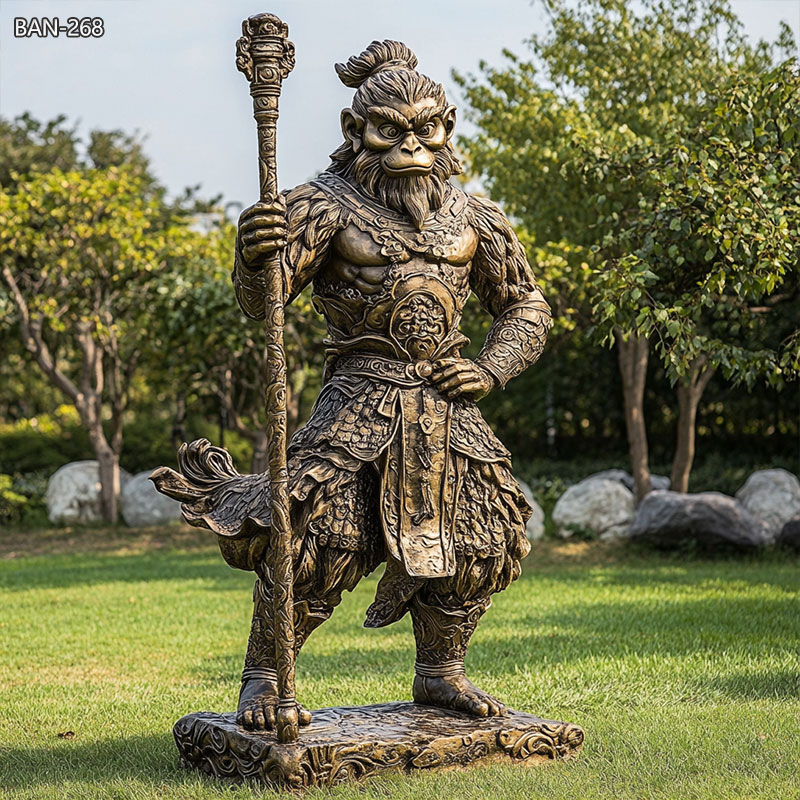
A key figure connected with monkey symbolism is Sun Wukong, also known as the Monkey King. This legendary character from the classic novel Journey to the West possesses incredible strength, magical abilities, and a rebellious spirit.
Sun Wukong symbolizes:
- Courage
- Independence
- Determination
- Supernatural power
Because of this association, monkey statues inspired by the Monkey King are often seen as symbols of strength and protection.
Monkey Symbolism in African Traditions
In several African cultures and folklore traditions, monkeys often appear as trickster figures. These characters use intelligence and humor to outsmart stronger animals.
Rather than representing deception, these stories often highlight:
- Cleverness
- Adaptability
- Survival skills
Monkey symbolism in African storytelling reminds people that intelligence and creativity can overcome challenges.
Because of this meaning, monkey sculptures may symbolize resourcefulness and resilience.
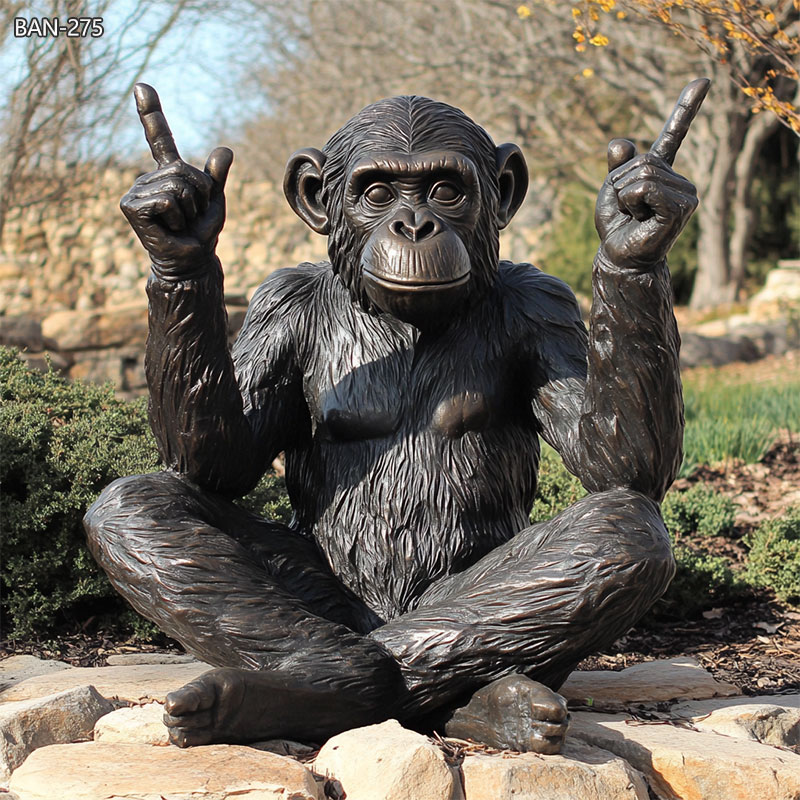
Where to Place a Monkey Statue for Good Luck
Placement can influence the symbolic effect of a monkey statue.
Common locations include:
- Office or workspace: A monkey statue on a desk may represent intelligence and career growth.
- Garden or courtyard: Outdoor monkey sculptures bring vitality and joyful energy to natural environments.
- Entrance or doorway: A statue near an entrance may symbolize protection and alertness.
Regardless of placement, monkey statues are often chosen to create an atmosphere of energy, intelligence, and optimism.
Different Types of Monkey Statues and Their Meanings
Monkey sculptures come in many artistic styles and poses, each carrying its own symbolic interpretation.
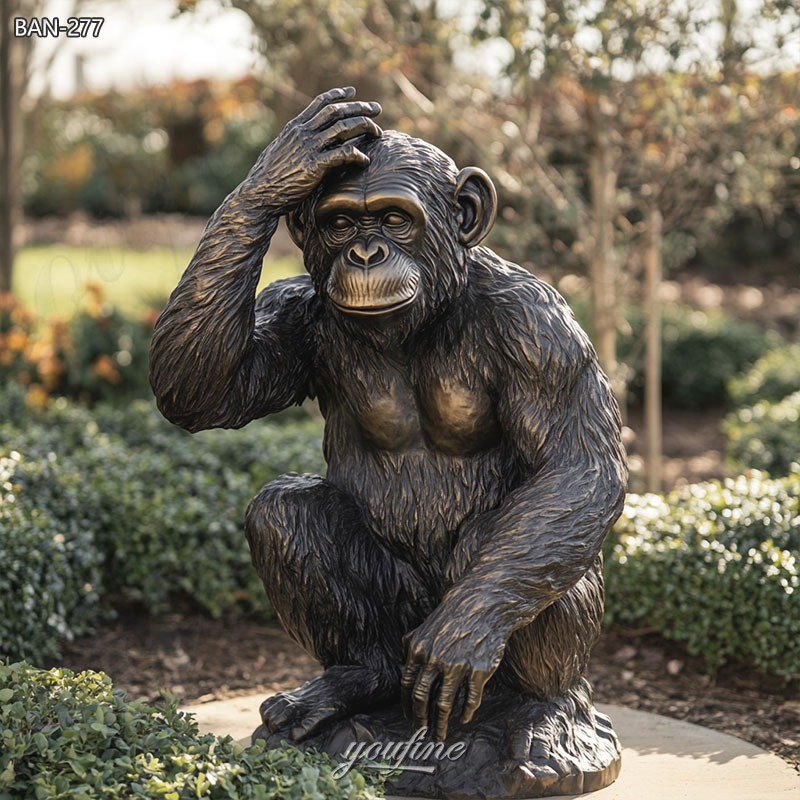
Sitting Monkey Statues
A sitting monkey often appears thoughtful or contemplative. This pose may symbolize:
- Wisdom
- Observation
- Patience
These statues are commonly used in garden settings where they appear to be quietly observing the environment.
The Three Wise Monkeys
Statues representing the Three Wise Monkeys are among the most recognizable monkey sculptures in the world.
Each monkey represents a moral lesson:
- Covering eyes: avoid seeing evil
- Covering ears: avoid hearing evil
- Covering mouth: avoid speaking evil
Together they symbolize ethical awareness and self-discipline.
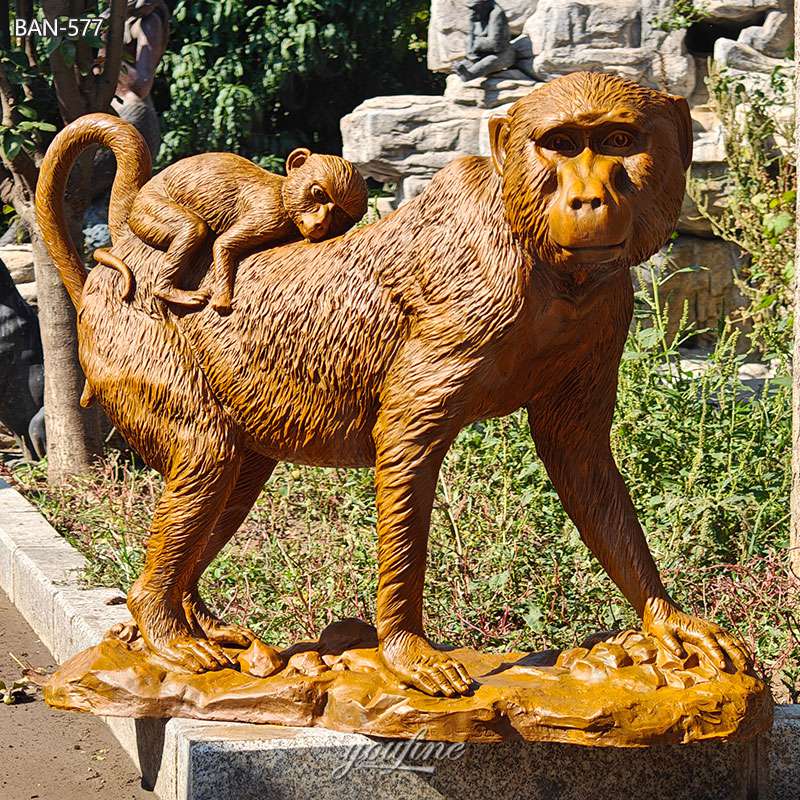
Monkey Family Sculptures
Some sculptures depict groups of monkeys interacting with each other. These pieces often symbolize:
- Family unity
- Friendship
- Social harmony
Because monkeys live in complex social groups, these sculptures highlight the importance of community.
Playful Monkey Sculptures
Playful monkey statues climbing, swinging, or holding fruit are often used in gardens.
They represent:
- Joy
- Energy
- A lively natural environment
These sculptures can make outdoor spaces feel more dynamic and inviting.
Why Monkey Statues Are Popular in Garden Design
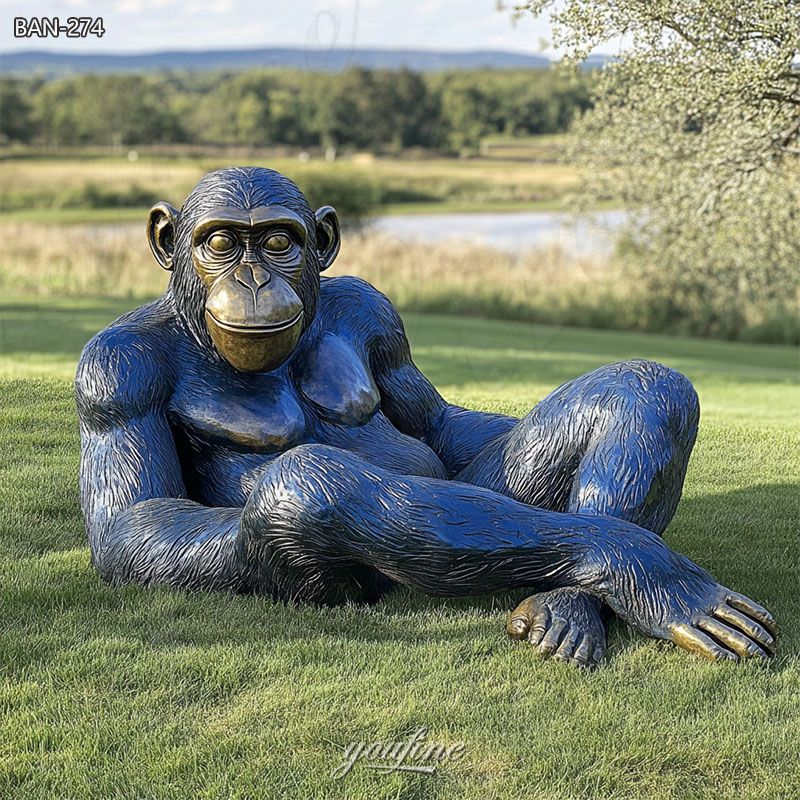
Monkey statues are widely used in landscape architecture and garden decoration. Their expressive shapes and symbolic meanings make them appealing artistic elements.
Adding Personality to Outdoor Spaces
Unlike many traditional statues, monkey sculptures often appear lively and humorous. Their playful poses create a sense of storytelling within a garden.
Visitors may feel as though the monkeys are interacting with the environment.
Connecting Art with Nature
Monkeys are closely associated with forests and wildlife. Because of this, monkey sculptures blend naturally with plants, trees, and water features.
A monkey statue placed near greenery can create a natural and harmonious atmosphere.
Creating a Conversation Piece
Decorative sculptures often serve as focal points in landscape design. A unique monkey statue can attract attention and spark conversations among guests.
Whether realistic or stylized, monkey sculptures add character and creativity to outdoor spaces.
How to Choose the Right Monkey Statue
If you are considering adding a monkey statue to your home or garden, several factors can help you select the right piece.
Material
Common materials include:
- Bronze
- Marble
- Stainless steel
- Resin
Bronze monkey statues are especially popular because they are durable and develop a beautiful patina over time.
Size and Placement
The size of the statue should match the surrounding environment.
Large sculptures work well in public parks or spacious gardens, while smaller statues can decorate patios or indoor spaces.
Artistic Style
Monkey sculptures range from highly realistic designs to abstract or modern interpretations.
Choosing a style that matches the surrounding landscape or architecture helps create a balanced aesthetic.
Famous Monkey Sculptures Around the World
Several famous monkey sculptures have become cultural landmarks and cultural symbols across different countries.
The carvings of the Three Wise Monkeys at the historic Tōshō-gū Shrine are among the most recognizable monkey artworks in the world. These iconic carvings illustrate the moral principle of “see no evil, hear no evil, speak no evil,” representing wisdom and ethical living.
Statues inspired by Sun Wukong can be found across China and other parts of Asia. These sculptures celebrate the legendary Monkey King’s strength, courage, and rebellious spirit, making them powerful symbols of determination and supernatural power.
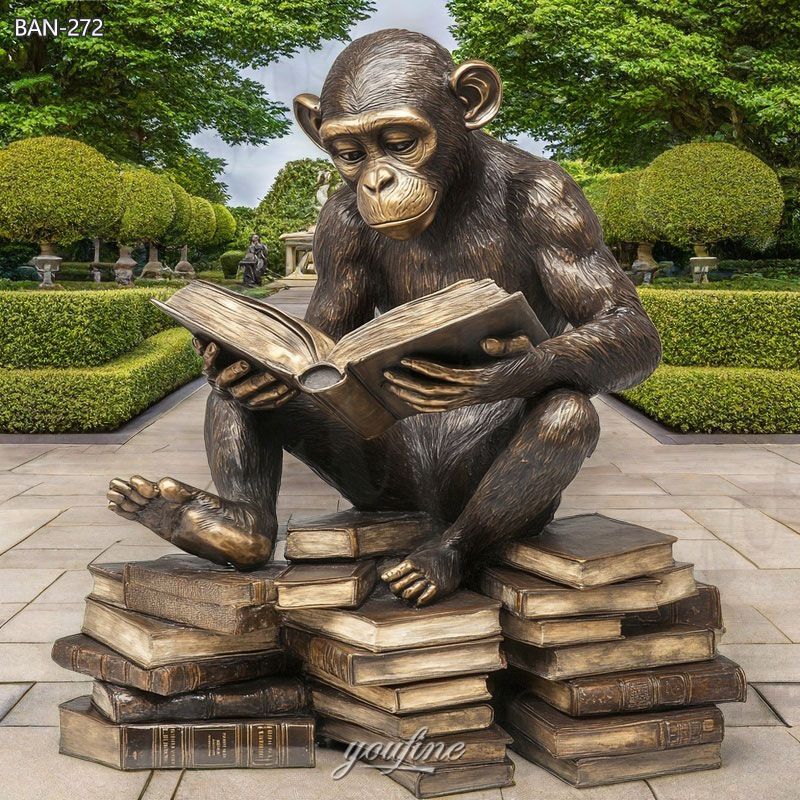
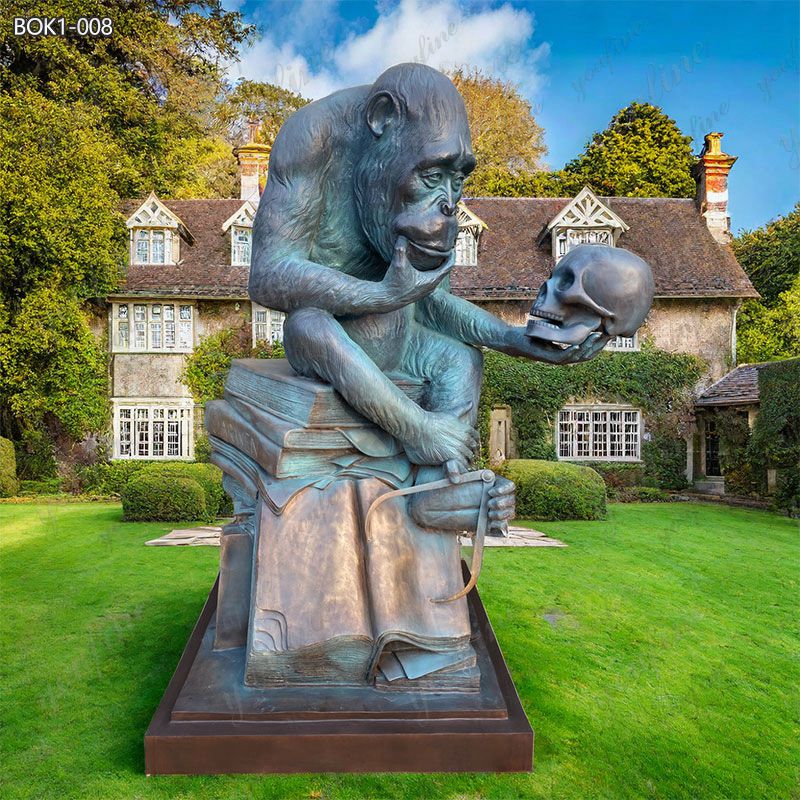
Another interesting example is the Darwin Monkey sculpture, inspired by the evolutionary theories of Charles Darwin. These sculptures often depict a monkey sitting thoughtfully while reading a book or contemplating, representing the connection between humans and primates as well as the pursuit of scientific knowledge. The Darwin Monkey has become a symbolic artwork in universities, museums, and science institutions around the world.
Together, these famous sculptures show how monkey imagery has inspired art, philosophy, religion, and science across centuries and cultures.
Conclusion
Monkey statues are far more than playful decorations. Across many cultures, they represent powerful ideas such as intelligence, curiosity, joy, protection, and spiritual strength.
From the moral wisdom symbolized by the Three Wise Monkeys to the heroic power of Hanuman and the legendary adventures of Sun Wukong, monkey sculptures carry deep cultural and historical meaning.
Whether used in gardens, temples, homes, or public art installations, a monkey statue can bring both artistic beauty and symbolic significance to a space.
For many people, these sculptures serve as reminders to stay curious, remain joyful, and approach life with intelligence and creativity.