As an animal sculpture supplier, we have worked with bronze tigers in many different contexts—private estates, luxury gardens, hotel entrances, and public landscapes. Some sculptures immediately command attention, while others, even at the same size, feel static or decorative.
So what truly makes a bronze tiger sculpture look powerful and alive?
It is never just about size or material. The sense of life comes from a combination of anatomy, posture, surface treatment, and the sculptor’s understanding of the animal itself.
Below are the key elements YouFine focuses on when creating a high-quality bronze tiger sculpture.
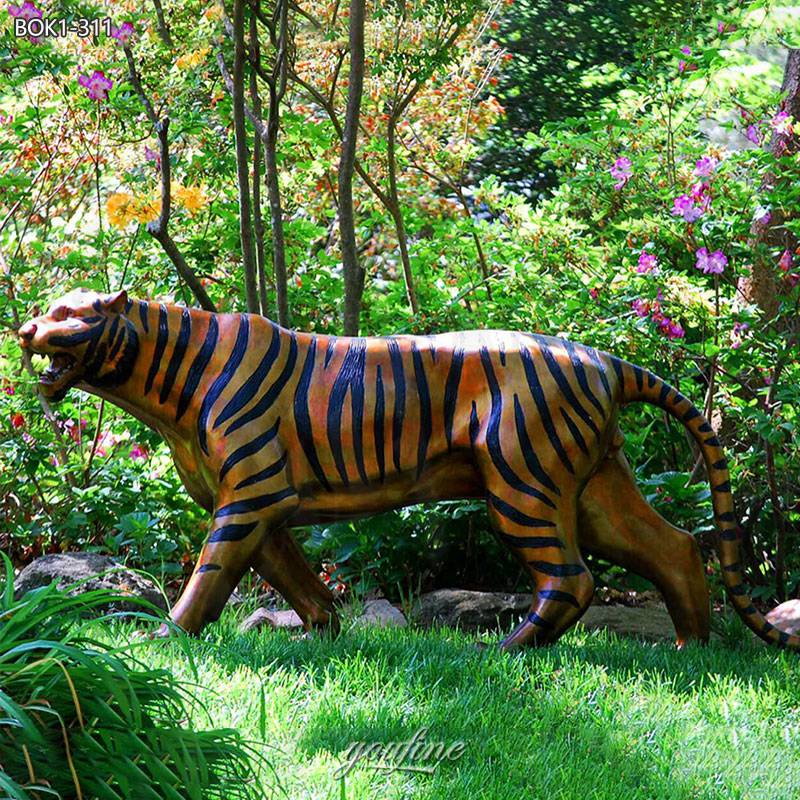
1. Accurate Anatomy: Power Starts Beneath the Surface
A tiger’s strength is not exaggerated—it is structured. A convincing bronze tiger sculpture begins with a deep understanding of feline anatomy:
- Broad shoulders and a strong chest
- Muscular forelegs that suggest explosive force
- A flexible spine that shows readiness rather than stiffness
When anatomy is simplified or incorrect, the sculpture may still look “nice,” but it will never feel dominant. In our experience, powerful tiger sculptures always show controlled muscle tension, not bulky exaggeration.
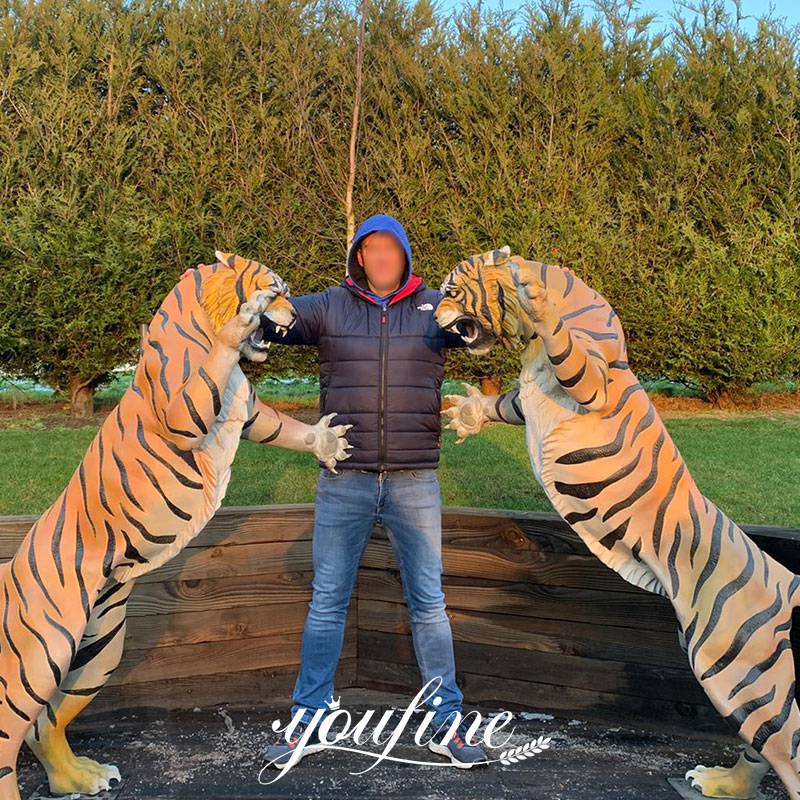
2. Dynamic Posture: Stillness with Intent
A tiger does not need to be roaring or jumping to appear powerful. Some of the most lifelike bronze tiger sculptures capture a moment just before movement:
- A low stalking posture
- A slightly turned head
- Weight shifted subtly onto one leg
This kind of posture creates internal motion, making the viewer feel that the tiger could move at any second. Static, symmetrical poses often look decorative, while asymmetry brings realism and energy.
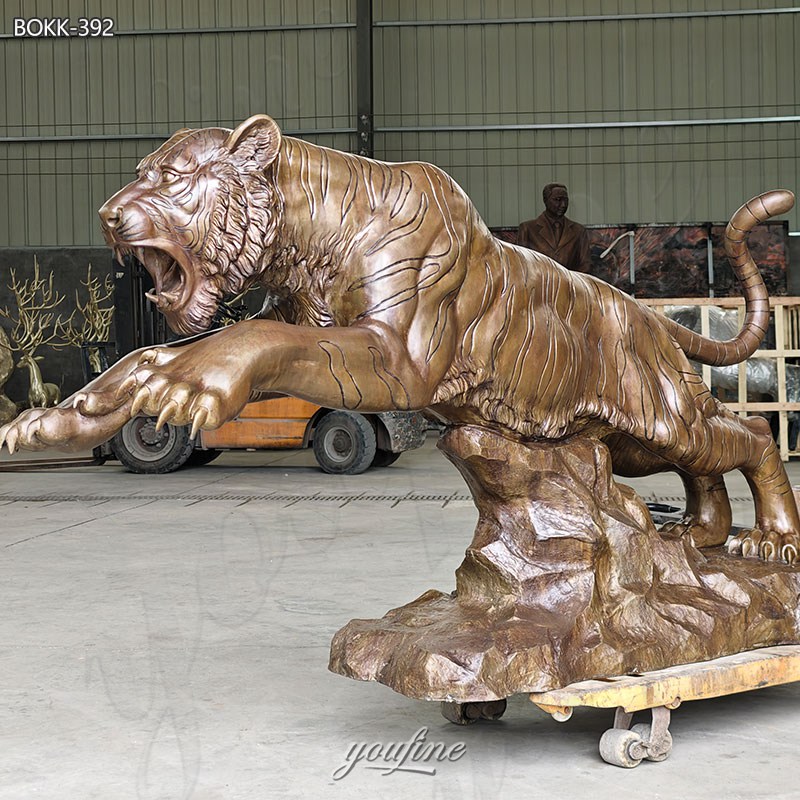
3. Facial Expression: The Soul of the Sculpture
The face determines whether a tiger looks alive—or empty. Key details that matter:
- Focused eyes with depth, not flat surfaces
- A slightly open mouth showing tension, not aggression for its own sake
- Natural spacing of whisker pads and muzzle structure
As suppliers, we often see that clients respond emotionally to the eyes first. A well-designed gaze creates connection, authority, and presence.
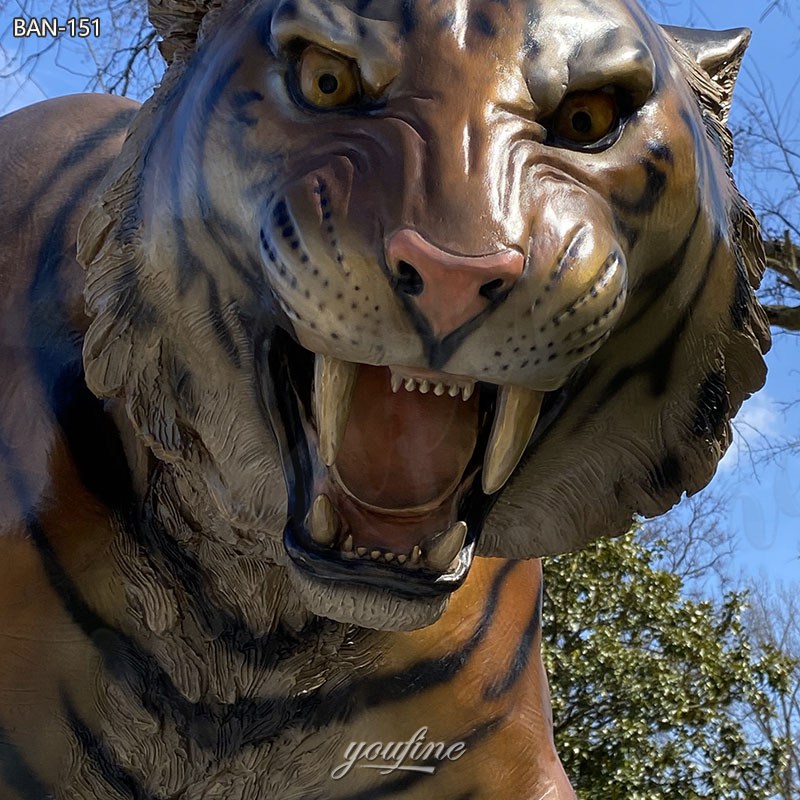
4. Surface Texture: Fur, Not Metal
Bronze is a rigid material, but a great sculpture makes you forget that. Through refined surface treatment, bronze can suggest:
- Short, dense fur along the body
- Thicker texture around the neck and cheeks
- Smooth transitions over muscle groups
When texture is too smooth, the tiger looks lifeless. When it is overworked, it becomes noisy. Balance is essential.

5. Proportions and Scale: Strength Without Heaviness
A powerful bronze tiger does not feel heavy—it feels balanced. Correct proportions ensure that:
- The head does not overpower the body
- The legs look capable of supporting movement
- The tail adds flow rather than distraction
Especially for outdoor installations, proper scale helps the sculpture interact naturally with its environment instead of overwhelming it.
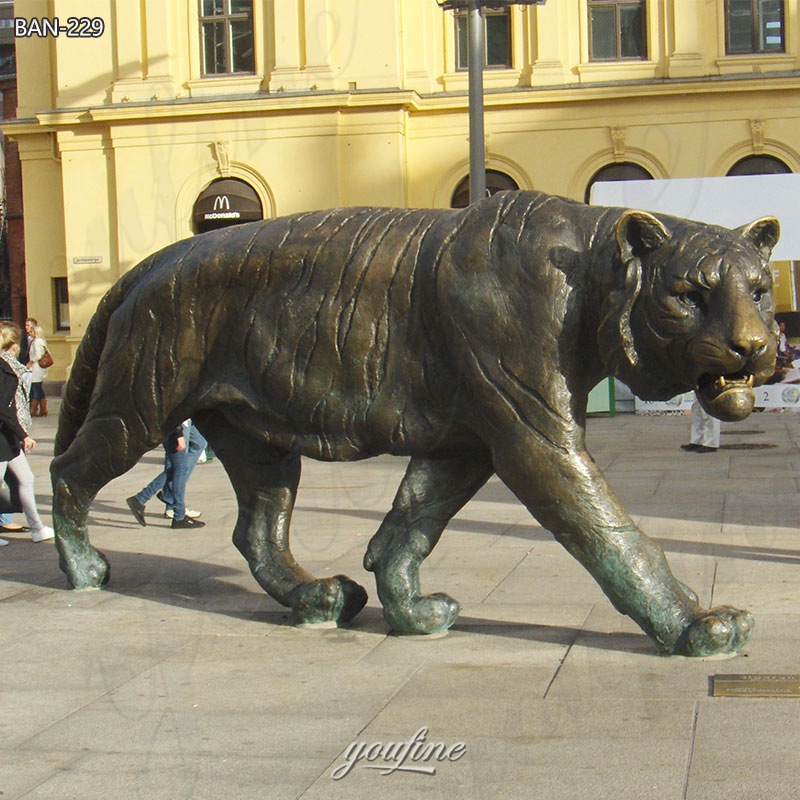
6. Patina and Finish: Enhancing the Natural Presence
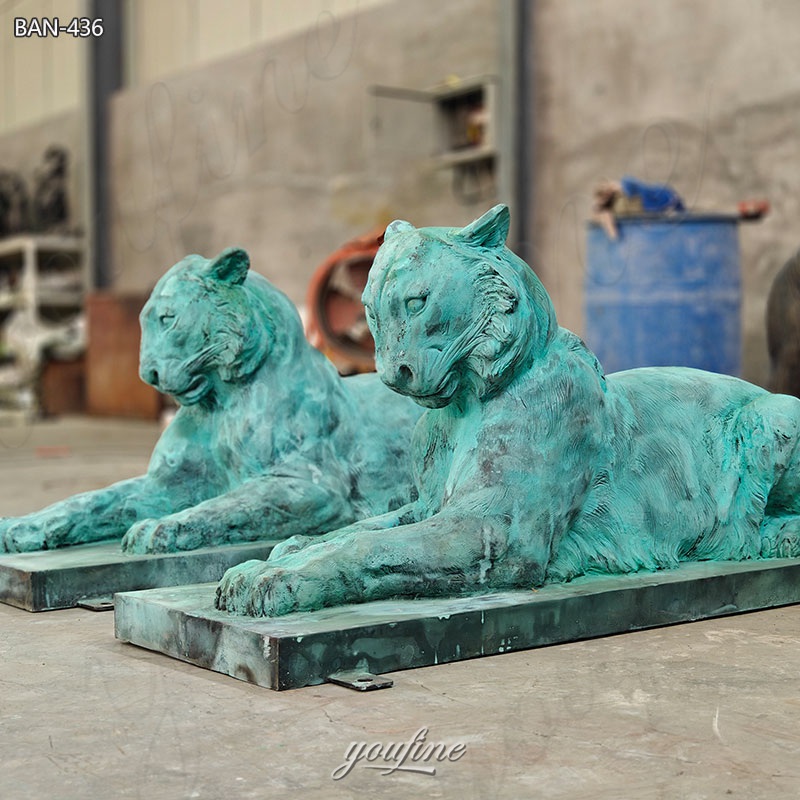
The patina plays a critical role in realism. Natural bronze tones—deep browns, warm blacks, or subtle highlights—enhance muscle definition and depth. Overly bright or artificial finishes often reduce the sense of realism.
In our projects, we select patinas that complement the tiger’s character and the surrounding architecture or landscape.
7. YouFine Artist’s Understanding of the Animal
At YouFine, we believe that a truly powerful animal sculpture begins long before clay touches the armature.
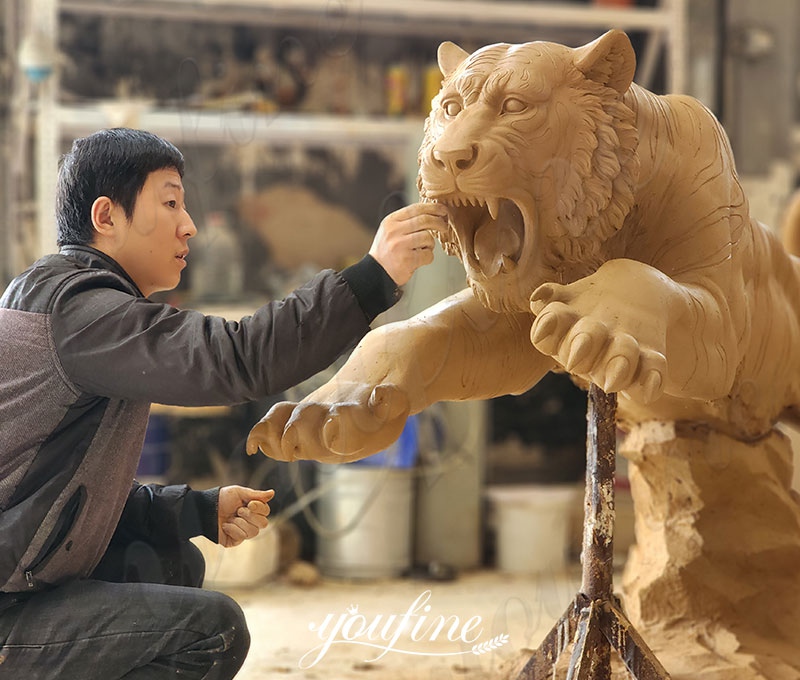
Our animal sculptures are created by artists who have dedicated their entire careers to sculpting wildlife. Each of our animal sculptors has, on average, more than 20 years of hands-on sculpting experience, focused specifically on animal forms rather than general decorative art.
This long-term focus allows our artists to develop a deep understanding of:
- The skeletal and muscular structure beneath the surface
- How weight is distributed when an animal stands, walks, or prepares to move
- The subtle differences between tension, relaxation, and alertness in the body
Beyond technical anatomy, our sculptors study animal behavior and living habits. They understand how different wild animals carry themselves in their natural environments—how a tiger lowers its body while stalking, how its shoulders rise and fall with movement, and how its gaze communicates dominance without exaggeration.
In some cases, our artists go even further. To achieve greater realism, they raise and observe animals themselves, allowing for close-range study of posture, movement, and expression that photographs and reference books simply cannot provide. This direct observation helps capture details that make a sculpture feel alive rather than replicated.
Because of this deep familiarity with animals, our sculptors do not rely on dramatic poses alone. Instead, they focus on authentic moments—capturing the quiet power, controlled strength, and natural confidence that define real wildlife.
This is why a bronze tiger sculpture created by YouFine does not just resemble a tiger—it behaves like one in form, presence, and spirit.
Final Thoughts from a Supplier’s Perspective
From our experience as an animal sculpture supplier, a bronze tiger looks powerful and alive not because it tries too hard—but because every detail works together naturally.
When anatomy, posture, expression, texture, and finish are aligned, the sculpture stops being an object and becomes a presence.
That is the difference between a bronze tiger that simply decorates a space—and one that truly commands it.