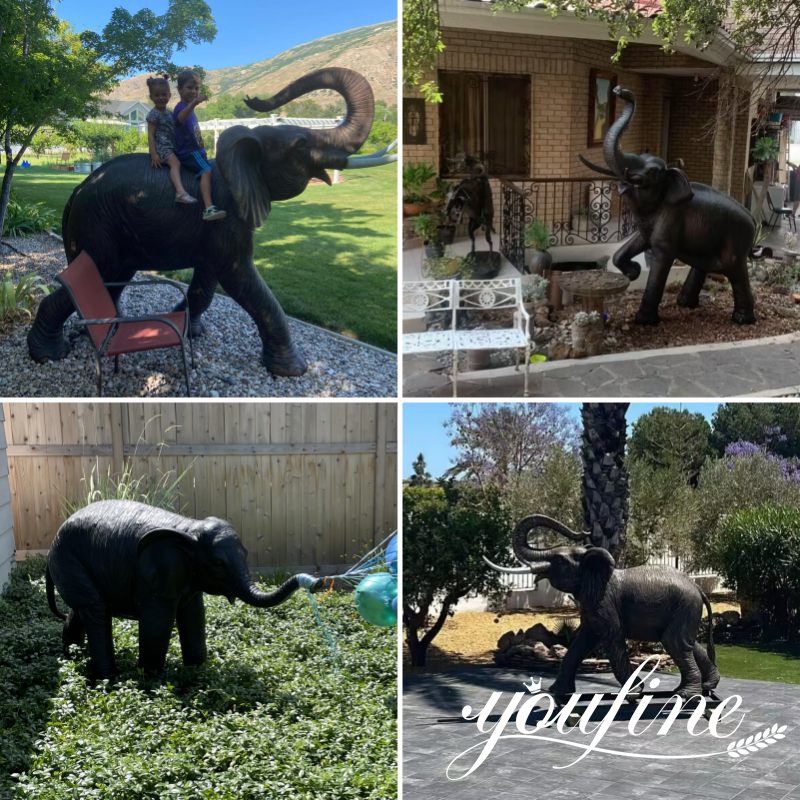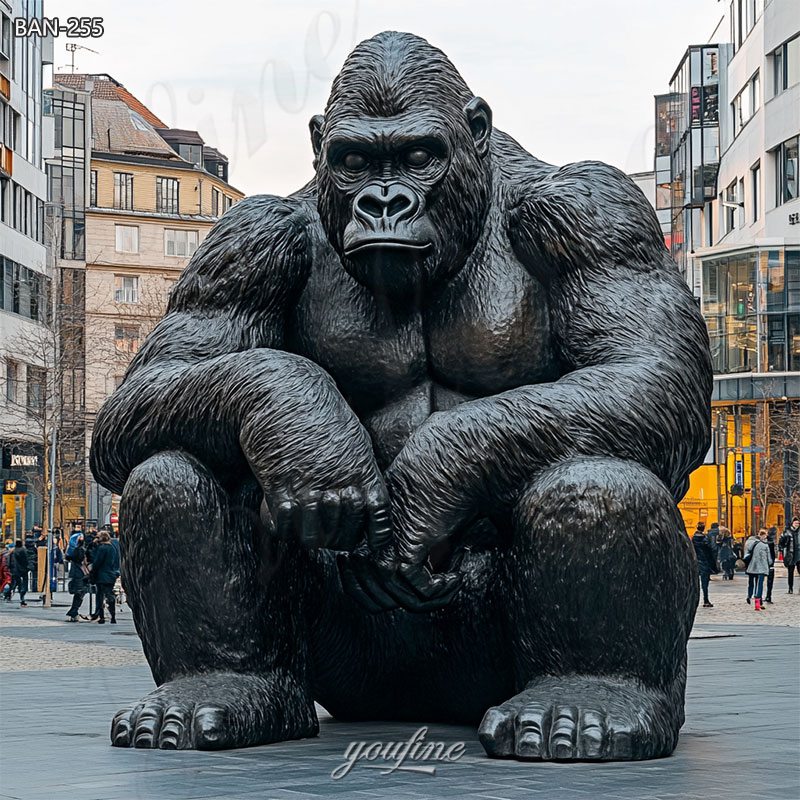
Outdoor elephant sculptures are often significant investments, not simple decorative purchases. Whether installed at a hotel entrance, in a public plaza, a private estate, or a cultural landmark, these sculptures are expected to represent permanence, quality, and craftsmanship for many years to come.
Yet many outdoor sculpture projects face the same problem: the material chosen looks impressive at first, but quickly shows signs of aging—cracks, fading, corrosion, or structural weakness—after prolonged exposure to sun, rain, and temperature changes. These issues not only affect appearance, but also increase maintenance costs and shorten the sculpture’s service life.
Selecting the right material is therefore a critical decision that directly impacts durability, long-term value, and overall project success. In this blog, we compare the most commonly used materials for outdoor elephant sculptures (bronze elephant statue, marble elephant, stainless steel elephant and fiberglass elephant sculpture) and explain which options perform best in real outdoor conditions, helping you make a confident, informed investment.
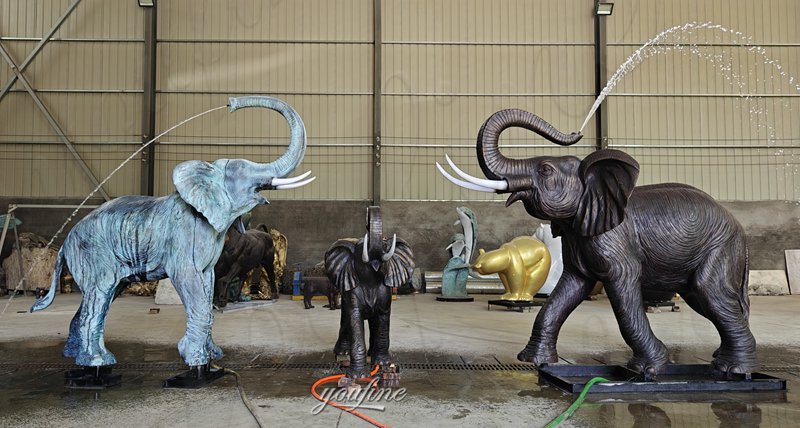
Key Factors to Consider When Choosing Outdoor Sculpture Materials
Selecting the right material for an outdoor elephant sculpture directly affects its durability, appearance, and long-term value. Before choosing a specific material, the following factors should be carefully considered.
- Weather Resistance: Outdoor sculptures must withstand sun exposure, rain, snow, humidity, and temperature changes. Materials that cannot handle these conditions may crack, fade, or corrode over time.
- Structural Strength: Elephant sculptures are often large and heavy. The material should provide sufficient strength and stability to resist wind loads and support long-term outdoor placement.
- Maintenance Requirements: Some materials require regular sealing, repainting, or surface treatment, while others need minimal maintenance. Lower maintenance usually means lower long-term costs.
- Aesthetic Longevity: A quality outdoor sculpture should maintain its visual appeal over time. Materials that age naturally and evenly are better suited for permanent outdoor installations.
- Project Purpose: Permanent installations for hotels, public spaces, or estates require more durable materials than temporary or decorative displays.

Common Materials Used for Elephant Statues
Choosing the right material is crucial for ensuring your elephant sculpture remains durable and visually striking outdoors. Here are the most commonly used options:
Bronze
Durability: Excellent for outdoor conditions; resists rain, snow, and UV exposure.
Maintenance: Low; develops a natural patina that protects the surface.
Aesthetic Longevity: Ages gracefully, adding character over time.
Typical Use: Permanent installations in gardens, hotels, public plazas, or cultural landmarks.
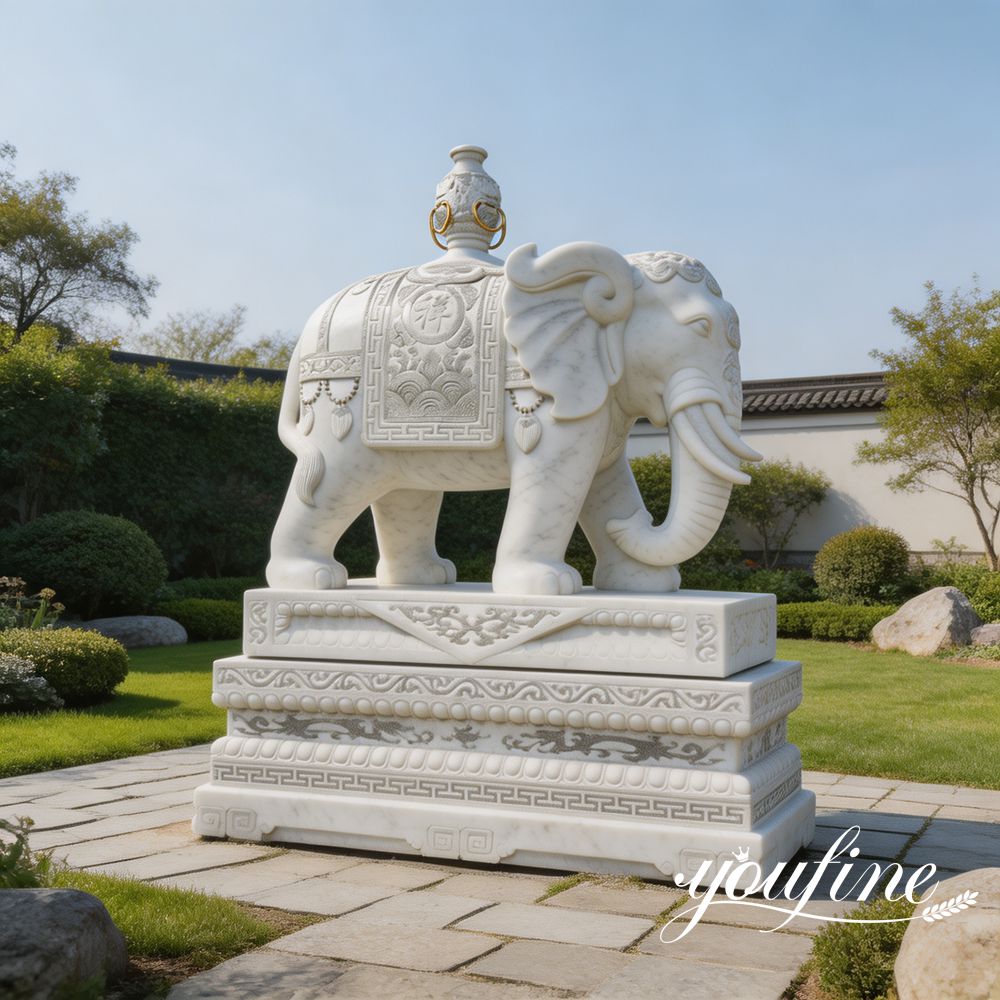
Stone (Marble / Granite)
Durability: Good, but sensitive to freeze–thaw cycles and erosion in harsh climates.
Maintenance: Medium; may require cleaning and occasional sealing.
Aesthetic Longevity: Timeless appearance; surface details may slowly erode.
Typical Use: Mild climates, covered outdoor areas, or cultural/historical sites.
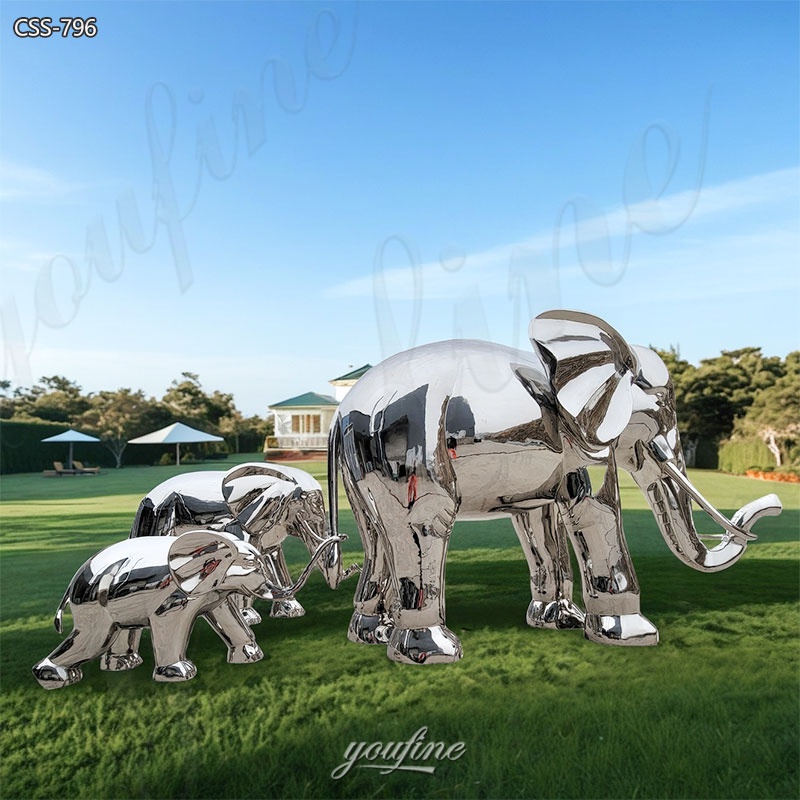
Stainless Steel
Durability: Strong and corrosion-resistant (grade-dependent).
Maintenance: Medium; can show scratches or fingerprints, requires occasional polishing.
Aesthetic Longevity: Modern, sleek look; retains shape well over time.
Typical Use: Contemporary landscapes, modern architecture, large-scale sculptures.
Resin / Fiberglass
Durability: Fair; limited resistance to UV, temperature changes, and heavy weather.
Maintenance: High; prone to fading, cracking, or surface damage.
Aesthetic Longevity: Shorter lifespan; may degrade visibly over time.
Typical Use: Decorative, temporary, or budget-friendly projects.
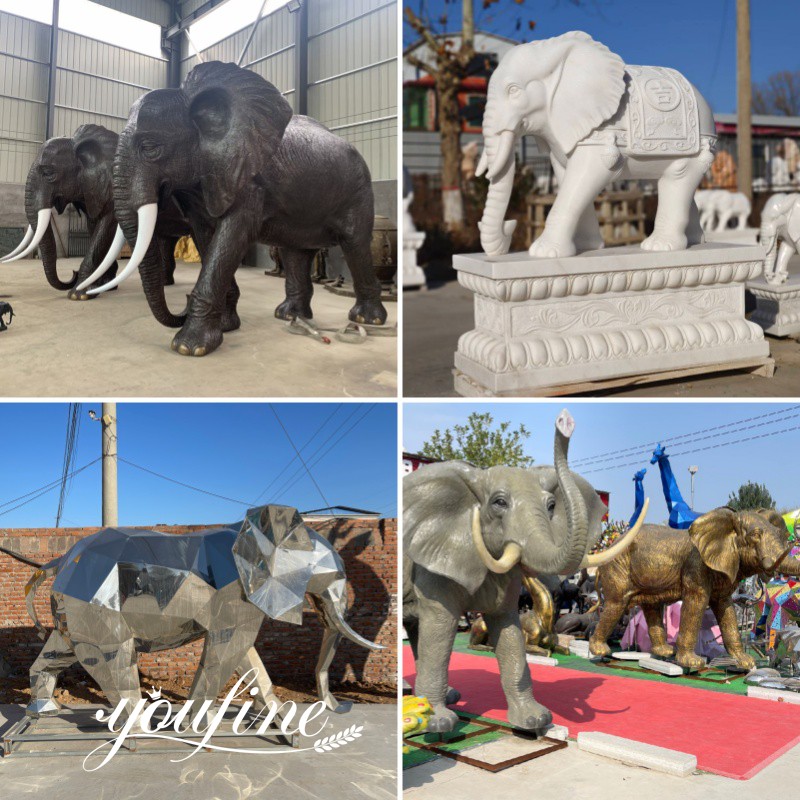
So, What Is the Ideal Material for Outdoor Elephant Sculptures?
When selecting a material for an outdoor elephant sculpture, the “ideal” choice depends on the project’s purpose, location, and expected lifespan. Several materials perform well outdoors when used in the right conditions. However, for long-term, permanent installations, material durability and aging performance become the deciding factors.
Among the commonly used materials, bronze stands out for its consistent performance across a wide range of outdoor environments, offering excellent structural strength, weather resistance, and long-term aesthetic stability. Stone and stainless steel can also be suitable choices when climate conditions, design style, and maintenance expectations are properly considered.
|
Material |
Outdoor Durability | Weather Resistance | Maintenance Needs | Aesthetic Longevity | Typical Use Cases |
|
Bronze |
★★★★★ Excellent | Excellent (rain, snow, UV) | Low | Improves with age (natural patina) | Public spaces, hotels, gardens, permanent outdoor installations |
|
Stone (Marble / Granite) |
★★★★☆ Good |
Moderate (sensitive to freeze–thaw cycles) | Medium | Timeless but may erode | Mild climates, covered outdoor areas, cultural sites |
|
Stainless Steel |
★★★★☆ Good |
Very good (depends on grade) |
Medium |
Modern, but surface scratches visible | Contemporary landscapes, modern architecture |
| Resin / Fiberglass | ★★☆☆☆ Fair | Limited (UV & temperature sensitive) | High | Fades and degrades over time |
Decorative, temporary, budget-focused projects |
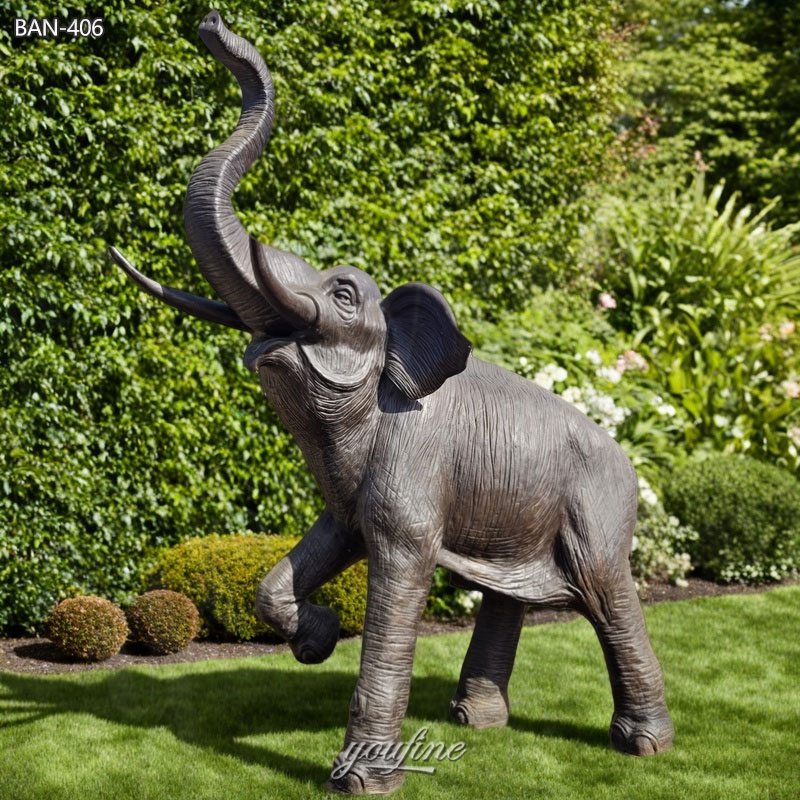
How Professional Factory Ensure Outdoor Durability
Outdoor durability is not determined by material alone. A professional sculpture factory applies different production standards, techniques, and quality controls based on the material used, ensuring each outdoor elephant sculpture performs reliably in its intended environment.
Material-Specific Engineering
- Professional factories adjust structural design and production techniques based on the specific properties of each material to ensure long-term outdoor durability.
- Bronze sculptures benefit from advanced silica sol investment casting, which helps prevent common surface issues such as white spots and green staining that can appear over time in outdoor environments. Compared with traditional casting methods, silica sol technology produces a denser, more uniform metal structure, improving surface stability and long-term visual quality, especially for outdoor installations.
- Stone sculptures (marble or granite) depend on the use of natural, high-quality stone blocks. Careful material selection and stress evaluation during carving are essential to prevent internal fractures and long-term cracking in outdoor environments.
- Stainless steel sculptures rely on full-penetration welding and sealed joints to prevent water ingress. Proper welding standards are critical to maintaining structural strength and avoiding internal corrosion over time.
- Resin sculptures require reinforced molds and controlled wall thickness to reduce deformation. Even with these measures, resin is best suited for short-term or decorative outdoor applications rather than permanent installations.

Controlled Manufacturing Processes
Each material follows a dedicated production process. Professional factories maintain strict controls over casting, carving, welding, or molding stages to ensure structural consistency and long-term stability under outdoor conditions.
Outdoor-Grade Surface Finishing
Surface treatments are selected based on both material and environment.
- Bronze patinas protect and enhance aging.
- Stone finishes reduce water absorption.
- Stainless steel polishing and coatings improve corrosion resistance.
- Resin coatings provide limited UV protection for short-term outdoor use.
Quality Inspection and Testing
Before delivery, professional factories conduct inspections for structural integrity, surface defects, and finishing quality. This reduces the risk of premature damage once the sculpture is installed outdoors.
Installation Guidance and After-Sales Support
Outdoor durability continues beyond production. Professional factories provide installation recommendations, anchoring solutions, and maintenance guidance tailored to each material and project environment.
Conclusion
Choosing the ideal material for an outdoor elephant sculpture requires more than a visual preference. Long-term durability, weather resistance, maintenance requirements, and manufacturing quality all play critical roles in determining how a sculpture performs over time in an outdoor environment.
With 40+ years of experience working across bronze, natural stone, stainless steel, and resin, YouFine understands how different materials behave outdoors and how proper engineering and craftsmanship can significantly extend a sculpture’s lifespan. From advanced silica sol casting for bronze sculptures to strict material selection and production standards, each project is approached with durability and long-term value in mind.
Whether you are planning a permanent outdoor installation or a site-specific project with unique environmental requirements, working with an experienced factory ensures your elephant sculpture remains structurally sound and visually compelling for years to come.