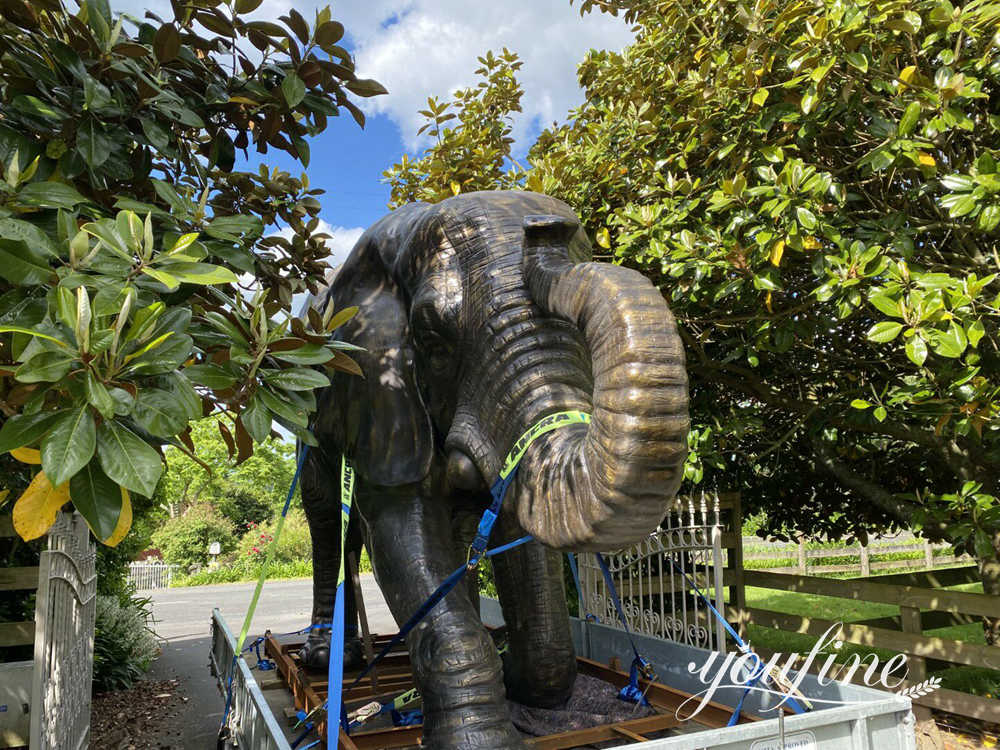
Pair elephant statues are more than decorative sculptures. When thoughtfully placed, they communicate strength, protection, harmony, and prestige. Across luxury hotels, private estates, gardens, and cultural spaces, paired elephant sculptures are often used as architectural statements that define entrances, guide movement, and elevate the overall atmosphere.
In this blog, we explore practical and inspiring placement ideas for pair elephant statues, helping you achieve both visual impact and symbolic meaning.
Why Choose Pair Elephant Statues?
Compared to a single elephant sculpture, a pair naturally creates balance and symmetry. This visual order is closely associated with authority, stability, and ceremonial presence—qualities highly valued in architectural and landscape design.
Pair elephant statues are especially suitable for:
- Entrances and gateways
- Axial or symmetrical layouts
- Large-scale spaces requiring visual weight
- Projects where symbolism and first impressions matter
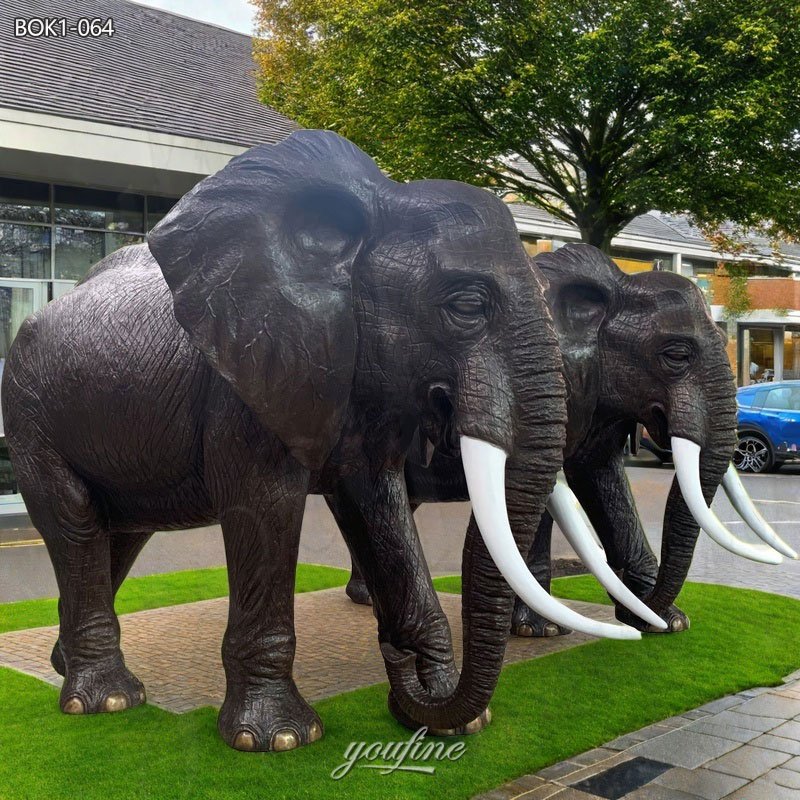
Classic Placement Ideas for Pair Elephant Statues
2. Main Entrance Placement
Placing a pair of elephant statues at the main entrance instantly establishes grandeur and identity. This approach is widely used in:
- Luxury hotels and resorts
- Private villas and estates
- Museums and cultural institutions
Placement tips:
- Position statues symmetrically on both sides of the entrance
- Ensure proportions match the door height and facade width
- Bronze or marble finishes work best for long-term outdoor exposure
This placement not only enhances visual authority but also creates a welcoming yet powerful first impression.
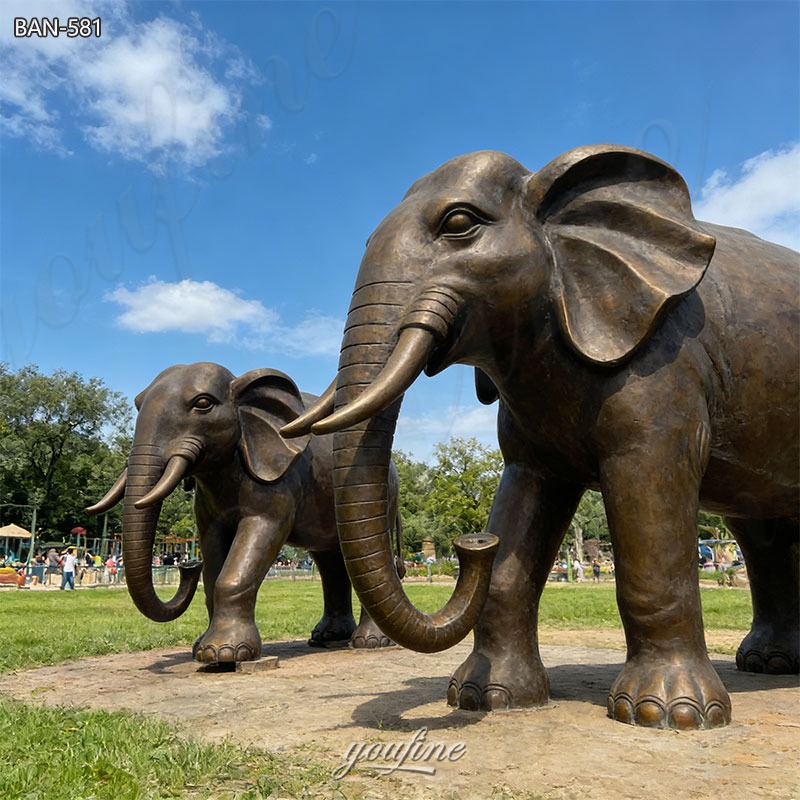
2. Garden Gate or Pathway Entrance
In large gardens or estates, pair elephant statues can act as a visual gateway, marking the transition from one space to another.
Ideal for:
- Manor gardens
- Sculpture parks
- Long pathways or formal garden entrances
Elephants placed at garden gates often work beautifully alongside:
- Wrought iron gates
- Marble columns
- Dense greenery or hedges
This setup adds a sense of ceremony while maintaining harmony with the landscape.
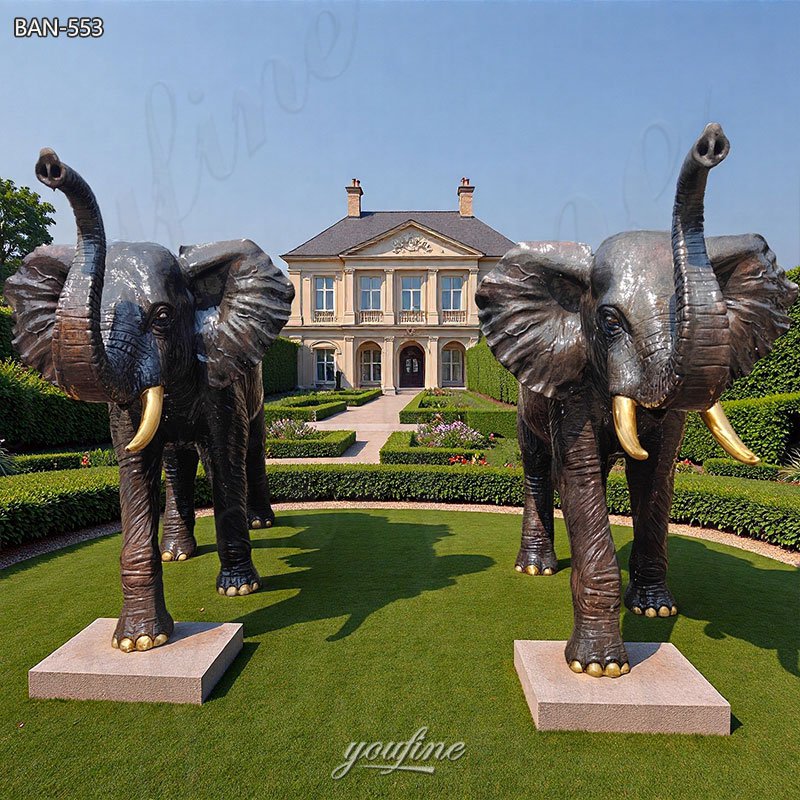
3. Courtyard Center Axis Placement
For properties designed around a central axis, pair elephant statues reinforce symmetry and spatial order.
Best suited for: European-style courtyards, Palatial or heritage-inspired architecture
Statues may be positioned:
- At the start of a central pathway
- Flanking a fountain or water feature
- On raised plinths to enhance prominence
Medium to large-scale elephant sculptures are recommended to maintain visual balance.
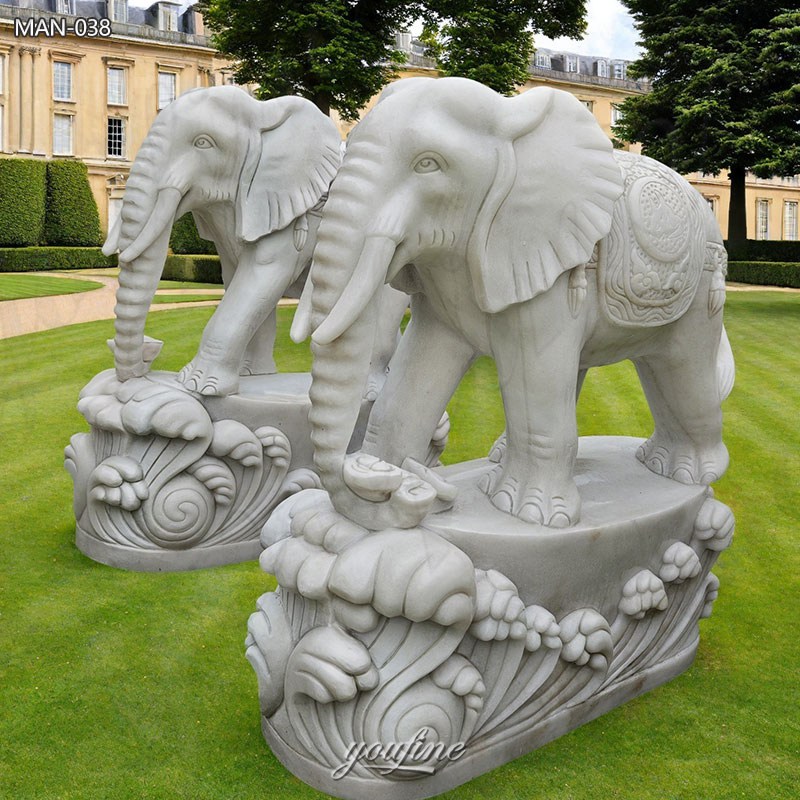
4. Staircases, Ramps, and Transitional Areas
Transitional spaces are often overlooked, yet they are ideal for paired sculptures.
Placing elephant statues at:
- Staircase landings
- Ramps
- Changes in elevation
This creates a natural visual guide for movement. Dynamic poses—such as walking or slightly raised legs—add rhythm and flow to these areas.
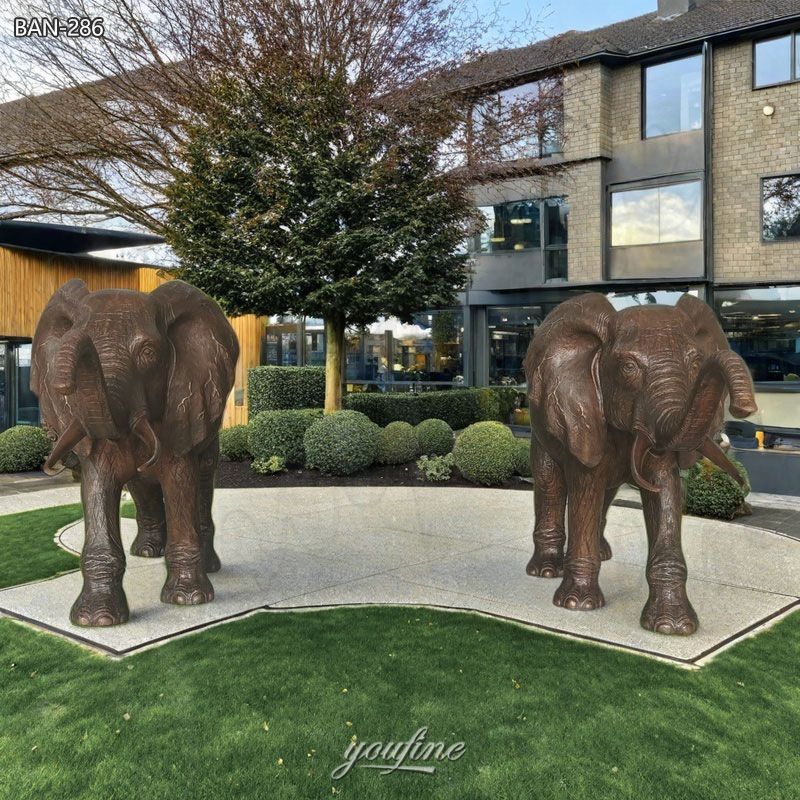
Placement by Function and Intent
Different placements serve different design goals:
- Symbolic Protection: Entrances, boundaries, gateways
- Luxury Branding: Hotel fronts, lobbies, signature spaces
- Landscape Focal Points: Water features, lawns, axial views
Understanding the purpose behind the placement ensures the sculptures feel intentional rather than decorative.
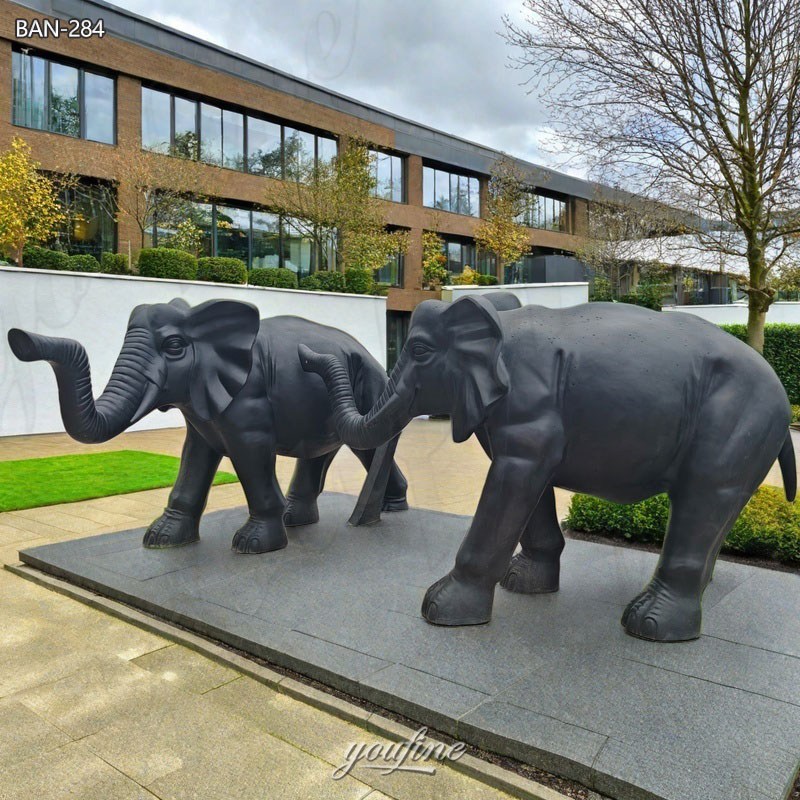
Size and Scale: Getting the Proportions Right
One of the most common mistakes is choosing elephant statues that are too small for their surroundings.
Key guidelines:
- Entrance statues should visually “hold”the space
- Large architecture requires substantial sculpture volume
- Consider plinth height as part of the total scale
- Indoor statues can be slightly smaller, but should still command presence.
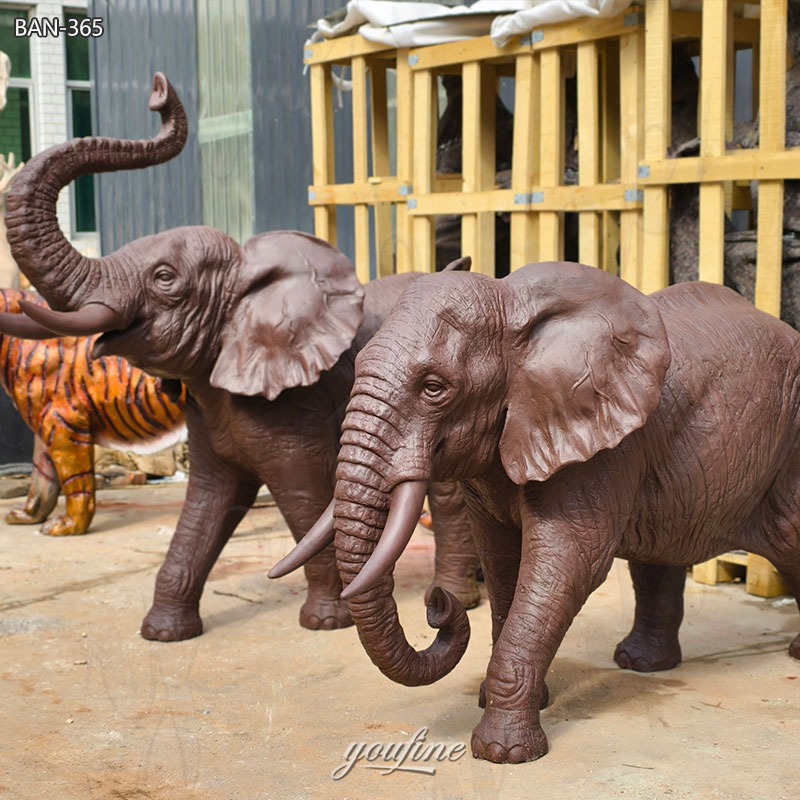
Material and Finish Considerations
Material choice directly affects where and how elephant statues can be placed:
- Bronze Elephant Statues: Ideal for outdoor entrances, public spaces, and long-term installations
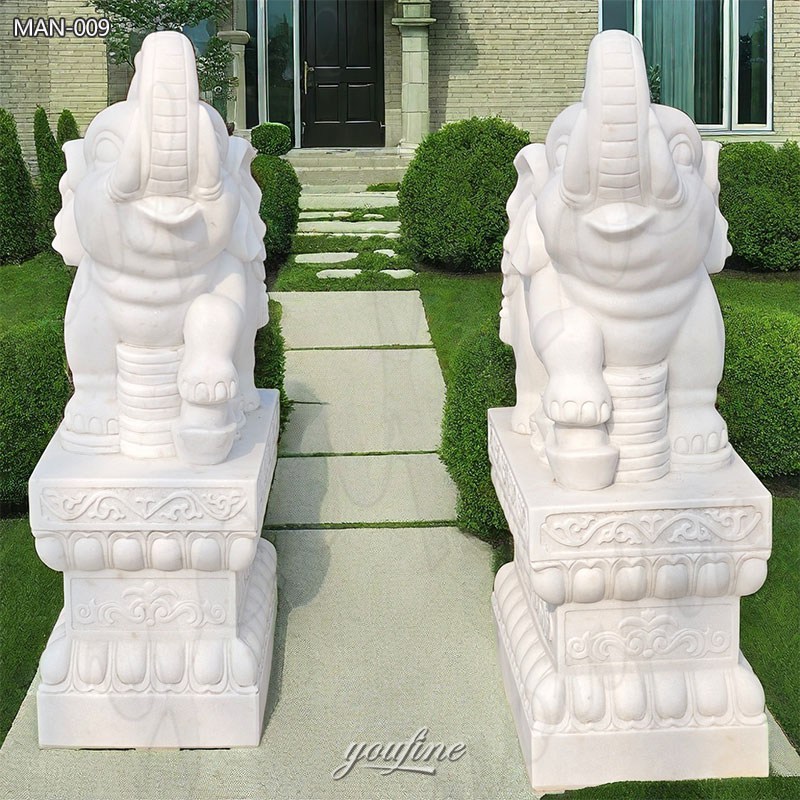
- Marble Elephant Statues: Suitable for traditional estates, cultural or religious contexts
Finish Options: Patina for timeless character, polished surfaces for luxury interiors; Selecting the right material ensures durability and aesthetic harmony.
Conclusion
Pair elephant statues are powerful design elements. Their placement determines how they are perceived—whether as guardians, symbols of prestige, or artistic centerpieces.
By choosing the right location, scale, and material, pair elephant statues can transform spaces and leave lasting impressions long after the first glance.