Elephant sculptures made of bronze, marble, or stainless steel are widely used in hotels, parks, commercial spaces, and private estates to create a strong visual statement. One of the most common challenges buyers face is choosing the right size. A sculpture that looks appropriate in drawings or photos may appear too small or overwhelming once installed.
The size of an elephant statue directly affects its visual impact, proportion, and how well it fits within the surrounding space. In this guide, we explain common size options, application-based recommendations, and key factors buyers often overlook, helping you choose the right dimensions with confidence—regardless of material.

Why the Size of Elephant Sculpture Matters
Choosing the right size is not just an aesthetic decision. It determines how the sculpture interacts with its environment, how viewers perceive it, and how successfully it fulfills its symbolic and functional purpose.
A sculpture that is too small may lose presence in an open space, while one that is too large can overwhelm nearby architecture or landscaping. In many projects, size selection also affects installation complexity, foundation requirements, and long-term maintenance—especially for large marble or stainless steel sculptures.
Selecting the correct dimensions from the beginning helps avoid costly adjustments and ensures the sculpture delivers lasting visual value.
Common Size Options for Elephant Sculptures
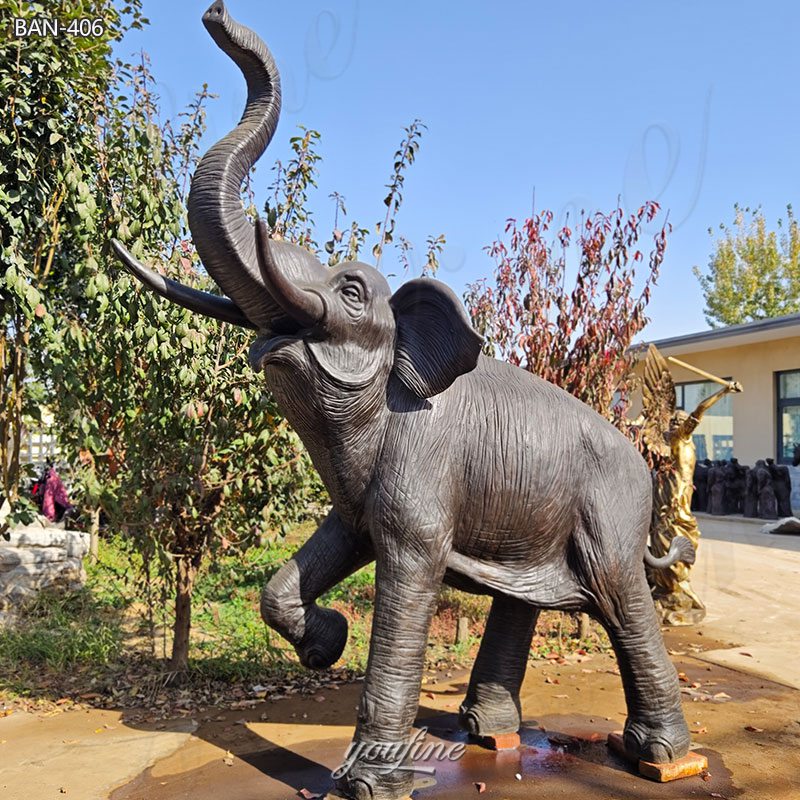
Although elephant sculptures are often custom-made, most projects fall into several common size ranges:
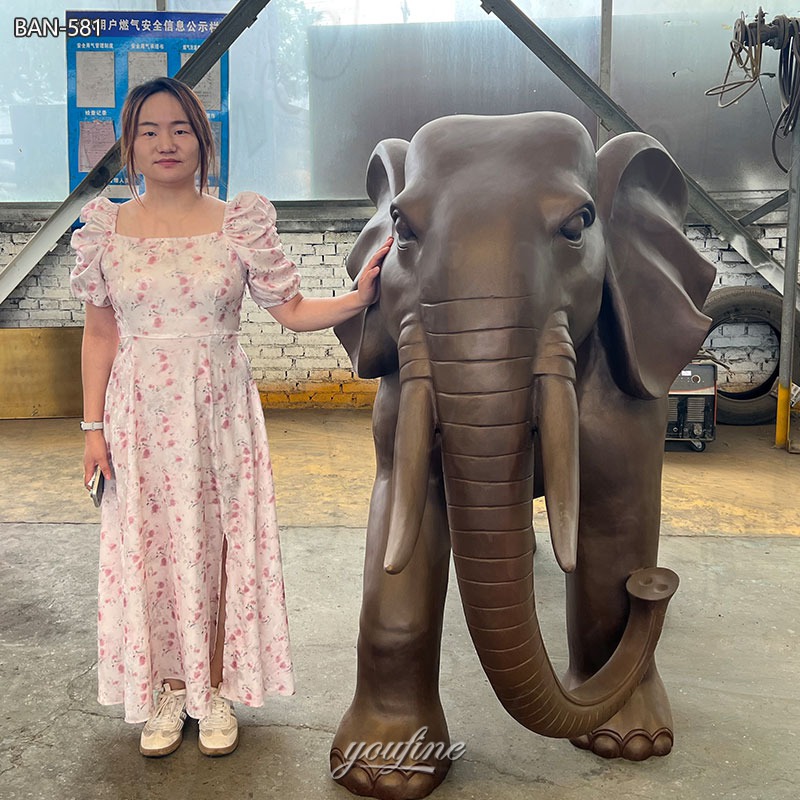
- Small Elephant Sculpture (80–120 cm / 2.6–4 ft): Suitable for entrance decoration, private gardens, or accent areas.
- Medium Elephant Sculpture (150–220 cm / 5–7.2 ft): Commonly used in hotel lobbies, courtyards, and entrance focal points.
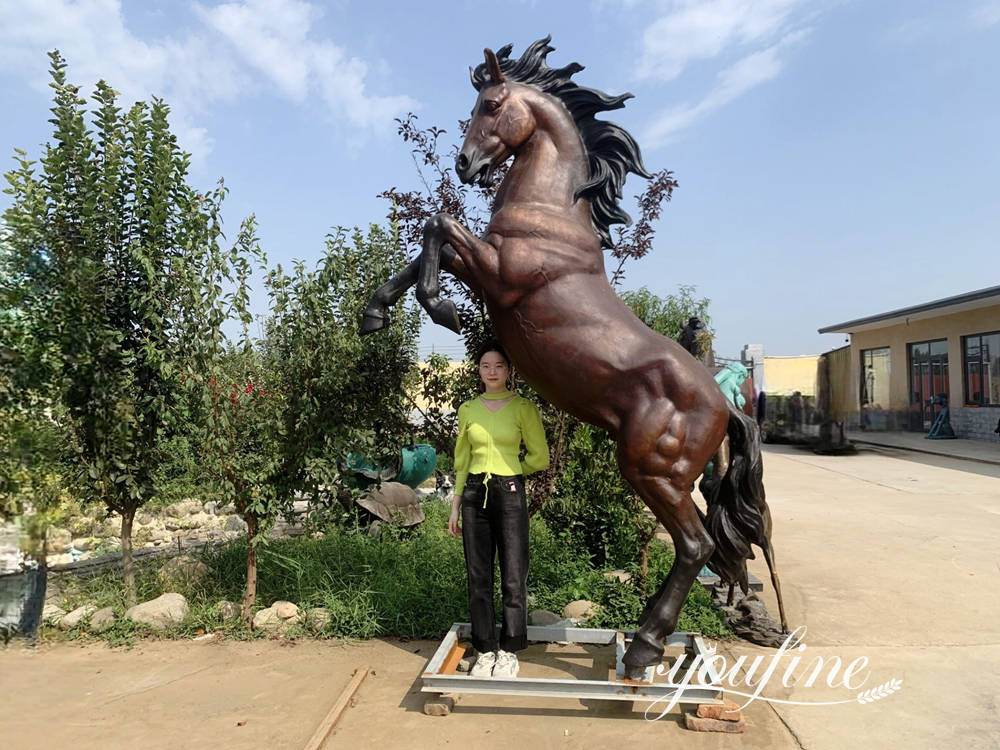
- Life-Size Elephant Sculpture (250–300 cm / 8–10 ft): Ideal for parks, plazas, resorts, and cultural spaces where realism and presence are important.
- Large or Monumental Elephant Sculpture (400 cm+ / 13 ft+): Designed for public landmarks, commercial developments, or large-scale outdoor installations.
Always confirm whether the listed height includes the base or pedestal, as this can significantly affect the final visual result.
How to Choose the Right Size Based on Application Scenarios
Elephant Sculpture for Hotel Entrances
Hotel entrances require a strong visual impact without overpowering the architecture. Medium to life-size sculptures are often the best choice, especially when placed symmetrically or near drop-off areas.
Elephant Sculpture for Parks and Public Plazas
Open environments demand scale. Life-size or larger sculptures ensure visibility from a distance and maintain proper proportion within expansive landscapes.
Elephant Sculpture for Private Gardens or Villas
For private spaces, balance is essential. Sculptures between 120–200 cm usually integrate well without dominating walkways or garden layouts.
Elephant Sculpture for Commercial and Shopping Spaces
Commercial areas benefit from medium to large sculptures that guide movement and create memorable landmarks, particularly when combined with lighting or landscape elements.

Size, Pose, and Proportion: Factors Buyers Often Overlook
Standing Elephant vs. Walking Elephant
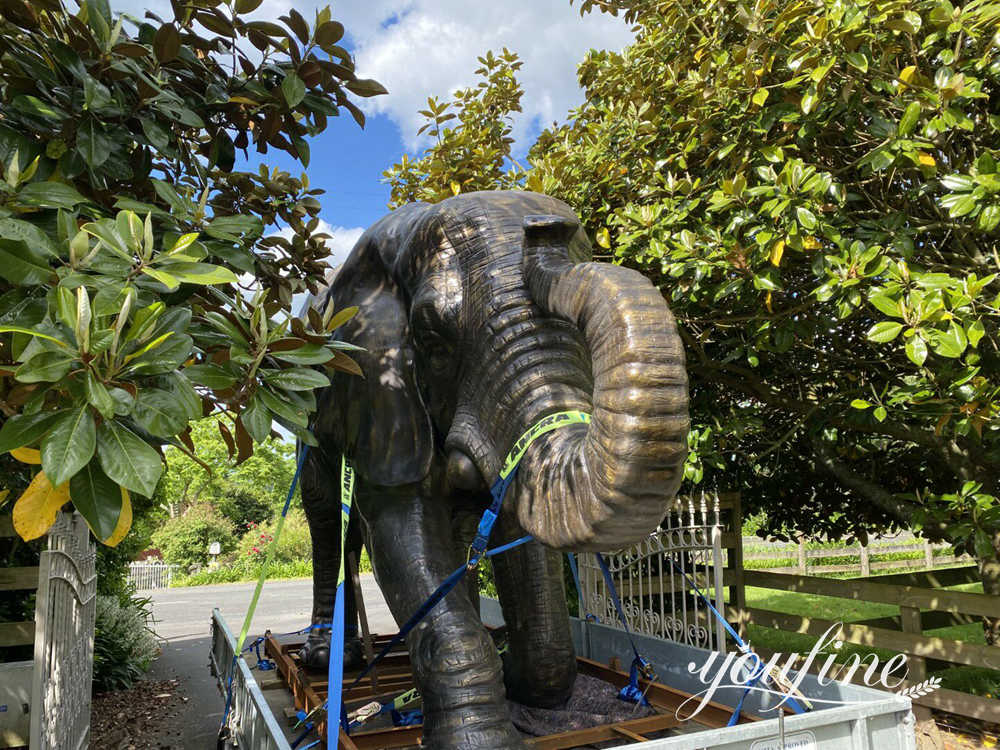
Two sculptures with the same height can feel very different. Walking elephants typically appear longer and more dynamic, requiring additional ground space compared to standing poses.
Trunk Position Changes Visual Height
An elephant with its trunk raised creates a stronger vertical impression and often appears taller than one with a lowered trunk, even if the actual dimensions are identical.
The Impact of the Base and Pedestal
The base is part of the total visual height. A pedestal of 40–60 cm can significantly enhance presence, but if not considered early, it may disrupt proportions after installation.
This is especially important for marble and bronze sculptures, where the base also plays a critical role in load-bearing and long-term stability.
Proportion Accuracy in Large Sculptures
As elephant sculptures increase in size, proportion accuracy becomes increasingly critical—regardless of whether the material is bronze, marble, or stainless steel. Small anatomical inaccuracies that are barely noticeable in smaller works become highly visible in large-scale sculptures.
Proper scaling of the legs, ears, trunk length, and body mass is essential to maintain realism and visual balance, particularly in open public spaces.
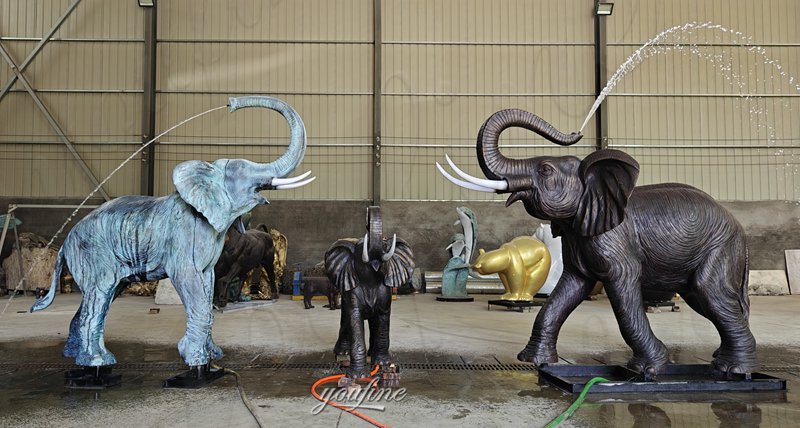
How YouFine Helps Clients Determine the Right Sculpture Size
At YouFine, as a factory has 40 years of experience, size selection is a professional and structured process rather than a guess.
We help clients by:
- Evaluating site dimensions, viewing distance, and surrounding architecture
- Providing scaled drawings or visual references
- Advising on pose selection and proportional balance
- Tailoring size recommendations based on the selected material—bronze, marble, or stainless steel
- Engineering appropriate internal structures and installation solutions
This approach ensures each sculpture fits its environment visually, structurally, and practically.
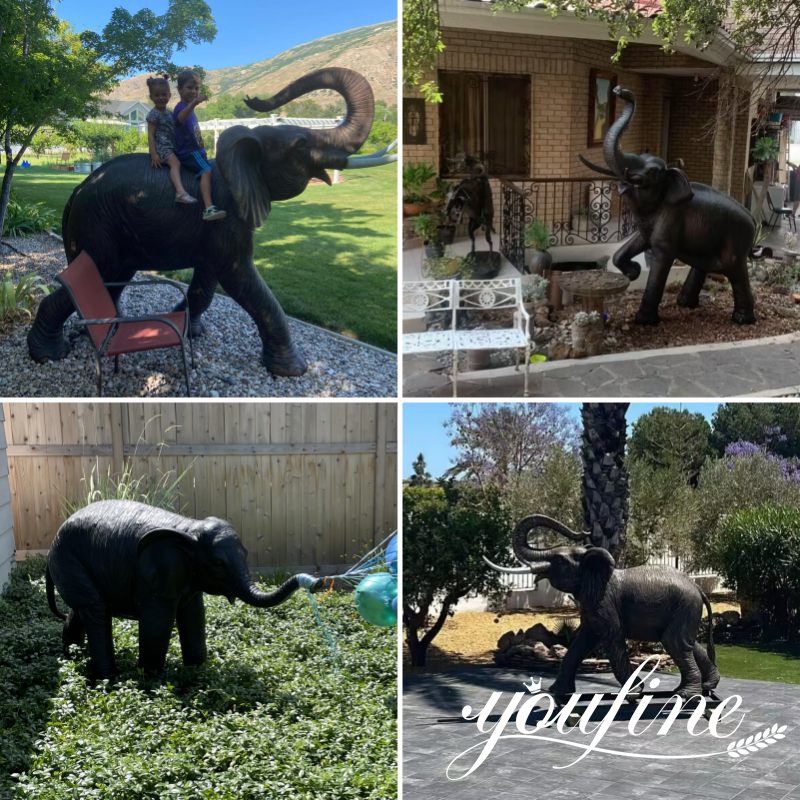
Conclusion
Choosing the right size for an elephant sculpture involves more than measuring height. It requires careful consideration of space, pose, proportion, material characteristics, and technical feasibility.
By understanding these factors early in the decision-making process, buyers can avoid common mistakes and ensure their sculpture achieves the desired visual impact and long-term value. Working with an experienced manufacturer like YouFine helps ensure every size decision is backed by professional guidance and proven craftsmanship.