After more than 10 years of working in the animal sculpture industry, I’ve helped clients from all over the world choose and place elephant statues in homes, villas, hotels, and commercial spaces. One thing I’ve noticed again and again is this:
Many people buy a beautiful elephant statue — but don’t know where to place it. And placement matters more than you might think.
An elephant statue is not just decoration. It carries symbolism, energy, and meaning. When placed correctly, it can enhance your space visually and symbolically. When placed incorrectly, it may lose its intended effect.
In this guide, I’ll share practical advice based on both traditional ideas and real project experience, so you can confidently place your elephant statue at home.

What Does an Elephant Statue Symbolize?
Before deciding where to place an elephant statue, I always recommend understanding its meaning first.
Across different cultures and design traditions, elephant statues represent:
Good Luck and Prosperity: Many of my clients specifically choose elephant statues because they believe they attract good fortune and financial success.
Strength and Stability: Elephants are powerful but calm animals. In sculpture design, they often represent stability, which is why they are popular in both homes and architectural entrances.
Protection: In several projects I’ve worked on, especially for villas and estates, elephant statues are placed at entrances as symbolic guardians.
Wisdom and Intelligence: Elephants are associated with wisdom. In offices or study rooms, they often symbolize thoughtful decision-making.
Family and Harmony: I’ve had many clients request a pair of elephant statues specifically to represent love, loyalty, and strong family connections.
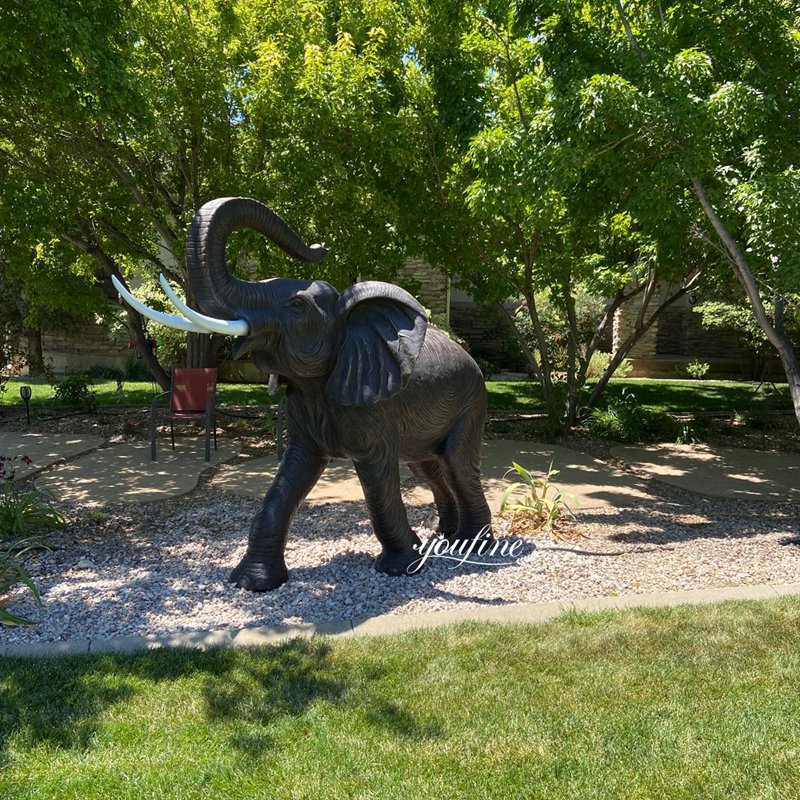
General Rules for Placing Elephant Statues at Home
From my experience working with different clients and spaces, there are a few core rules that always apply.
Direction Matters
Facing the entrance → helps “invite” energy, opportunities, and luck
Facing inward → helps “retain” wealth and stability
I usually recommend choosing this based on your intention.
Trunk Position
Clients often ask me whether the trunk should be up or down.
Trunk up → more dynamic, associated with success and good luck
Trunk down → calmer, representing stability and grounding
In design terms, trunk-up statues also feel more visually active, which works well in open spaces. You could learn more: Is the Elephant Statue Trunk up or down for Good Luck?
Single vs. Pair
This is something I discuss frequently with clients:
Single elephant → stronger sense of power and presence
Pair of elephants → more balanced, ideal for entrances or family homes
For most residential projects, I personally recommend using a pair. You could learn more: Pair Elephant Statues or a Single Elephant Sculpture: How to Choose
Material Selection
Material affects both the look and the meaning:
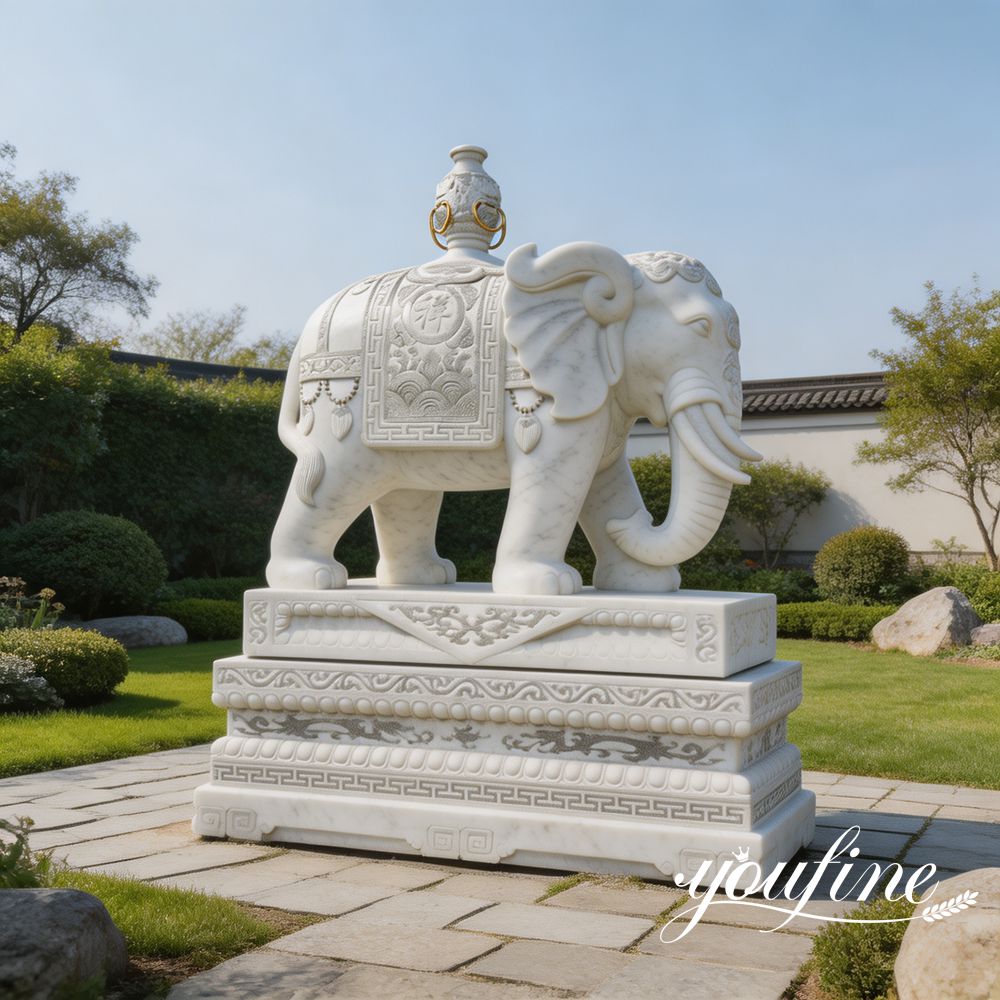
Marble → elegant, high-end, commonly used in villas
Bronze → classic and artistic, often used indoors
Stainless steel → moden design, perfect for outdoor environments
In many of my projects, marble elephant statues are the most popular choice for luxury homes. You could learn more: What Material Is Ideal for Outdoor Elephant Sculptures
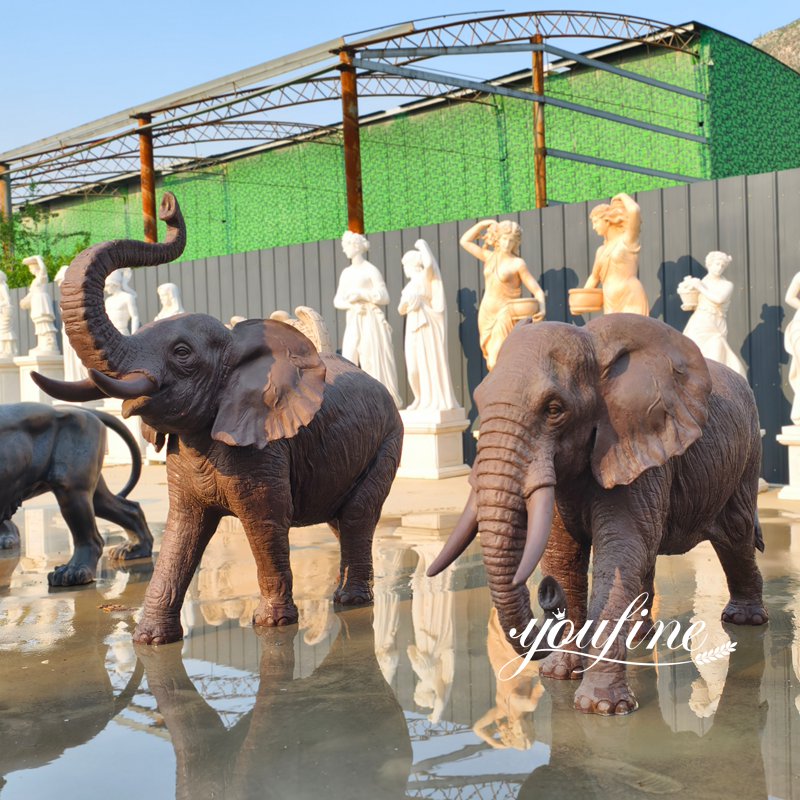
Where to Place Elephant Statues
After working with large-scale sculptures for over 10 years, I rarely see elephant statues placed on tables. Most of my clients choose life-size or over 1-meter elephant sculptures, which are designed for architectural spaces, entrances, and landscapes.
So the placement logic is completely different.
Instead of thinking about small decorative spots, you should think in terms of space planning, visual balance, and entrance impact.
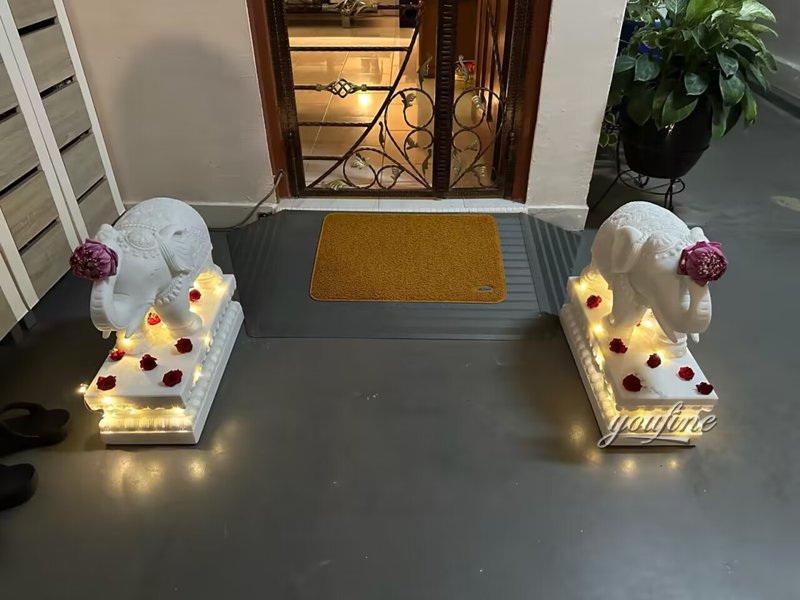
Entrance / Gate (Best Placement for Elephant Statues)
From my experience, the most popular and effective placement for large elephant statues is at the main entrance.
My Recommendation:
- Place a pair of elephant statues on both sides of the gate or doorway
- Keep them symmetrical
- Slightly angle them toward the entrance or outward
In many villa and hotel projects I’ve worked on, this setup creates:
- A strong sense of arrival
- Visual symmetry and balance
- A powerful, welcoming presence
This is especially effective for:
- Luxury villas
- Resorts
- Commercial buildings
Garden & Landscape Design
Large elephant statues are ideal focal points in outdoor spaces.
My Recommendation:
- Place them at garden entrances or pathway intersections
- Combine with fountains, pools, or landscaping features
- Use them as a central visual anchor
Real Project Insight:
In several landscape projects, adding a pair of marble elephants instantly elevated the entire environment, making it feel more luxurious and structured.
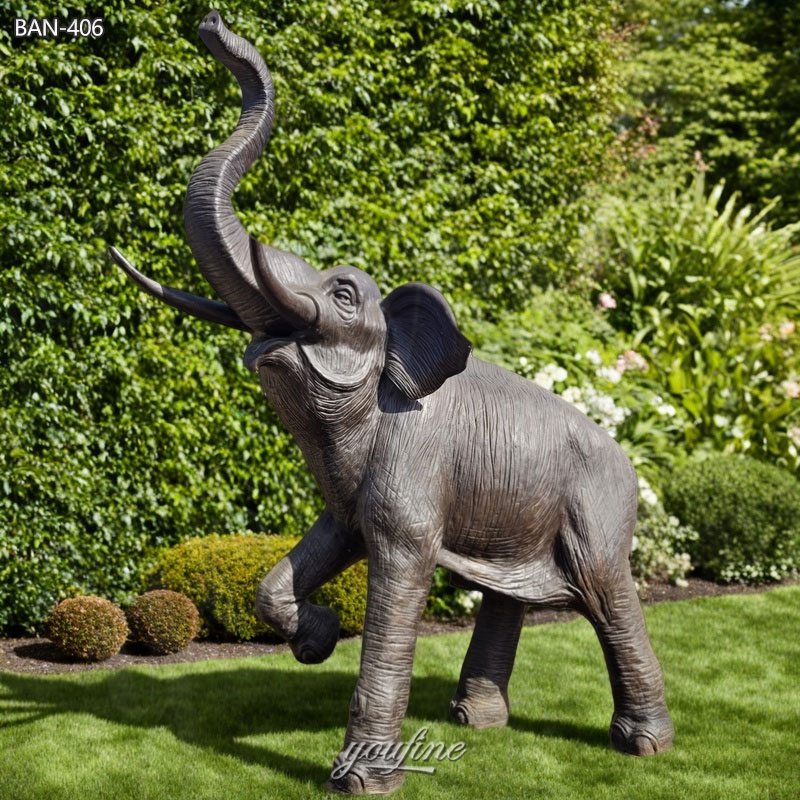
Courtyard / Front Yard
For homes with courtyards, this is another excellent option.
My Recommendation:
- Place a single large elephant as a centerpiece
- Or use a pair near steps or pathways
Why: This creates a sense of stability and elegance, especially in open architectural spaces.
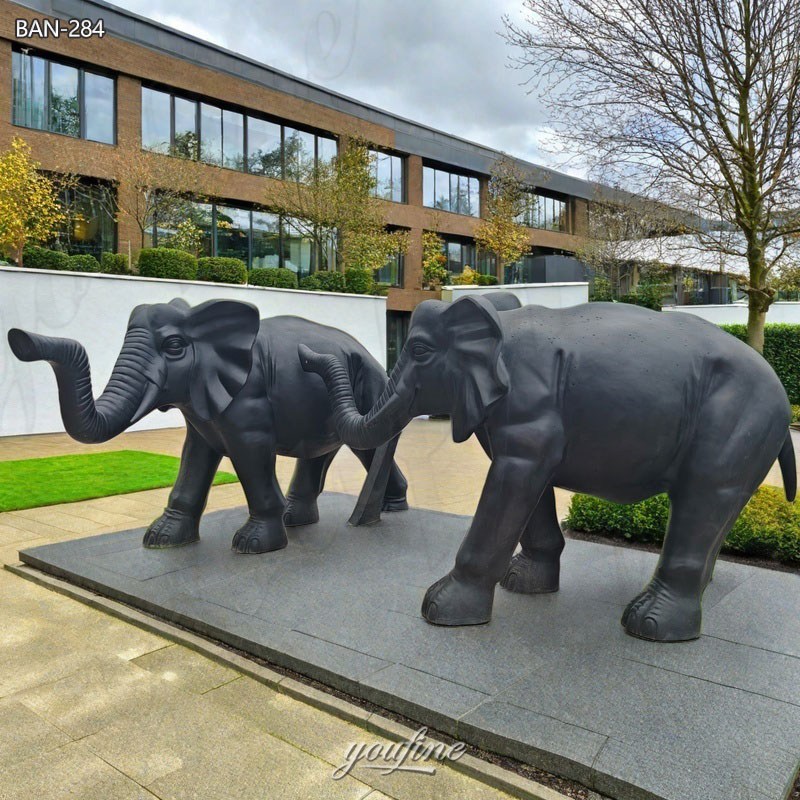
Commercial Spaces (Hotels, Parks, Malls)
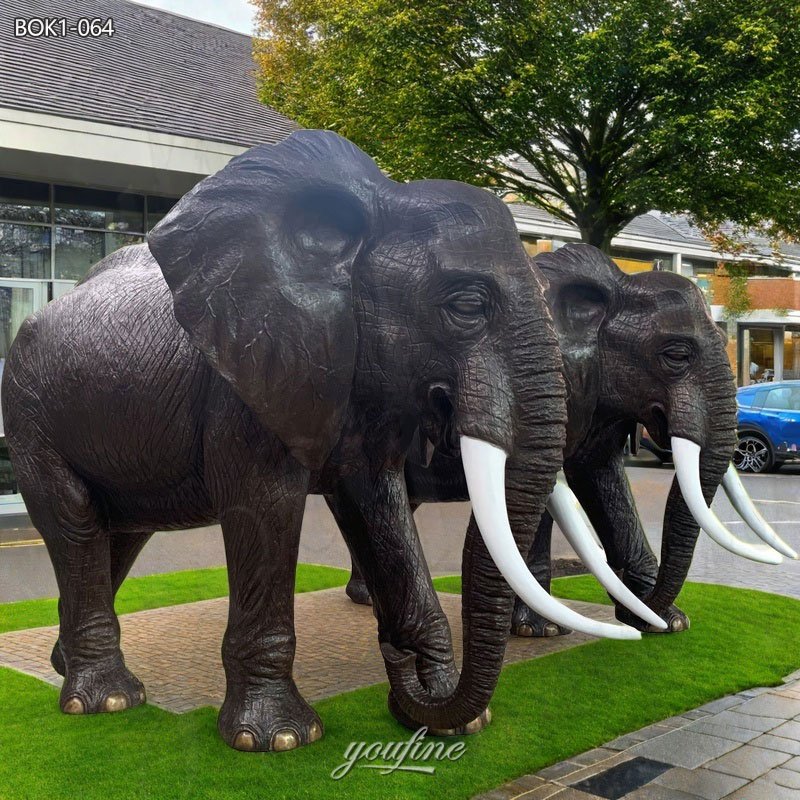
Many of my international clients use large elephant statues for commercial projects.
Common Placements:
- Hotel entrances
- Resort pathways
- Public squares
- Theme parks
Why It Works:
Large elephant sculptures naturally draw attention and create memorable visual experiences, which is important for commercial environments.
Common Mistakes with Large Elephant Statues
Based on real client cases, here are mistakes to avoid:
- Placing them too close to walls (loses impact)
- Using only one at a large entrance (breaks symmetry)
- Choosing size too small for the space
- Ignoring foundation and installation
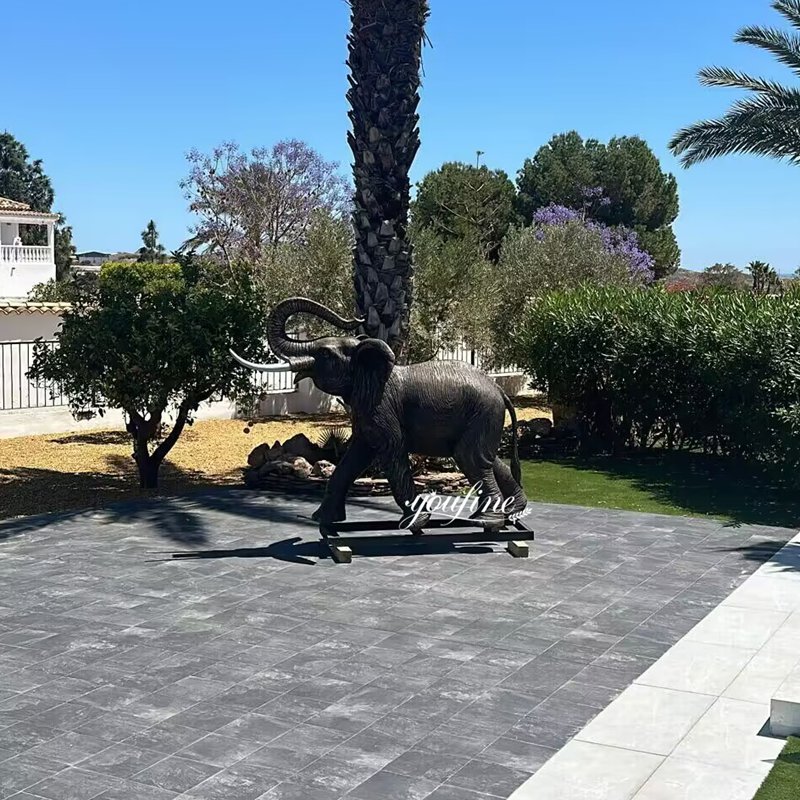
Best Direction to Place Elephant Statue (Feng Shui Guide)
Some of my clients specifically request feng shui-based placement.
Here are the commonly recommended directions:
North → career growth
Southeast → wealth
East → health and family
Southwest → relationships
My Advice: Even if you’re not strictly following feng shui, using direction as a guideline can help you place your statue more intentionally.
Choosing the Right Elephant Statue for Your Home
After helping clients across different countries, I’ve learned that choosing the right statue is just as important as placement.
Size
Always match the size to your space. Oversized statues can overwhelm a room, while small ones may get lost.
Material
Choose based on both environment and style:
Marble → best for luxury interiors and entrances
Bronze → ideal for artistic indoor settings
Stainless steel → best for modern design
Craftsmanship
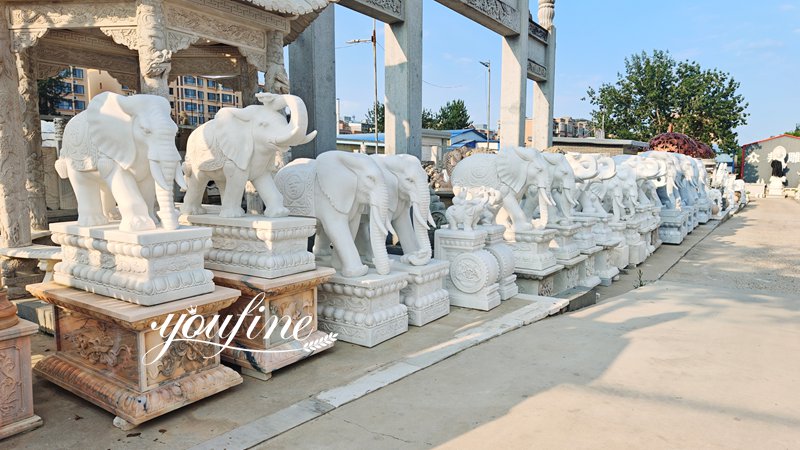
Hand-carved sculptures always stand out more. They have better detail, character, and long-term value.
Customization
Many of my clients choose custom designs to match their architecture or landscape. This often leads to the best results.
Conclusion
I can confidently say that placement is just as important as the statue itself.
A well-placed elephant statue can enhance your home’s atmosphere, create a strong visual impression, and add meaningful symbolism to your space.
Whether you choose a small indoor piece or a large outdoor sculpture, the key is to place it thoughtfully — with both design and intention in mind.