A tiger statue is never just decoration.
It represents strength, authority, protection, confidence, and sometimes dominance. Whether placed at a private estate entrance, luxury resort, corporate headquarters, or public landscape, a tiger sculpture becomes a powerful visual statement.
But here is something many buyers underestimate: The pose matters more than the size.
A standing tiger creates a completely different atmosphere than a walking tiger. A roaring tiger carries an entirely different emotional energy compared to a calm guardian stance.
If you are considering investing in a tiger statue for your project, this guide will help you choose the right pose based on:
- Space type
- Emotional impact
- Architectural style
- Viewing distance
- Symbolic intention
Let’s explore.
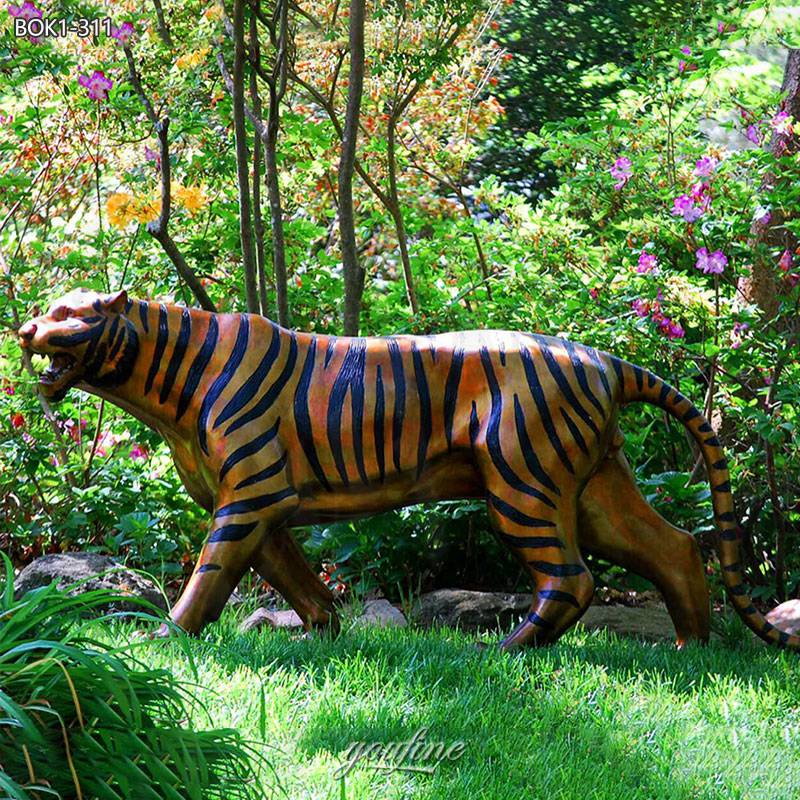
Why the Tiger’s Pose Changes Everything
Before comparing specific poses, it’s important to understand why posture makes such a difference.
1. Psychological Impact
Human beings instinctively respond to body language — even in sculpture.
A still, upright tiger signals control and stability.
A walking tiger suggests movement and forward momentum.
A roaring tiger communicates power, dominance, and command.
Your choice determines how visitors emotionally interpret your space within seconds.
2. Spatial Relationship and Visual Flow
A sculpture does not exist alone. It interacts with:
- Architecture
- Landscape lines
- Pathways
- Viewing angles
- Lighting
A dynamic pose can pull the eye forward. A stable pose anchors a composition. An aggressive pose becomes a focal point.
Choosing incorrectly can disrupt visual balance — even if the sculpture itself is beautiful.
3. Symbolic Meaning Across Cultures
The tiger holds different symbolic meanings worldwide:
- In many Asian traditions, it represents protection and authority.
- In Western estate design, it symbolizes prestige and strength.
- In commercial branding, it can suggest leadership and competitive power.
- The pose amplifies these symbolic messages.
Now, let’s examine each option in detail.

1. Standing Tiger Statue – Power, Stability,and Protection
The standing tiger is the most classical and versatile choice.
Emotional Effect
A standing tiger conveys:
- Authority
- Control
- Dignity
- Guardianship
It feels composed, aware, and confident — not aggressive.
Best For
- Estate entrances
- Private villas
- Luxury residential gates
- Government buildings
- Formal gardens
- Symmetrical architectural layouts
When installed as a pair, standing tigers create a powerful sense of structure and protection.
Placement Strategy
- Elevated pedestal enhances presence
- Facing outward symbolizes guarding
- Paired installation increases symmetry
- Works well in medium-sized spaces

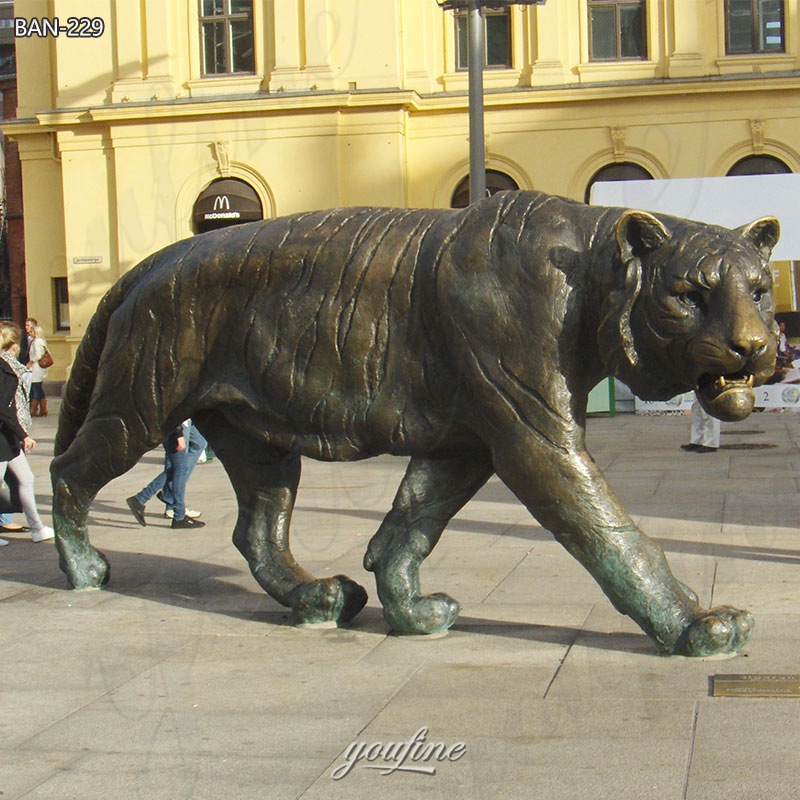
2. Walking Tiger Statue–Movement and Leadership
The walking tiger introduces energy.
Unlike the stable standing pose, this one creates motion — even in stillness.
Emotional Effect
A walking tiger suggests:
- Progress
- Momentum
- Confidence
- Leadership
- Purpose
It feels alive and intentional.
Best For
- Long driveways
- Resort landscapes
- Garden pathways
- Corporate headquarters
- Large park installations
It works particularly well in spaces with directional flow.
Placement Strategy
- Align with pathway direction
- Allow sufficient space in front of the tiger
- Avoid tight corners
- Slight diagonal positioning adds dynamism
Walking tigers need spatial depth. Without enough breathing room, they can feel compressed and awkward.
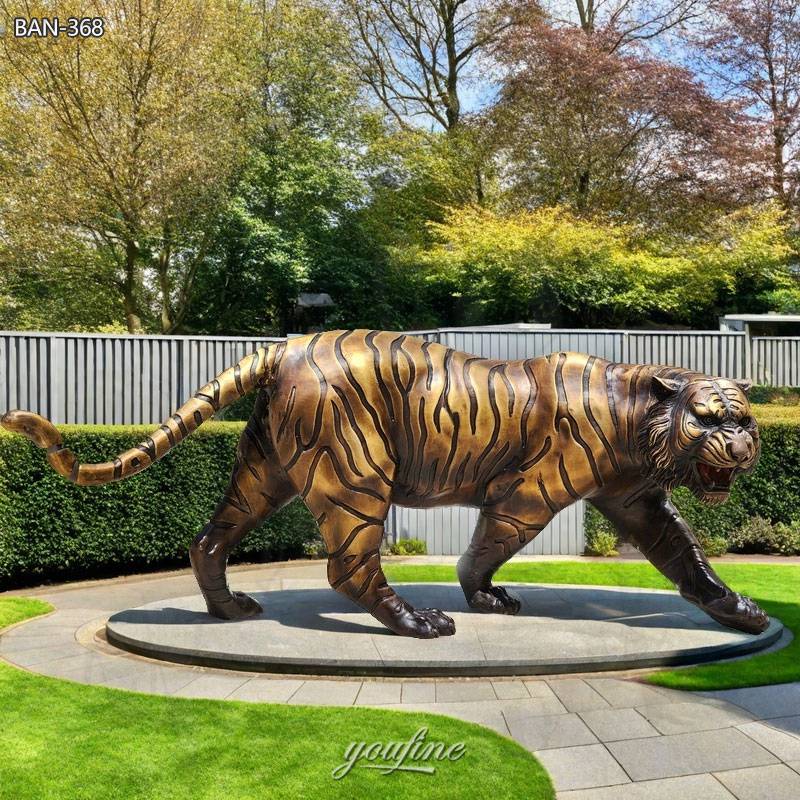
3. Roaring Tiger Statue – Dominance and High Impact
The roaring tiger is the boldest choice.
It demands attention.
Emotional Effect
A roaring tiger communicates:
- Dominance
- Intensity
- Command
- Aggression
- Authority
It is a statement piece.
Best For
- Commercial entrances
- Theme parks
- Luxury hotels
- Public plazas
- Brand headquarters
- Monumental outdoor landscapes
This pose works when you want immediate visual impact.
Placement Strategy
- Large open front area
- Strong base structure
- Dramatic lighting
Dark bronze patina enhances muscle detail

Single Tiger vs Pair Installation
Beyond pose, consider composition.
Single Installation
A single tiger works well as:
- Hero centerpiece
- Focal point in roundabout
- Garden sculpture highlight
It draws attention directly to itself.
Pair Installation
Paired tigers create:
- Architectural balance
- Symmetry
- Formal prestige
- Traditional authority
For high-end estates, hotels, and ceremonial entrances, symmetrical tiger pairs amplify grandeur.
Facing direction also matters:
- Facing outward = protection
- Facing inward = guarding inner space
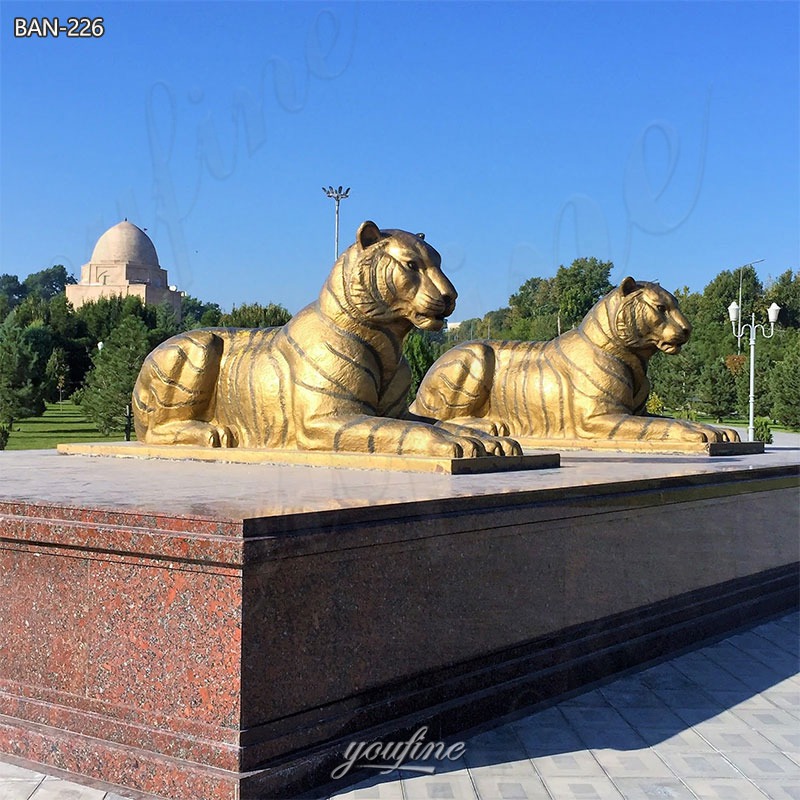
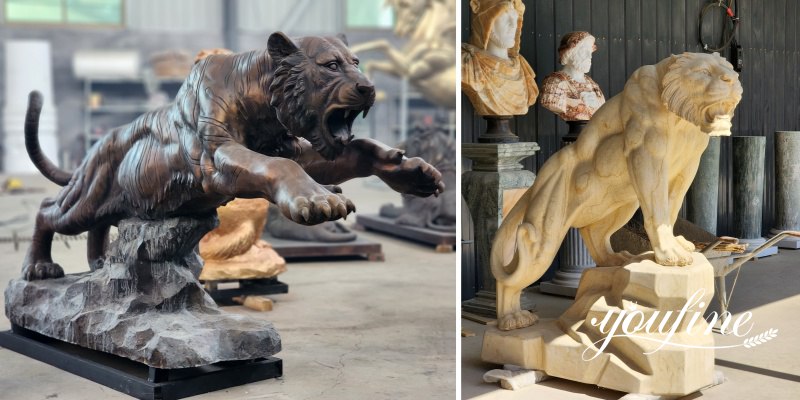
Material Considerations: Bronze vs Marble
The pose you choose should align with material choice.
Bronze Tiger Statues
Bronze is ideal for:
- Roaring poses
- Dynamic walking forms
- High-detail muscle definition
Bronze captures expression, fur texture, and tension extremely well. Dark patina enhances drama. Bronze is also highly durable for outdoor installation.
Marble Tiger Statues
Marble works beautifully for:
- Standing classical poses
- Calm guardian styles
- Estate and palace environments
It gives a timeless, noble aesthetic.
How Space Size Influences Pose Selection
Many buyers focus on the sculpture first — but space should come first.
Small Space (Under 3 meters wide)
- Avoid roaring pose
- Avoid exaggerated movement
- Choose calm standing posture
Medium Space (Driveways, Villa Entrance)
- Standing or walking works
- Pair installation possible
- Moderate dynamic detail
Large Open Landscape
- Roaring becomes viable
- Dynamic walking works beautifully
- Monumental scale recommended
Scale and pose must work together.
Common Mistakes Buyers Make
1. Choosing Based Only on Appearance
A photo can be misleading without spatial context.
2. Ignoring Viewing Angles
Will visitors see it head-on? From the side? From a distance?
Each pose performs differently depending on approach direction.
3. Underestimating Aggression Level
Roaring poses may feel too intense for residential use.
4. Not Considering Architectural Style
Classical estates pair better with composed poses.
Modern corporate campuses can handle stronger dynamics.

Quick Decision Guide
| Pose | Emotional Impact | Best For | Space Requirement |
| Standing | Stable, Regal, Protective | Villas, Gates, Estates | Medium |
| Walking | Dynamic, Confident, Progressive | Driveways, Resorts | Medium to Large |
| Roaring | Dominant, Powerful, Dramatic | Commercial & Public Spaces | Large |
Final Thoughts: Choosing With Confidence
Selecting the right tiger statue pose is not about which one looks strongest in a catalog.
It’s about understanding:
- What emotion do you want your space to convey?
- Is the setting formal or dynamic?
- How large is the installation area?
- Do you want subtle authority or bold dominance?
A well-chosen tiger statue becomes more than sculpture — it becomes identity.
Whether you prefer a composed standing guardian, a confident walking leader, or a commanding roaring icon, the right pose will elevate your entire space.
If you are planning a project and would like professional guidance on size, material, or pose customization, YouFine team at Animal Sculpture Gallery is ready to assist.
The difference between an ordinary installation and a powerful statement often comes down to one decision:
Standing, walking, or roaring?
Choose wisely.